
The Jigokudani monkey park, located in the mountains of Nagano Prefecture, offers a fascinating encounter with Japanese macaques in a unique natural setting. This site, famous for its monkeys bathing in hot springs in winter, attracts curious travellers to discover a unique facet of Japan. Here’s all you need to know to plan a successful visit.
A park not like the others
Located in Yamanouchi, in the Jigokudani Valley — which literally means “hell valley” because of its intense geothermal activity — the park was established in 1964 to provide a secure space for monkeys, while avoiding conflicts with the inhabitants of the region. The development of ski tourism in the 1950s had then pushed the macaques back to the villages, causing incidents with public cultures and baths.
Today, about 160 Japanese macaques live in this mountainous area and descend daily to the hot water basins in the park. This phenomenon, unique in the world, makes it possible to observe primates in a social and thermal behavior rarely documented elsewhere.
What to see and do in the park
The park is mainly frequented in winter, when the snow covers the landscape and the macaques take refuge in hot water baths. It is during this period, from December to March, that emblematic photos are taken: peaceful monkeys, dipping in onsen, while steam rises around them.
However, the park remains open all year round. In spring and summer, young macaques are seen playing in the forest or at the edge of the Yokoyu River, while in autumn, red and golden foliage provide a striking setting.
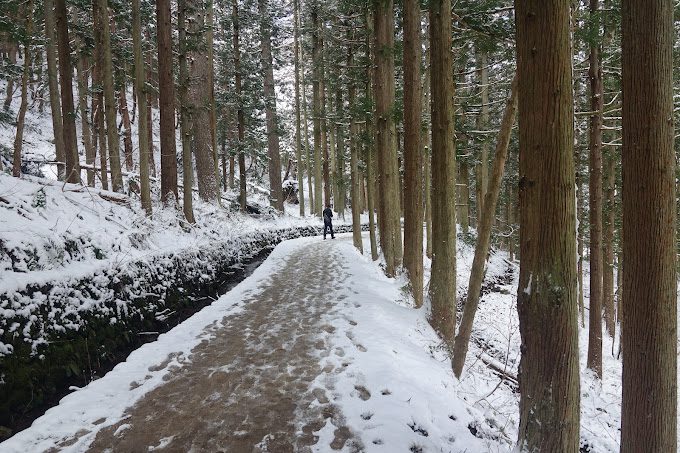
Besides the observation of the monkeys, the access trail is already a beautiful experience. It crosses a quiet forest for two kilometres (about 30 to 40 minutes walk from Kanbayashi Onsen) and offers explanatory panels on the social life of the macaques, their hierarchy, their diet or their parental behaviour.
Practical information for the visit
Hours
The park is open all year round:
- November to March : 9am to 4pm
- April to October: 8.30 a.m. to 5 p.m.
Entry rates
- Adults: about 800 yen
- Children (6-17 years): approximately 400 yen
Children under 5 years of age can enter free of charge.
Access
The starting point for hiking to the park is Kanbayashi Onsen. To get there from Nagano (JR station), take the Nagano Dentetsu line to Yudanaka (45 min), then a local bus or taxi to Kanbayashi Onsen (about 15 min).
From Kanbayashi, follow the well marked trail to the park. In winter, the trail can be snowed: it is strongly recommended to wear suitable shoes or light crampons.
Useful advice
- Plan warm and waterproof clothing in winter.
- The park does not offer a restaurant on site, but some cafes and ryokan are in Kanbayashi.
- Washrooms are available at the entrance to the trail and in the park.
- It is strictly forbidden to feed, touch or approach too close to monkeys.
Snow monkeys: fascinating behavior
The Japanese pimp, orMacaca fuscata, is the non-human primate living most north of the planet. These monkeys are adapted to extreme temperatures and have developed behaviors specific to their environment.
Their swimming in hot springs is observed mainly in females and young, who find a thermal refuge there. This behavior is not natural at the origin: it developed in the 1960s, when some individuals imitated humans in a local onsen. Since then, it has been transmitted through social learning.
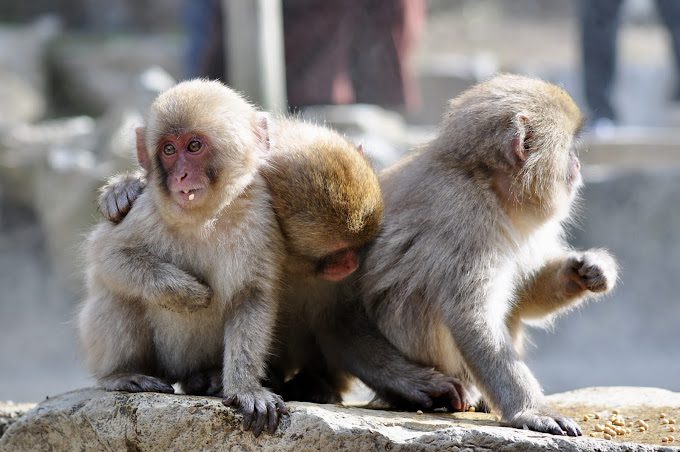
The park is also a valuable study site for primatologists. There are complex group dynamics, alliances, altruistic behaviour, but also hierarchical tensions, which are particularly visible in the distribution of food by caregivers.
When to visit the park for an optimal experience
Winter (December to March) is the most photogenic season. Monkeys are numerous around basins, snow gives the landscape a magical look, and thermal activity makes the atmosphere spectacular. This period is also the most frequent: it is better to come to the opening to avoid the crowd.
In spring (April-May), young monkeys born in winter become active, and temperatures are milder. The summer is less popular but pleasant, especially to combine the visit with hikes in the Jōshin’etsukōgen National Park. Autumn (October-November) attracts amateurskōyōred foliage.
Accommodation and activities in the vicinity
Yudanaka Onsen and Shibu Onsen are two traditional spas close to the park. They offer typical inns (ryokan), public baths and preserved village atmospheres. Spending one night on site allows to extend the experience in a relaxing setting.
For mountain lovers, the ski areas of Shiga Kogen and Nozawa Onsen are easily accessible by bus. Many visitors thus combine a day of monkey observation with winter activities.
Other cultural sites can enrich your stay in the area, such as the Zenko-ji temple in Nagano, one of the oldest in Japan, or the Ueda Castle.
The Jigokudani Monkey Park is a place where nature, animal observation and the Japanese experience fit together. By preparing your visit well and following the instructions, you can enjoy a unique moment in contact with a rare and moving animal behavior.
If this article has brought you useful information and can help other travellers prepare for their stay, a Google review will always be appreciated. |
|

Learn more about preparing your trip to Japan
Discover more from Evasions Rebelles - Travel Planner Japon
Subscribe to get the latest posts sent to your email.


