Holidays in Japan are an opportunity to discover the many traditions and customs that animate the country. Unlike other countries where rest days are predominantly religious, Japanese holidays reflect both Japan’s ancient culture and modern values. Whether you’re curious to better understand Japanese society or planning a trip, knowing these holidays will allow you to anticipate your visits and experience unique moments.
The peculiarity of public holidays in Japan
A celebration of Japanese values
Japanese public holidays often highlight values such as respect for nature, intergenerational ties and social harmony. Japan has 16 national holidays, and every day has a special meaning related to seasons, ancestors, family, or major events in the country’s history. These celebrations are widely observed, and Japanese people participate in them with family, friends or within their community.
Organization and bridges on public holidays
Public holidays are set by the government and, unlike other countries, they are not moveable. However, Japanese law stipulates that a holiday falling on a Sunday shall be postponed to the following Monday, thus guaranteeing workers an additional day of rest. Japan also observed extended periods of leave, such as Golden Week in May and New Year, when many Japanese traveled or met with family.
The iconic holidays and holidays in Japan
Japanese New Year (Shōgatsu)
The New Year, or Shōgatsu, is one of the most important festivals in Japan. Celebrated on 1 January, it marks the beginning of the year with special traditions such as visits to shrines (hatsumode), greeting cards (nengajo), and traditional meals. Many Japanese take advantage of this period to pay tribute to their ancestors and pray for a prosperous year. Shops, museums, and some tourist attractions can be closed, as it is a time of family retreat.
Golden Week: A series of public holidays in May
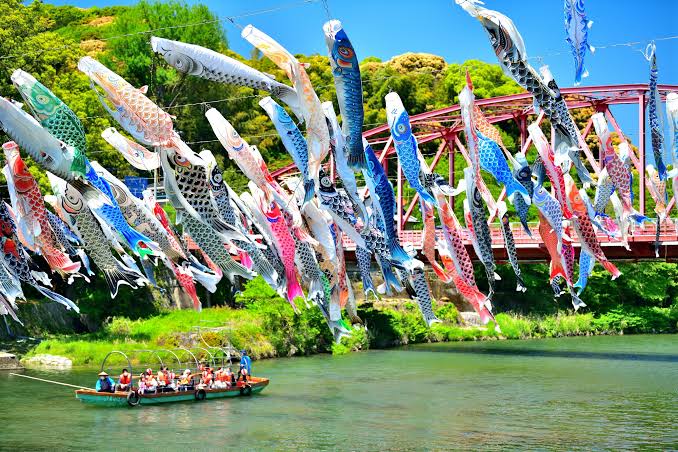
Golden Week is a unique four-day period, allowing many Japanese to take extended holidays. It includes the Showa Day (29 April), celebrating Emperor Showa’s birthday, the Memorial Day Constitution (3 May), the Greenery Day (4 May), as a tribute to nature, and the Children’s Day (5 May), which honours children and their parents. During this week, the Japanese travel a lot, the tourist places can be very frequented and the prices of accommodation increase.
The Feast of the Sea (Umi no Hi) in July
The Umi no Hi, or Feast of the Sea, takes place every third Monday in July. This holiday is dedicated to the sea, an essential element for the Japanese archipelago, both for its natural resources and its cultural importance. Numerous festivities, such as seaside ceremonies and local festivals, are held to honour the benefits of the ocean. It is also a great opportunity for residents to enjoy beaches and nautical activities.
Mountain Day (Yama no Hi) in August
Introduced in 2016, Yama no Hi, or Mountain Day, is celebrated on August 11. This holiday is intended to encourage Japanese people to enjoy nature and mountains. As a mountainous country, Japan values this natural element, and many Japanese take advantage of this day to hike, visit national parks, or reconnect with nature. For tourists, it is a great opportunity to discover Japanese mountains, like Mount Fuji, in a festive atmosphere.
Respect for Elders (Keiro no Hi) in September
The Keiro no Hi, or Respect for Elders, is held every third Monday in September. This special day is dedicated to the elderly and aims to honour their contribution to society. Community ceremonies, shows and events are held in their honour. Families often visit their elders, and it is not uncommon for special gifts or meals to be prepared for them. This celebration shows the importance of gratitude and respect for previous generations in Japan.
Labour Day (Kinro Kansha no Hi) in November
The Kinro Kansha no Hi, celebrated on November 23, is the Japanese equivalent of the Labour Day, although it is observed at the end of the year. This day pays tribute to workers and highlights the importance of work in Japanese society. Official demonstrations and ceremonies are sometimes held to express gratitude to workers. It is a day of rest for Japanese people who often take the time to relax with family or friends.
Traditional Japanese holidays and cultural influence
Setsubun: the bean throw party
Setsubun, although not an official holiday, is an important celebration in Japan, which takes place on February 3. The Japanese participate in the ritual of throwing beans to drive out the evil spirits and attract the good fortune for the coming year. In temples and shrines, public ceremonies are organized, allowing visitors to participate and live an ancient tradition.
Festivals and matsuri
In addition to the official holidays, Japan is rich in festivals (matsuri) that speed up the calendar. Matsuri, although not public holidays, offer the opportunity to discover unique cultural traditions, such as folk dances, mikoshi processes (portable sanctuary) and pyrotechnic performances. Each region celebrates its own festivals throughout the year, and attending a matsuri is an unforgettable experience for any visitor.
Tips for visiting Japan during holidays
Visiting Japan on a holiday can be a rewarding experience, but it is important to prepare well. During times like New Year’s Eve and Golden Week, public transport, hotels and tourist attractions can be crowded, and prices can increase. To fully enjoy your trip, consider booking your accommodation and transport tickets in advance. Also, keep in mind that some places, such as museums and shops, can close their doors for these special days.
Holidays in Japan offer a real immersion in local culture and the opportunity to discover aspects of Japanese life that highlight nature, family values and ancestral traditions. By travelling during these periods, visitors can participate in festivities, appreciate local customs and better understand the community spirit that drives the country. Feel free to organize your trip based on these special days to experience unique moments and enrich your experience of Japanese culture.
If this article has brought you useful information and can help other travellers prepare for their stay, a Google review will always be appreciated. |
|

Learn more about preparing your trip to Japan
Discover more from Evasions Rebelles - Travel Planner Japon
Subscribe to get the latest posts sent to your email.