In Japan, some castles fascinate by their silhouette, history or cultural anchor, but one category attracts particular attention: castles whose nickname refers to an animal. Heron, raven, turtle, carp, crane or fantastic creatures like the dragon… These appellations reveal a singular relationship to the landscape, to symbolism and to local beliefs. To prepare an original itinerary, understanding these nicknames makes it possible to approach castles from a more lively angle and enrich a trip to Japan with a strong cultural dimension.

Why so many animals in Japanese castle nicknames
Animal nicknames are rooted in the symbolism very present in the archipelago. The crane evokes longevity and protection, the turtle represents stability, ascent carp and success, the raven the strength or luck depending on the regions. In feudal Japan, these images were used to embody the power of a clan or to convey a protective message around a strategic place.
For a traveller, understanding these references sheds light on how the inhabitants perceived their castle: not as a simple fortress, but as a cultural landmark, sometimes even as a protective being.
Himeji, Heron Castle
Himeji, the White Heron Castle, remains the most famous example. Its clean architecture and bright white walls inspired the image of a heron spreading its wings. The gradual climb through the narrow corridors makes it possible to observe elaborate defenses and enjoy panoramas of the city. From Kobe, Osaka or Kyoto, Himeji easily integrates into a route, and its nickname reinforces a poetic reading of the landscape.

The castles known as the raven
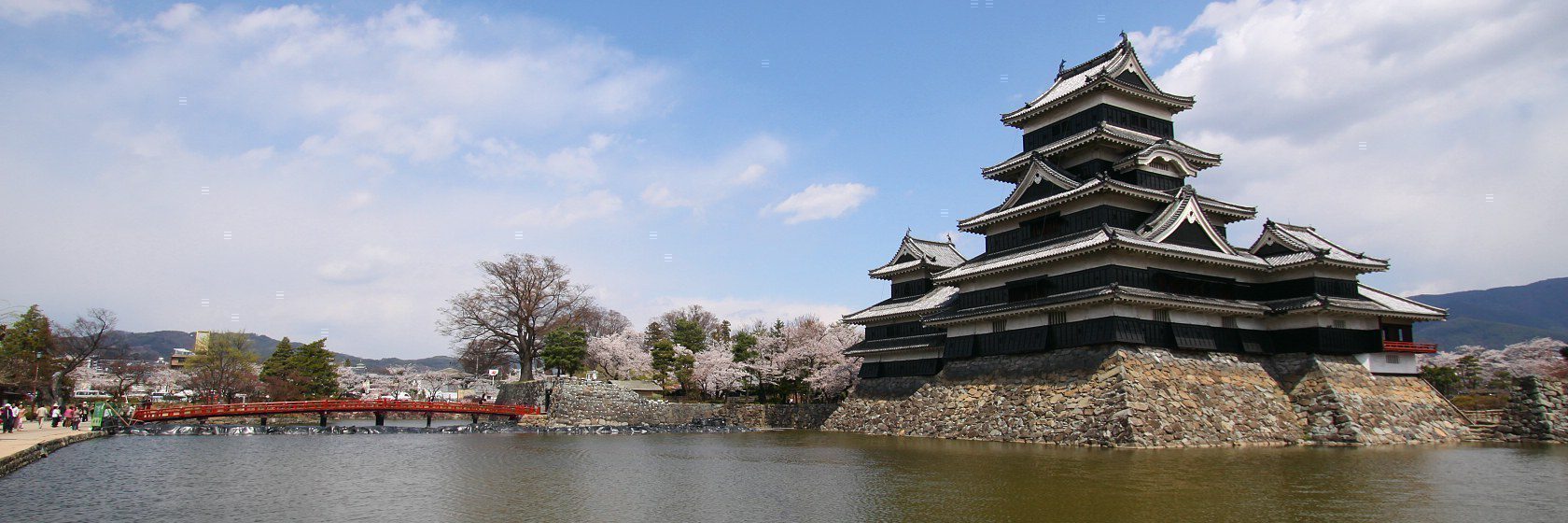
Several dark castles in lacquered or burned wood received a nickname linked to the crow. The contrast between the black walls and the robust silhouette reminds the bird in flight.
Matsumoto
Matsumoto is the most frequently cited case, even if the ancient sources do not officially confirm this nickname. For the visitor, the image of the raven allows you to understand the visual impact of the building and its role in protecting the Alpine valley.
Okayama
Okayama has a similar aesthetic, with a dark silhouette that has earned him an immediate association with the raven. Located opposite the Korakuen Garden, it easily integrates into a route combining architecture and local culture.

Castles of the crane, symbols of elevation
The nickname associated with the crane is found in different regions, often to evoke an ascending movement or a slender silhouette.
Aizu-Wakamatsu (Tsuruga-jō)
Aizu-Wakamatsu, called Tsuruga-jō, perfectly illustrates this symbolism. The nickname, used by the inhabitants themselves, translates an ancient connection with local history and the stories transmitted around the castle.
Fukuoka
Fukuoka shares this association thanks to the shape of its defensive ensemble seen from the bay, interpreted as a crane ready to simmer. These spaces, which have become public parks, allow a fluid visit combining history and landscape.
Turtles, carps and other creatures: a symbolic geography
Some names, rarer, evoke turtles, carp or fantastic beings.
Oshi-jō
Oshi-jō, nicknamed Kamejō, is said to be linked to the shape of his enclosure. The visit helps to understand how historical floods shaped its structure and organization.
Hiroshima-jō
Hiroshima-jō, associated with the carp, resonates with the local identity and even with the name of the city’s baseball team. The reconstruction of the castle after the war offers a relevant reading of urban resilience.
Nagoya
Nagoya is distinguished by its golden shachi, protective creatures close to fish and linked to the myths of water and fire. Their presence affirms the prestige of the sovereigns and strengthens the identity of the site.
The role of legends in creating nicknames
In some regions, nicknames come from ancient stories transmitted over several generations.
Shibata and kitsune
Shibata, associated with the fox, illustrates this phenomenon. A legend says that Inari’s spirit would have guided the development of the castle’s boundaries. These stories nourish collective memory and still influence the way people present their heritage.
Fukuyama and the bat
The association between the castle of Fukuyama and the bat comes from the ancient name of the hill on which it was built: Komoriyama, literally “mountain of the bat”. This symbolic bond was strengthened in the early twentieth century when the city adopted in 1917 an emblem representing a stylized bat superimposed on a mountainous shape. This motif, already surprising for a Japanese castle, attracted attention far beyond the region. His resemblance to Batman’s modern iconography resulted in a friendship agreement between Fukuyama and Gotham City, the fictional city of the world of the famous vigilante, in 2022. This initiative, both fun and identity, marked the 400th anniversary of the castle and coincided with the release of the filmThe Batman. The result: a castle full of history, enriched by a contemporary cultural nod that amuses visitors as much as it intrigues.
Practical tips for organising a route around these castles
To prepare a coherent itinerary, it is possible to group the castles by region. In Kansai, Himeji and Okama form a relevant duo. In Tohoku, Fukushima and Aizu-Wakamatsu allow to explore in depth the symbolism of the crane. In Chūbu, Matsumoto is a natural gateway to the Japanese Alps. Hiroshima offers a combination of heritage, memory and green spaces.
To optimize travel, accompanying a specialized travel planner makes it easier to read timetables, visit sequence and cultural interpretation essential to understanding these nicknames.
The interest of these nicknames to better understand Japan
These animal designations are not mere linguistic frictions. They reflect a look at landscape, beliefs and architecture. For a traveller, each nickname becomes a key to understanding a local history, a clan symbol, or a local story. This approach enriches the journey and otherwise enlightens the evolution of cities.
Explore Japanese castles through their animal nicknames turns the visit into a cultural experience. These names reflect local perceptions, protective beliefs, and the people’s sensitive relationship to their heritage. By integrating these places into a thoughtful itinerary, the visitor discovers a more subtle Japan, where architecture dialogues with the imagination.
If this article has brought you useful information and can help other travellers prepare for their stay, a Google review will always be appreciated. |
|
Discover more from Evasions Rebelles - Travel Planner Japon
Subscribe to get the latest posts sent to your email.