Nestled at the foot of Mount Ryūō-zan, in the city of Tenri (Nara Prefecture), the Chōgaku-ji temple offers a unique experience for travelers seeking spirituality, ancient Buddhist art and contemplative landscapes. Between historic buildings, mysterious legends and reels illustrating Buddhist hells, this temple is a fascinating stop along the Yamanobe road, one of Japan’s oldest pilgrimage routes.
A place founded by Kūkai at the service of the faith and emperor
The Shōgaku-ji temple was reportedly founded in 824 by Emperor Junna, at the initiative of Kūkai (Kōbō Daishi), a major figure of Shingon Buddhism. It was originally used as a tutelary temple at the nearby shrine of the Ayamato. Affiliated to Mount Kōya, this place was once a vast complex with more than 300 monks and 48 subtemples.
Today, although more modest, the site retains significant symbolic and heritage significance. It is classified as the 19th temple of the circuit of the flower temples of Kansai and the 4th sacred site of the Buddhist pilgrimage of the 13 sacred sites of Yamato.
Classified buildings and rare works of Japanese Buddhism
The temple houses four buildings classified as Important Cultural Property. Among them is the main pavilion (Hondō), which retains a statue of Amida dating from the Heian period (794–185). This remarkable representation is one of the oldest examples of Japanese Buddhist statues with glass eyes, a rare technique at the time.

The central statue is flanked by two protective bodhisattvas, also equipped with glass eyes, strengthening the expressivity and presence of these sacred figures. Five important statues are preserved on the site, illustrating the richness of Japanese religious art over centuries.
The unique treasure of the rollers of Hell
Among the elements that distinguish Chōgaku-ji is his precious collection ofjigokuzōji, or “hell rolls”. Made at the time of Momoyama (16th century), these paintings vividly illustrate the eight great Buddhist hells. They are exposed to the public once a year, between 23 October and 30 November.

These scrolls were historically used for religious teaching: by representing the torments reserved for sinful souls, they recalled the importance of moral virtues. Their visual power continues to hit visitors today.

Around the basin: a serene atmosphere punctuated with symbols
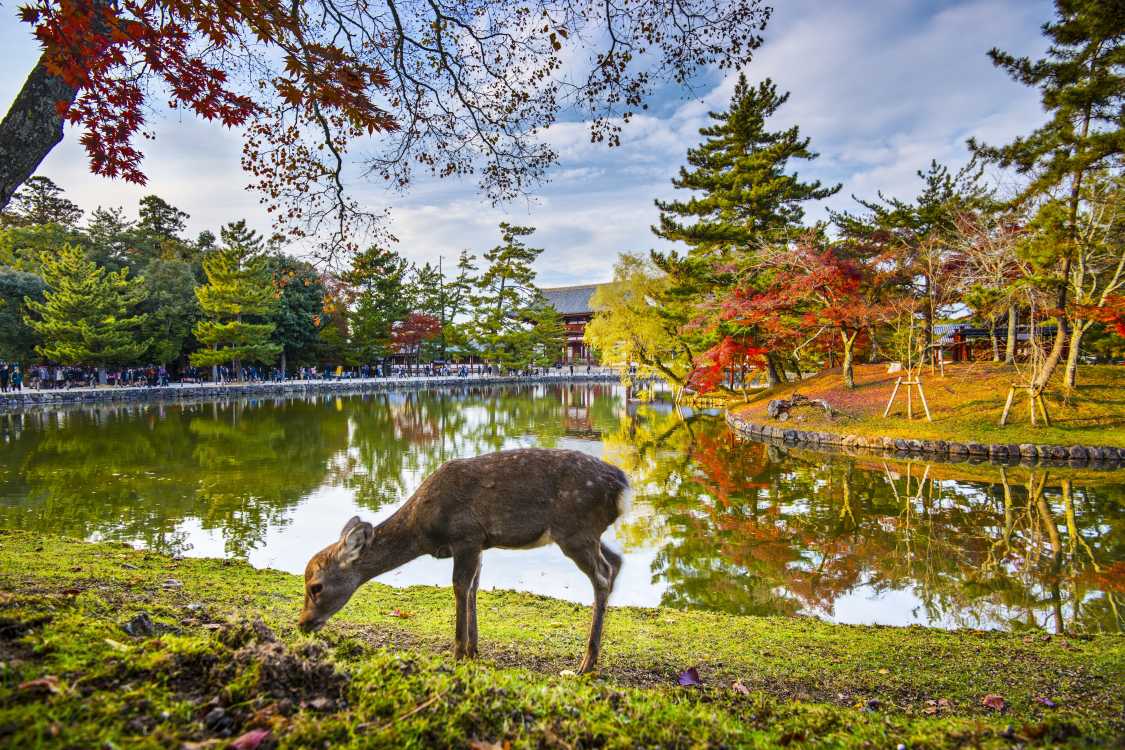
In the centre of the site lies a peaceful iris basin, the Hōshōike. It houses colorful carps and is surrounded by statues of Jizō, the Bodhisattva protector of children and lost souls. These representations, dating back to some of the Kamakura era, participate in the meditative atmosphere of the places.
On the banks, an imposing three-metre statue of Kōbō Daishi watches over visitors. It is also possible to ring the bell of the temple, known to fulfill the vows when it is sincerely prayed by striking it.
Traces of battles and ghost legends
Chōgaku-ji is also associated with several stories in the collections “Ancient Tales of Tenri”. One of them refers to a battle on Mount Ryūō, during which soldiers died in the temple compound. Their blood traces would still be visible on the ceiling of the main hall, and their spirits haunted the place according to local tradition.
These accounts, far from adding mere folklore, record the temple in a living memory of the historical and spiritual events of the region.
Seasonal experience and refined architecture
The site lends itself to a peaceful visit of about one to two hours, ideal in spring when the azalea blooms (end of April to May). You can also enjoy the Kōri building, the only vestige of the Jizōin temple, dating from the Muromachi period. This Japanese-style thatched pavilion features a sober and refined Shoin style, accompanied by a carefully maintained Tsurukame garden.
The ensemble bears witness to an architecture of the epoch integrated into the surrounding natural landscape, with an aesthetic consistency that expresses itself in detail.
Practical information for the visit
The temple is open daily from 9am to 5pm. Entry is paid (400 yen for adults, reductions according to age). It has free parking that can accommodate private cars and buses.
Access is from JR Yanagimoto train station (Sakurai line) walking about 20 minutes. By car, it is accessible from the Tenri interchange on the Nishi-Meihan, following Route 169 and then the signs to the temple.
TheTenri City Trail Center, right in front of the temple entrance, offers a rest area, beverage distributors and tourist information on the way to Yamanobe.
Local tasting and related activities
The temple offers visitors a taste of a local culinary specialty: noodlesSōmenin summer andnyūmen(hot sōmen) in winter, available at reception. This allows to add a taste dimension to the visit, in connection with the regional traditions of Nara.
A “illustrated presentation” ( These sharing moments are rare but enriching if you have the opportunity.
Chōgaku-ji offers an immersion in a deep and spiritual Japan, away from classic tourist routes. It is a place where you can see the works of the past as well as the silent reflections of the present, between lotus, carved stones and tales from beyond. For those interested in Buddhist art, religious history or the discreet beauty of rural temples, it is an essential stopover in the Kansai region.
If this article has brought you useful information and can help other travellers prepare for their stay, a Google review will always be appreciated. |
|
Discover more from Evasions Rebelles - Travel Planner Japon
Subscribe to get the latest posts sent to your email.