In the heart of the Okazaki district in Kyoto, the Heian-jingu shrine is distinguished by its imposing vermillon torii, its vast esplanades of white gravel and above all its sumptuous gardens where cherry-trees with long pink branches bloom each spring. Dedicated to Emperors Kammu and Komei, this iconic place traces more than a millennium of Japanese history.
A young sanctuary with ancient roots
Although his classical appearance may make him look like an ancient vestige, Heian-jingu is actually a relatively recent sanctuary. Built in 1895, it was erected to celebrate the 1100th anniversary of the foundation of Heian-kyo, the former name of Kyoto, which was the imperial capital of Japan between 794 and 1868.
The architecture of the sanctuary is a small scale partial reproduction of the imperial palace of the Heian period. This period, marked by the cultural, artistic and religious boom of classical Japan, remains associated with the climax of Kyoto as the heart of imperial power. Heian-jingu thus embodies a symbolic memory, honoring both the birth of Kyoto and the imperial dynasty to which it was long bound.
A monumental portal and a large courtyard
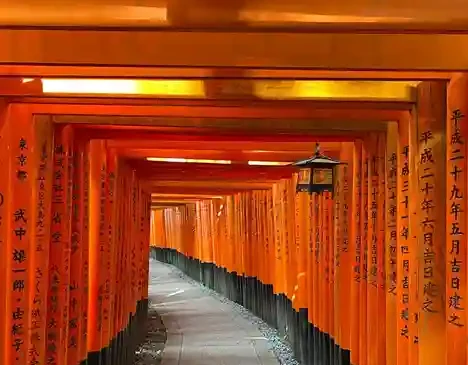
The southern entrance of the sanctuary is marked by a vermilion torii 24 meters high. This gigantic Shinto portal crosses Jingu-michi Avenue, marking a threshold between the secular world and sacred space. By passing this torii, visitors discover a large esplanade covered with white gravel, typical of shinto speakers, which reflects the light and reinforces the visual impact of buildings painted with red and green.
The main pavilion, orHondenstands at the bottom of the court. Its straight and elongated structure recalls the architectural codes of the Heian period, although it was built with modern materials and techniques. Unlike many ancient sanctuaries in patinated wood, this one retains a clear and vibrant aesthetic.
The gardens of Heian-jingu : landscaped haven of exception
Behind the ceremonial buildings is a traditional garden of about 30,000 m2. It consists of four sections (east, center, west, south) connected with each other, each providing a distinct atmosphere and vegetation. Water plays an essential role, including with several ponds dotted with islets, wooden bridges and stones arranged to invite contemplation.
In the spring, the cherry blossoms (shidarezakura) make the site famous. Their long branches loaded with pink flowers create spectacular plant vaults. These flowers, later than those of the classic cherry trees, allow to prolong the season of the hanami.
One of the most photographed moments of the garden is theTaikobashi Bridge, a covered structure that crosses one of the lakes. Its refined silhouette attracts both Japanese garden lovers and photographers. Shot locations of a movie sceneLost in Translation, this bridge adds a touch of romanticism to the course.
Visiting experience and practical advice
The visit to the sanctuary takes place in two stages: free access to the main courtyard, and paid access to the garden (600 yen). Count one to two hours to explore the place quietly. The ensemble is easily accessible from the Higashiyama metro station (Tozai line) or via the city bus lines.
The sanctuary hosts several annual events, the most notable of which is theJidai Matsuri, a large costumed parade that takes place on October 22nd. On this occasion, hundreds of participants reconstruct the history of Kyoto throughout the eras. The procession ends at the Heian-jingu shrine, strengthening its role as guardian of the city’s memory.
Things to see in the surroundings
The location of Heian-jingu in the Okazaki district allows to combine several visits in half a day. Right next door are theKyoto Museum of Modern Art,Municipal Art Museumand theKyoto Zoo. TheLake Biwa Canal, which passes by, also offers a pleasant walk, especially in cherry season.
Finally, proximity to thepath to philosophy, to the northeast, allows to follow on a meditative walk to the Eikan-do and Nanzen-ji temples. It is an area rich in heritage, but also pleasant to explore on foot, away from the crowd of Gion or d
Best times to visit
The sanctuary can be visited all year round, but certain periods are particularly recommended:
- End of March to mid-April: flowering of weeping cherry trees, with a peak in early April.
- End of October: Jidai Matsuri festival and spring autumn foliage.
- Winter: quiet and minimalism of bare landscapes, with few tourists.
- Summer months: The gardens are lush, but the heat and humidity can make the visit more tiring.
Whether you’re a history lover, passionate about Japanese gardens or simply curious, Heian-jingu offers a peaceful and aesthetic parenthesis in the tedious Kyoto. Its combination of open spaces, imperial symbolism and harmonious natural scenes makes it an essential stop in any cultural exploration of the city.
If this article has brought you useful information and can help other travellers prepare for their stay, a Google review will always be appreciated. |
|
Discover more from Evasions Rebelles - Travel Planner Japon
Subscribe to get the latest posts sent to your email.