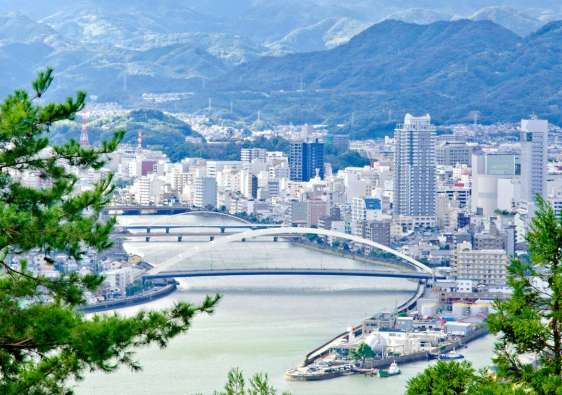
In Tokushima Prefecture is Shōkanji Temple, a discreet but singular place deeply rooted in the Buddhist spirituality of Japan. Affiliated to Nara’s famous Todai-ji,Shōkanji Incarnates an unknown facet of Kegon, where traditional teachings mix, unexpected cultural ties and pedagogical approach to fundamental Buddhist concepts such as reincarnation and hell.
A temple attached to Todai-ji: spiritual origin and anchor
Shōkanji Temple is a small religious establishment attached to the Todai-ji of Nara, which is the main seat of the Kegon School, a branch of Mahāyāna Buddhism introduced to Japan in the eighth century. This link with Todai-ji gives Shōkanji a serious doctrinal foundation, while allowing him to develop a clean identity, anchored in the territory of Mugi-chō, a coastal village in the south of Tokushima.

Founded in 1949, at the initiative of a monk known as Shōnin, the temple aims to spread the values of Kegon and to provide a space for spiritual recollection in a peaceful environment. The place is also nicknamed “Fudō-san” with reference to its principal deity: Fudō Myōō, a Buddhist figure associated with the protection and elimination of illusions.
A rare presence: a relic of the Buddha from Sri Lanka
One of the most notable elements of the temple is the presence of a Buddha relic: a tooth (butsuden) from the Dent Temple in Kandy, Sri Lanka. This relic was transmitted to Shōkanji in a context of unprecedented intercultural relations.
It all started when Tokushō-shi, the founder’s wife, came by chance to Sri Lanka. This improvised trip resulted in a lasting friendship between the temple representatives and several Sri Lankan religious and diplomatic figures. The stūpa containing the sacred tooth was offered by President Jayewardene, symbol of this spiritual cooperation between the two countries.
The relic is now preserved in a building called Kōmyō Shōja, while an arrow-shaped structure, also serving as a mausoleum for the founder, materializes the presence of the stūpa on the site.
A pedagogical vision of salvation and Buddhist hells
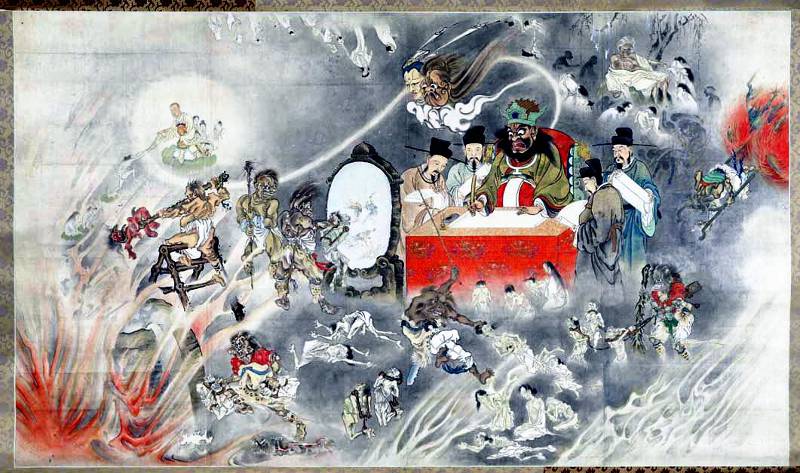
The teaching of the temple is not limited to rituals or mere contemplation. Through the concept ofshujō saidō(the salvation of all living beings), Shōkanji develops an educational approach accessible to all. One of the most striking elements is the development of a course around theEight great Buddhist hellsa concrete representation of the karmic consequences according to the acts committed.
Each area of the temple space illustrates a specific form of suffering associated with a sin: killing, stealing, lying, committing prohibited sexual acts or uttering erroneous views. This course, sometimes brutal in its representations, is intended to make the visitor reflect on the moral implications of his choices.
It is not just a deterrent, but an attempt to refocus Buddhist values on the consciousness of impermanence and individual responsibility. The visit thus becomes an introspective act as much as a cultural immersion.
The eight hells of Shōganji: a mirror of human karma
The path proposed by Shōkanji is structured around eight symbolic representations of hells, according to traditional classifications. These areas are not spectacularly staged, but rather sobriety described, which reinforces their impact. Here is an overview of these spaces:
Tōkatsu-jigoku (Hell of Resurrections)For those who have taken away life, even an insect. Sentences are perpetually repeated.
Kokujō-jigoku (Black Cord Hell)Only those who steal, in addition to killing. The name refers to the black cords used to delineate areas of torture.
Shugō-jigoku: intended for those guilty of prohibited sex. The mountains collapse on the damned under unbearable pressure.
Kyōkan-jigoku: for drinkers who, because of alcohol, have harmed others. Penalties include melting metal baths.
Dai-kyōkan-jigoku: punish the destructive liars, whose words have caused serious consequences. Their tongue is torn off.
Shōnetsu-jigoku– those who propagate false beliefs or malicious rumours are burned in unbearable heat.
Dai-shōnetsu-jigoku (Great Hell of the Furnace): the most violent in hell related to acts of sexual violence. No pause in suffering.
Abi-jigokuThe final step for those who have committed unforgivable crimes: parricide, regicide, or destruction of dharma. No hope of rebirth.
These representations, though radical, are not to be interpreted as mere punishments, but as metaphorical teachings about karmic laws.
Shōkanji as an educational space: spirituality, childhood and transmission
Beyond the religious dimension, Shōkanji is distinguished by his concrete educational involvement. Tokushō-shi, already an actress of cooperation with Sri Lanka, founded a kindergarten in Kandy City:Shōkanji Kindergartenoffered to the city. This gesture illustrates the temple’s desire to foster intercultural dialogue from an early age.
In Japan, the temple also remains a place of transmission, where children can discover the ethical principles of Buddhism in an accessible environment. Workshops, guided tours and exhibitions are sometimes offered to school groups, or at community events.
A visit to the temple: practical information
Shōkanji is located in the Mugi Mountains, about an hour’s drive from Tokushima railway station. There is no direct service by train or bus. A car is therefore recommended to get there.
The temple does not have standardized visiting slots as in major tourist sites. It is advisable to contact in advance to organize a visit, especially if you wish to visit the site of the eight hells or to exchange with a member of the temple.
There is no shop or restaurant on site, but the visit can be placed on a route to the Kaifu coast or the Iya Valley.
Shōkanji is not a spectacular or famous temple. It is a place for reflection, discreet and sincere, whose interest lies in the depth of his spiritual message, the richness of his ties with other Buddhist cultures, and his concrete way of addressing often overlooked ethical issues. For those who seek to understand Japanese Buddhism beyond forms, it is a precious detour.
Discover more from Evasions Rebelles - Travel Planner Japon
Subscribe to get the latest posts sent to your email.