Located between Kamakura and Enoshima, Fujisawa-shuku is one of the living testimonies of the Edo era. Former relay station on the road to Tokaidô, it retains a unique urban memory, mixing spirituality, travel history and popular culture. This article guides you through its origins, functions, emblematic places and current possibilities of discovery.
A city born around Yugyō-ji Temple
Fujisawa’s foundation is inseparable from Shōjōkō-ji temple, also known as Yugyō-ji. Created in 1325 by monk Donkai, the fourth successor of wise Ippen, he quickly became the spiritual center around which developed amonzen-machi: a city structured around a great place of worship.

The temple is the seat of the Ji-shū Buddhist school. Its founder Ippen traveled the country to preach and disseminate the practice ofnenbutsudanced, a prayer song accompanied by movements that later inspired thegood-odori. This form of collective religious ecstasy is at the heart of the temple’s identity and has profoundly marked the local popular culture.
The site retains a strong emotional load. It is particularly famous for its Iroha hill, bordered by cherry trees in the spring and dominated by an imposing ginkgo in autumn. Even today, the temple attracts visitors, pilgrims and curious, who find there a gateway to Fujisawa’s past.
Tōkaidō road relay station
With the unification of Japan by the Tokugawa, the need to quickly link Edo (Tokyo) to Kyoto led to the creation of Tōkaidō, the country’s main artery from the early seventeenth century. Fifty-three official stations, calledshukuba, were designed to house travellers, change horses and convey government messages.

Fujisawa-shuku is the sixth of these stations. It combined the functions of rest, communication and commerce. There were inns, stables, relays for mail, but also lively stalls serving travellers.
The development of this city-relais was largely influenced by its proximity to Enoshima, then booming as a pilgrimage and leisure destination. This allowed Fujisawa to move beyond its functional role to become a valued stopover, mixing spirituality, commerce and relaxation.
Enoshima, a natural extension of the journey
From the second half of the Edo era, the Enoshima-jinja shrine, dedicated to Benzaiten (divinity of music, sea and eloquence), attracts many visitors. The island of Enoshima becomes a place of entertainment, with its coastal landscapes, caves, gazebos and temples.
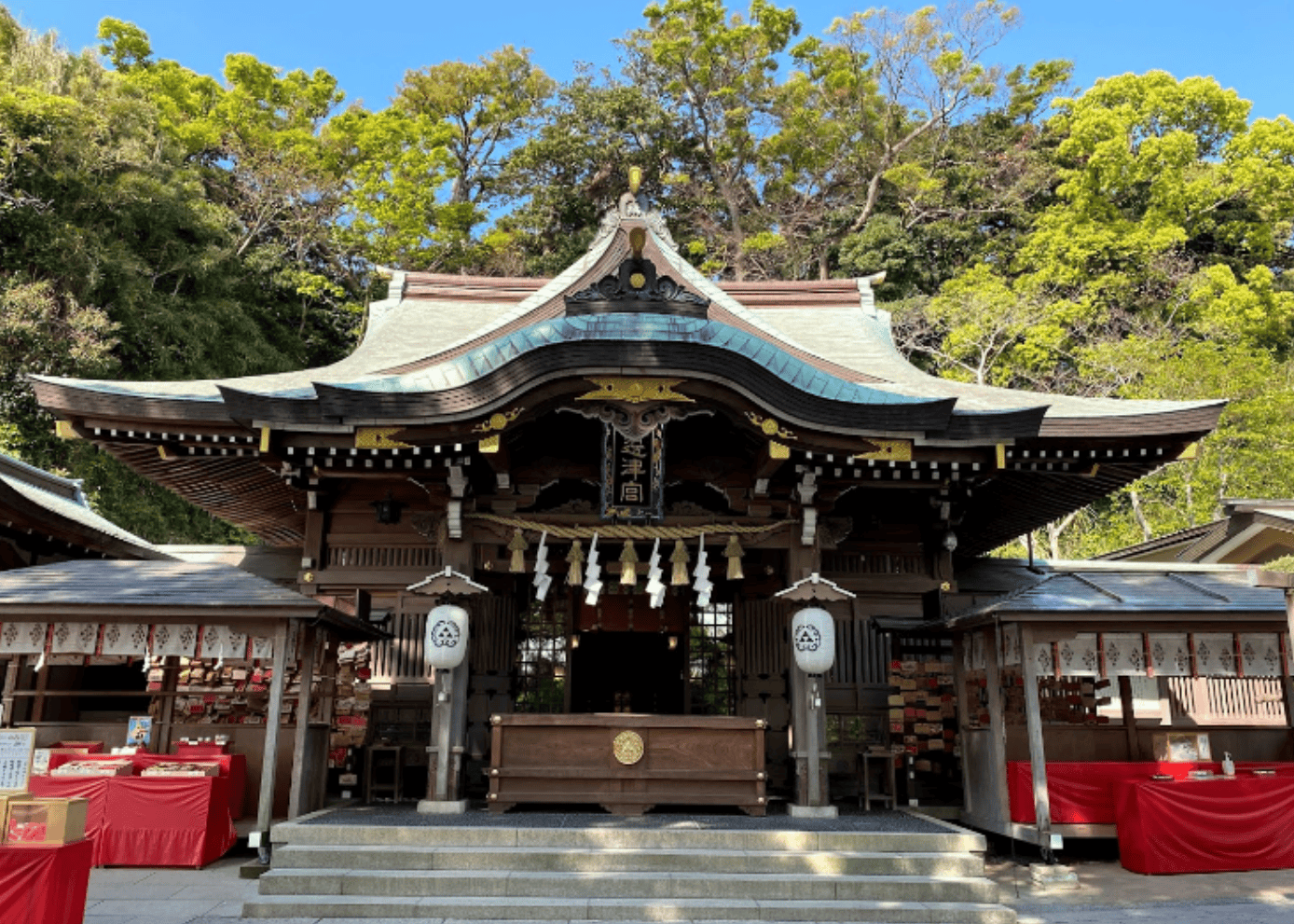
Fujisawa-shuku then becomes a convenient starting point for Enoshima. The journey from the station is direct and well marked, whether on foot or via the local railway network, notably thanks to theEnoshima-Kamakura Freepass.
Even today, the association of the two places creates an attractive itinerary for those who wish to explore Japanese spirituality, the history of the journey or simply enjoy the seaside near Tokyo.
Visit Shōjōkō-ji Temple
Fujisawa’s main temple, also known as Tōtaku-san Muryōkō-in Shōjōkō-ji, is a large complex, composed of several pavilions and gathering places. The main access, by Iroha hill, offers an entrance marked by imposing trees.
Inside, the buildings reveal a sober and elegant architecture, typical of the Ji-shū school. The temple hosts several religious events throughout the year, including services around thenenbutsu, and actively participates in local festivals, such as those related to autumn equinox or summer celebrations.
The history of the place and Ippen’s doctrine are better understood by explanatory panels and brochures. For an in-depth visit, focus on spring (late March to early April) or late autumn.
Fujisawa-shuku Cultural Centre
To complete the historical discovery of the city, Fujisawa-shuku Cultural Centre offers a precise reconstruction of the Edo relay station. There are objects from travellers’ daily lives, old building models and a 3D model representing the city at its height.
The centre is an informative step before crossing the still visible streets of the ancient shukuba. It is located about 15 minutes walk from JR Fujisawa Train Station, near the entrance to Yugyō-ji Temple (Kuro-mon Gate).
The permanent exhibition is well organized, with bilingual cartels and some explanatory videos. The centre also occasionally offers cultural events and temporary exhibitions around local history.
Rediscover the ancient Tōkaidō in Fujisawa
Walking around the streets of Fujisawa-shuku, it is possible to imagine the effervescence of the Edo era. The old road, long and narrow, retains an almost intact shape. Cobbled segments remain, lined with low houses and small shops.
Historical signs mark the route, illustrating the places represented in the ukiyo-e prints of Hiroshige. These 19th-century images measure the continuity and transformation of the city.
Today, the neighbourhood has a modern housing and a discreet heritage, sometimes integrated with contemporary structures. It is this cohabitation that makes the visit captivating: discover a part of history in the folds of the present.
Practical information to visit Fujisawa-shuku
Fujisawa is easily accessible from Tokyo. From Shinjuku station or Tokyo, take the JR Tōkaidō line or the Odakyū line to Fujisawa station. The journey takes between 45 minutes and an hour.
From the train station, there are several options available to you: walk to Yugyō-ji temple, or use the Enoden network to reach Enoshima. TheEnoshima-Kamakura Freepassis recommended to combine several visits over a day.
Fujisawa-shuku Cultural Centre is open every day except Monday (or the next day if Monday is a holiday), with varying times depending on the season. It closed at the end of the year between 27 December and 1 January.
For an optimal tour, plan at least half a day to explore the temple, the cultural centre and the old sections of the road. A full day also allows to extend the visit to Enoshima.
Explore Fujisawa in connection with other sites
Fujisawa can easily integrate into a route around the Kamakura, Enoshima and Odawara region. His interest lies in his dimension of city-carrefour between several universes: Buddhist spirituality, travel art, popular culture of Edo.
Travellers interested in history, old infrastructure or heritage circuits will find it an instructive step. It is also a good example of the transformations of Japanese territory over the centuries: from a religious center to a relay city, then to a place of memory and discovery.
For art lovers, Hiroshige’s prints offer an ideal complement: his work on the 53 stations of Tōkaidō is often exhibited in museums in the country or in reproduction at the original sites, as in Fujisawa.
Fujisawa-shuku remains a discreet yet revealing destination. It condenses centuries of Japanese history in a restricted, accessible and living space. A city where to walk, read, observe allows you to travel in time, a few kilometers from the urban tumult.
If this article has brought you useful information and can help other travellers prepare for their stay, a Google review will always be appreciated. |
|
Discover more from Evasions Rebelles - Travel Planner Japon
Subscribe to get the latest posts sent to your email.