Among the most unknown Japanese castles of international travelers, Maruoka Castle occupies a separate place. Located in Fukui Prefecture, it attracts both its architectural value and a dark legend deeply rooted in local memory. More than just a monument, Maruoka-jō tells a story where feudal ambition, ancient beliefs and popular narrative have been shared for centuries. Understanding this legend makes it possible to visit the site with a more enlightened look and to understand a less known facet of Japanese culture.
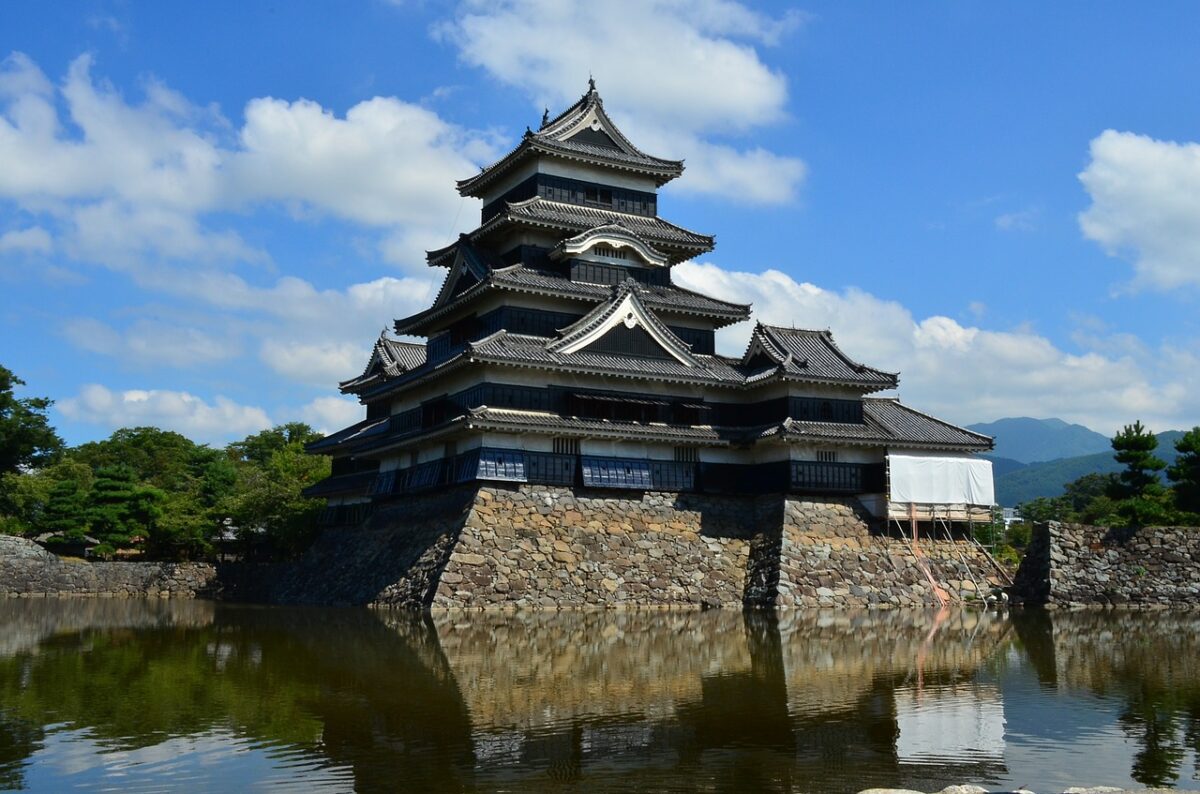
Maruoka-jō, a singular castle in the Japanese landscape
Maruoka Castle has dominated the small town of the same name since the end of the 16th century. Built in 1576, it is often presented as the oldest wooden castle still standing in Japan. Although a major earthquake caused its collapse in the mid-20th century, its reconstruction used a large part of the original materials, which reinforced its architectural authenticity.
Small compared to large fortresses like Himeji or Matsumoto, Maruoka-jō seduces by its raw and functional appearance. Its dark wooden dungeon, placed on a hill, reflects the military aesthetics of the Sengoku era. The steep stairs, the narrow openings and the absence of superfluous ornaments remind us that the castle was above all a defensive structure.
A founding legend: the story of Oshizu
What really distinguishes Maruoka-jō from other Japanese castles is the legend of Oshizu. According to the local account, the construction of the ramparts was marked by repeated collapses. In the face of these difficulties, an extreme solution would have been considered, in line with the beliefs of the time: the Hitobashira, or human pillar, an ancient rite of offering a human life to ensure the stability of a building.
Oshizu, a widow living in poverty with her children, would have accepted this sacrifice in exchange for a promise made by the local lord concerning the future of one of his sons. Once the castle was completed, this promise was never fulfilled. The legend then tells that the spirit of Oshizu, betrayed and forgotten, manifested his anger with abundant rains in the spring, symbolically flooding the moat of the castle. These showers were long called “Oshizu tears”.
Even today, a small commemorative stele recalls this story and invites visitors to reflect rather than fear.
Phantom, myth and popular Japanese culture

Unlike some Western representations, ghost accounts in Japan are more of a memorial and symbolic record than a horror. The spirit of Oshizu is not described as a violent entity, but as a soul marked by injustice. This approach is part of a Japanese vision where places keep track of past human emotions.
Stories of haunted castles are common in Japan, especially in sites linked to conflicts, betrayals or sacrifices. They are often used to convey moral values, to recall excesses of power or to emphasize the weight of unfulfilled commitments. In Maruoka, the legend of Oshizu is an integral part of the castle’s identity and contributes to its singular aura.
Visit Maruoka-jō today
The castle and surrounding park, known as Kasumigajō, offer a peaceful atmosphere throughout the year. The site is particularly appreciated in the spring, when cherry trees in flowers transform the outskirts of the dungeon into a popular place to walk.
The visit of the dungeon allows you to observe the wooden structure, the old construction techniques and the open views of the city. Explanatory panels, accessible even without in-depth knowledge of Japanese history, give keys to understanding the castle and its legend.
In the evening, during certain periods, the site is illuminated. This light reinforces the atmosphere of the place without falling into a frightening setting. For travelers sensitive to folk stories, this night visit remains more contemplative than worrying.
How to integrate Maruoka into a route in Fukui
Maruoka-jō is easily visited during a stay in the Fukui region, often abandoned to the advantage of major tourist attractions. Combining the visit of the castle with other local sites makes it possible to better understand the regional identity, marked by a dense feudal history and a strong relationship to nature.
Access from the large regional stations is easy thanks to local buses, which makes the excursion accessible even without a car. Half a day is usually enough to discover the castle, park and immediate surroundings.
For a well prepared trip, it is relevant to consider the seasons. Spring attracts more Japanese visitors, while autumn offers a quieter atmosphere and significant natural colours.
A cultural reading beyond the sensational
Addressing Maruoka-jō only under the corner of the haunted castle would be reducing. The legend of Oshizu sheds light on ancient practices, unequal social relations and a time when beliefs strongly influenced political and architectural decisions.
For the curious traveller, this visit becomes a way to understand how the Japanese perceive their past, honour forgotten souls and integrate popular narratives into the valorization of their heritage. Maruoka-jō is a perfect example of this ability to preserve a place without clearing the shadow zones.
Visiting Maruoka Castle is a willingness to look at Japanese history in all its complexity, taking the time to listen to local stories and observe the traces left by past generations. A discreet but meaningful step for anyone who wants to discover a less anticipated and more introspective Japan.
If this article has brought you useful information and can help other travellers prepare for their stay, a Google review will always be appreciated. |
|
Discover more from Evasions Rebelles - Travel Planner Japon
Subscribe to get the latest posts sent to your email.