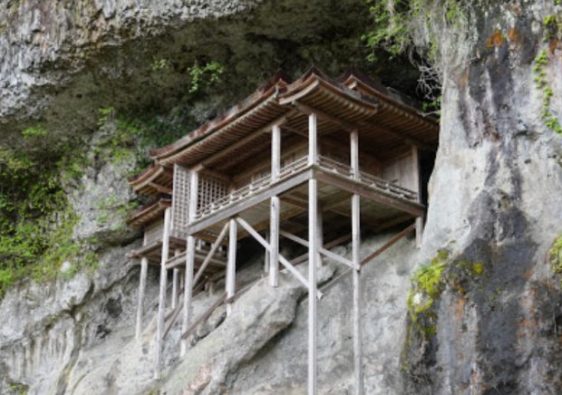
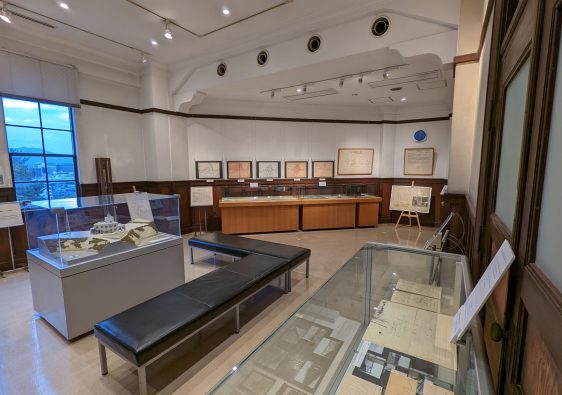
The town of Setouchi is a rural town with a population of about 40,000 and is composed of the cities of Ushimado, Oku and Osafune and is bordered byOkayamaand the city ofBizen. Formerly a small village, Oku is now the center of the city of Setouchi and this is where the city hall, many businesses and the city’s award-winning modern library are located. The beauty of Oku lies in its lush nature and countless hectares of fertile rice fields. Throughout the seasons, the whole city changes colour to the rhythm of different blooms. Hidden in the many hills of Oku are several ancient places of worship where important local festivals take place throughout the year. One of these hills is home to a particularly beautiful shrine and temple that are more than regional in importance, forming part of several major pilgrimage routes in Japan.
Takehisa Yumeji’s childhood home
Takehisa Yumeji is an artist who has created in many fields: a poet, an illustrator of children’s books, a rebel painter, a pioneer, a graphic designer and the developer of a new artistic style called “Taisho Romanticism”. His most famous works are those of women represented in scenes of everyday life. It was in this house that Yumeji was born on 16 September 1884. His family ran his own sake distribution company and also worked on the farm. Yumeji spent the first sixteen years of his life in this magnificent setting. It can probably be said that his hometown, and especially his childhood home, was the origin and most important inspiration of his art. In addition to seeing where he lived, you can also admire many paintings.
Just a few meters away is Yumeji’s recreated workplace, which was originally built in Tokyo but was abandoned and demolished after his death. The mansion was designed by Yumeji himself and is a mix of Japanese and Western architecture, making it one of Yumeji’s masterpieces. Inside, many photos of Yumeji’s life are hung on walls, from his early childhood, his bohemian lifestyle of vagrant artist, his marriage and muses, to his last days.
Takeda Kinosuke’s puppets
Oku is the birthplace of Takeda Kinosuke born Takao Okamoto in 1923. It is famous for contributing to repopularizing the ancient art of Japanese puppetry at Takeda School, a performance group whose roots date back to the mid-17th century. Many of his puppets are currently exposed to the library of the city of Setouchi. To see its fantastic creations come to life, watch one of the monthly performances organized at the library or, for an even more spectacular presentation, attend the Kinosuke festival, which is held every year in August.
Kadota Park
Kadota Kaizuka is the oldest of a settlement in Setouchi. Discovered in 1933 by Kaoru Nagase, the area has become a historic park with life-size house reconstructions to allow visitors to immerse themselves in the Yaoi era and discover life in Japan thousands of years ago.
Ueterasan, Yokeiji Temple
This Buddhist complex was built over 1200 years ago. Many festivals and events take place here throughout the year, making it a very popular place to relax, observe the blooms that follow, pray or picnic. The temple is also known to house a millennium National Treasure: the Yakushi-nyorai statue (Bouddha of medicine and healing), which is shown only twice a year at festivals. Among the remarkable buildings are the Sanju-tu (three-storey pagoda) and the six Shi-in (houses or live monks).
Getting to Setouchi
The town of Setouchi is very easily accessible by train from the city of Okama.
If this article has brought you useful information and can help other travellers prepare for their stay, a Google review will always be appreciated. |
|
Discover more from Evasions Rebelles - Travel Planner Japon
Subscribe to get the latest posts sent to your email.