Temples and shrines in Japan often have unique features that make them memorable. These features include statues of animals that play an important role in local beliefs and traditions. These animals, whether real or represented as sculptures, are often considered as divine messengers, lucky symbols or spiritual protectors. Here is a selection of temples and shrines where animal statues occupy a particular place.

Maneki-neko at Gotokuji Temple in Tokyo
Gotokuji Temple, located in the Setagaya district of Tokyo, is known as the birthplace of the famous maneki-neko, these lucky cat figures. Visitors are greeted by thousands of cat statues, representing a symbol of luck and prosperity. Legend has it that a 17th-century feudal lord, Ii Naotaka, took refuge in this temple after being invited by a cat during a storm. As a sign of gratitude, he had the temple dedicated to his family, and the maneki-neko became a lucky emblem.
The maneki-neko in Gotokuji usually lift the right leg, which symbolizes financial prosperity. An on-site visit offers a unique experience combining spirituality and folklore.
How to get to Gotokuji Temple
The temple is a 5-minute walk from Gotokuji Station.
Foxes at the Toyokawa Inari Tokyo Betsuin Shrine

The Toyokawa Inari shrine, nestled in the heart of Tokyo, is famous for its many fox statues. These figures, symbols of the god Inari, are often represented in various forms and expressions. Foxes, divine messengers of Inari, are associated with agriculture and success. This sanctuary is particularly popular for those wishing to succeed in arts and entertainment.
Visitors can explore the various structures of the sanctuary, where Buddhist and Shinto elements coexist. It is also one of the places of veneration of the seven divinities of chance, offering an atmosphere rich in traditions.
How to get to the shrine Toyokawa Inari Tokyo Betsuin
The sanctuary is a 5-minute walk from Akasaka Mitsuke Station Exit B.
Rabbits at Okazaki Shrine in Kyoto
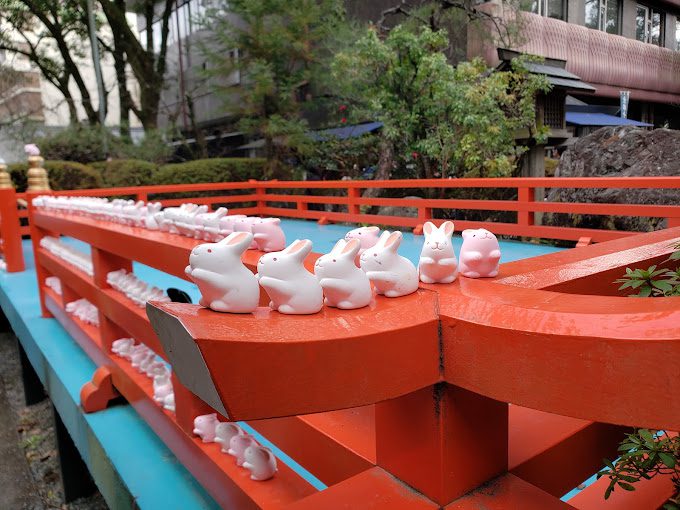
The Okazaki shrine, located east of the famous Heian Jingu in Kyoto, is known for its rabbit statues. The latter, considered divine messengers, symbolize fertility and birth. The sanctuary has thus become a place of pilgrimage for couples seeking to conceive a child and future mothers.
Among the highlights of the visit are the “Kasuzuke Usagi”, a large black rabbit statue. By pouring water on his head and rubbing his belly, visitors hope to get blessings for an easy birth.
How to get to the Okazaki shrine
From Kyoto station, take the Karasuma line to Marutamachi, then bus 204 to Okazaki Jinja Mae stop.
Frogs at Nyoirinji Temple in Ogori
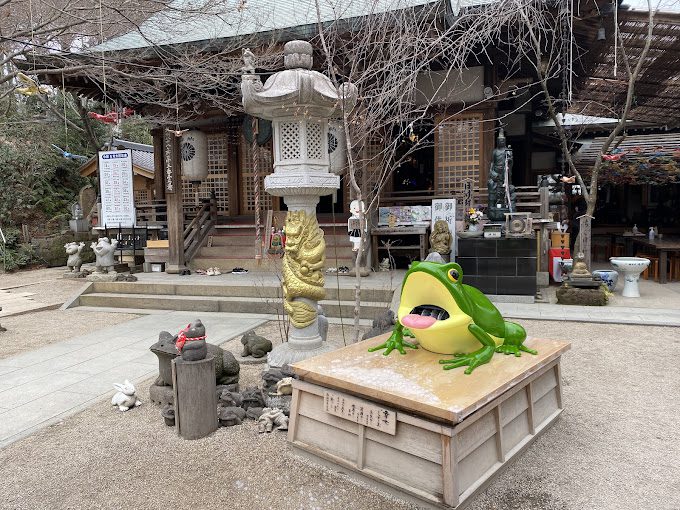
Located in Fukuoka Prefecture, the Nyoirinji Temple, nicknamed “Kaeru-dera” or “Frog Storm”, houses more than 5000 frog figures. This unusual collection began about 25 years ago when the principal priest brought back a small statue of Jade from China. The word “kaeru”, meaning both “grenouille” and “return” in Japanese, inspired the theme of the temple.
Besides frogs, the temple is also famous for its beautiful seasonal landscapes, such as cherry blossoms in spring and hortensias in summer.
How to get to Nyoirinji Temple
The temple is a 15-minute walk from Mitsusawa Station.
Monkeys at Yasaka Koshindo Temple in Kyoto

The Yasaka Koshindo Temple, located in the historic Higashiyama district of Kyoto, is one of Japan’s most colourful temples. Monkeys play a central role as protective symbols. Among the notable representations are the famous monkeys “don’t see, don’t hear, don’t say evil” as well as the kukurizaru, hanging cloth balls where visitors record their wishes.
The temple attracts many visitors for its unique spirituality and vibrant aesthetics.
How to get to Yasaka Koshindo Temple
Take bus #206 from Kyoto station, get off at Kiyomizu-michi stop, then walk 7 minutes.
Animals in Japanese Shrines
Animal statues, ubiquitous in shrines and temples, are often inspired by local legends or popular beliefs. Examples include:
- Cows, often present in tenmangu shrines, are supposed to bring wisdom or heal wounds.
- White snakes symbolize luck and prosperity.
- Mouse, associated with health and happiness, are considered as meeting makers.
- The doves, messengers of the Hachiman shrines, embody peace and protection.
These statues enrich the visitor experience by offering an overview of Japanese traditions. During your next visit, take time to explore the animal symbols of sacred places for a complete cultural immersion.
If this article has brought you useful information and can help other travellers prepare for their stay, a Google review will always be appreciated. |
|
Discover more from Evasions Rebelles - Travel Planner Japon
Subscribe to get the latest posts sent to your email.