
Geisha embody a living art passed from woman to woman in discreet houses in Japan. In Kyoto, Tokyo or Kanazawa, these artists — called geiko or maiko according to their level — perpetuate a tradition of music, dance and codified conversation. Understanding their role requires overcoming clichés: this guide explains how, where and under what conditions you can attend a performance or talk to them today.
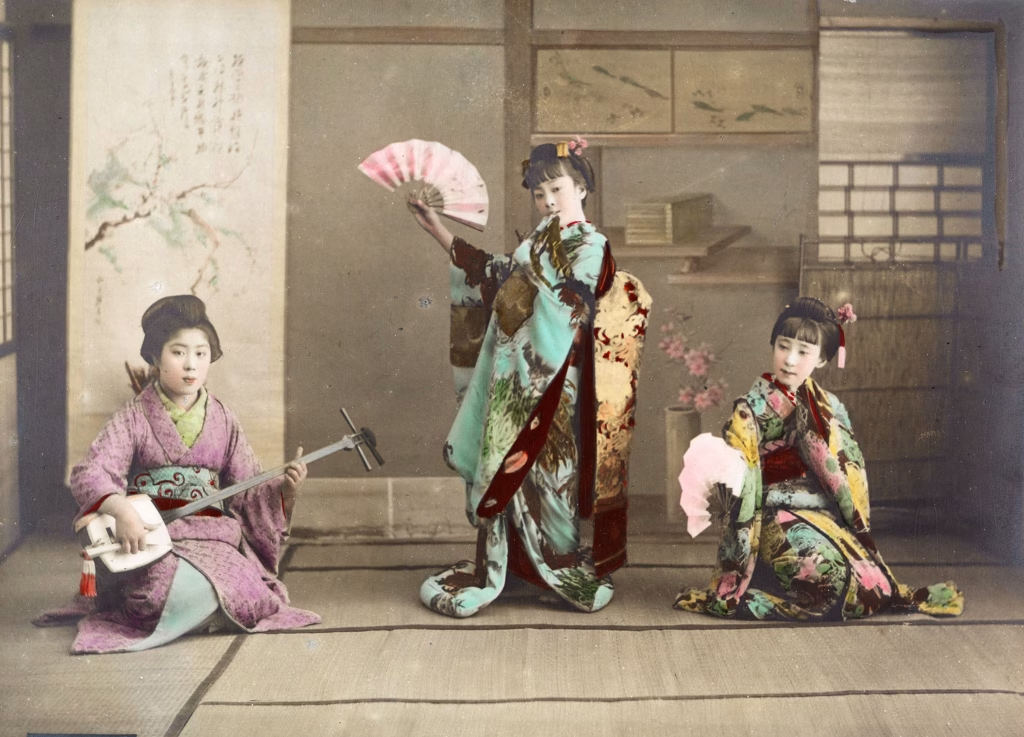
The art of geisha : roles, names, formation
Geisha are professional artists dedicated to traditional dance, shamisen, singing, poetry and service art. In Kyoto, we are talking about geiko ( In Tokyo and other regions, local terms such as hangyoku are used for apprentices. The course often starts around 16 years and lasts several years, with intensive learning of instruments, the language of flowers, ceremonial protocols, and labeling during formal events, meals or ceremonies.
Where to meet geiko and maiko: neighborhoods and opportunities
- Gion (Kyoto): the main quarter. Find the geiko and maiko in the Hanamikoji or Ponto-chō alleys, mainly between 5pm and 7pm, during the desloc.
- Ponto-chō: more discreet, sometimes offers gatherings around ochaya (secret houses).
- Asakusa, Kagurazaka, Shinbashi (Tokyo): the most active during local festivals or cultural demonstrations. Book via kenban or agencies.
- Kanazawa (Higashi-chaya-gai)andKinosaki Onsen (Hyōgo): generally more accessible, some offers include shows or workshops.
- Takayama, Matsuyama, Morioka, Sapporo: ad hoc activities, especially interactive workshops with young apprentices.
How to attend a ritual or performance
Several options:
- Dinner in a ryōtei with geiko/maiko: reservation via agency or upscale hotel. High budget, sometimes 50,000 to 200,000 ¥.
- Coffee tea with maiko: about 10,000 to 30,000 ¥, allow to listen to music, see a dance, exchange around a tea.
- Public shows or festivals: sometimes free or at low prices, offered by maiko at matsuri or cultural events.
- Visit of a kenban or ochaya: guided tours (about 5,000 ¥) allow you to see behind the scenes and understand the trades.
- Make-up workshops or dance/shamisen initiation: proposed by some specialized houses.
Dress and artistic expression: dress codes
- Maiko: kimono with seasonal motifs, obi tied in dashi-musubi, complex hairstyles (nihongami) decorated with kanzashi flowers. Make-up (shiroi) very present, with slit red lips.
- Geiko: more sober kimono, obi tied in drum-musubi, more classic hairstyle, light makeup, enhanced natural complexion.
- Accessories: fans for dance, shamisen instruments, embroidered aprons, tabi and okobo for maiko, zori for geiko.
Label in meeting and cultural respect
- Respect for discreet silence, ceremonial gestures.
- No close photos without asking.
- Classic greetings: tilt the bust.
- Correct outfit: avoid shorts/sports t-shirts, prefer sober clothes.
- Punctuality and politeness required.
- Understand the terms: okosan (
Book a meal or a geisha session: specific steps
- Contact a kenban or local agency.
- Specify: number of participants, duration (often 2 hours), performances (dance, play, music, conversation).
- Make a deposit or deposit.
- Confirm label: shoes to remove, coffee table, absence of strong alcohol.
- Confirmation of an assigned actor (maiko or geiko).
Conservation and renewal of the geisha tradition
- The kenban are the agencies that organize training and reserve artists.
- Women enter learning through a family network or recommendations.
- Municipalities (Kyoto, Tokyo, Kanazawa, Morioka, Matsuyama, Sapporo) support the formation of new apprentices, participate in cultural events.
- International promotion: conferences, student workshops, participation of geisha foreignes (e.g. Asakusa Fiona Graham).
Route suggestions: geisha immersion from 3 to 5 days
- Kyoto (3 days): evening walk in Gion, dinner kaiseki + maiko, tea-coffee, visit kenban, photos in anecdotal recoin geisha.
- Tokyo (2 days): evening in Shinbashi with geisha apprentices, Shamisen workshop, show in Kagurazaka or Asakusa.
- Kanazawa / Kinosaki (2 additional days): exchanges with local geiko, show in ryokan, dance learning.
- Add temples (Kiyomizu, Yasaka), museums (Kenroku-en), baths onsen to complete the traditional experience.
An immersion guided by respect and understanding of geisha codes allows a profound encounter with a little known but essential part of Japanese culture, revealing gestures, sounds and exchanges where the art of refinement is alive.

Si cet article vous a apporté des informations utiles et peut aider d’autres voyageurs à préparer leur séjour, un avis Google en cliquant sur l’image suivante sera toujours apprécié.

Pour une dose de Japon au quotidien, suivez-nous sur Threads
Discover more from Evasions Rebelles - Travel Planner Japon
Subscribe to get the latest posts sent to your email.


