In Sabae, Fukui Prefecture, approximately 96% of Japan’s spectacle mount production is concentrated. The city is one of the three major global hubs of the sector. What few travellers know is that the drop of material from the cutting of frames, intended to be thrown, becomes in the hands of visitors unique jewels. Polishing workshops, secrets of a plastic made from cotton, family itinerary combining dinosaurs and handicrafts: here’s how to turn a day in Fukui into a scientific and creative experience.
Before you leave: what to know
Making an accessory from eyeglass material is a simple but deeply satisfying process: sanding, over and over again, until you get a polished mirror. Three practical rules allow the workshop to be approached calmly.
The first is dust. The sanding releases a thin white powder that settles on clothing and face. It is easily removed by hand, but is embedded in dark or meshed fabrics and remains visible. Better to wear clear, smooth and unfragile clothes.
The second rule touches hands. The small fragments hold firmly between the fingertips during friction against the abrasive paper. Long nails may be sanded or prevented from pressing properly. It is therefore preferable to cut them short before the session.
The third is more fun: we must be wary of the seriousness of the parents. The gradual shift to thinner grains gives a feeling close to the lustering of a body or the polishing of a shoe. Fathers often dive into a silence absorbed, even more than children, and time goes by without seeing it pass.
The secrets of the material
Plastic eyeglass frames are made of a material called cellulose acetate. Unlike ordinary petroleum plastic, it is a bioplastic of natural origin, produced from vegetable fibres such as cotton and wood pulp. This composition explains its softness on the skin, its low propensity to cause allergies and its beautiful translucency. It is an ecological material par excellence: buried in the soil, it decomposes naturally under the action of micro-organisms.
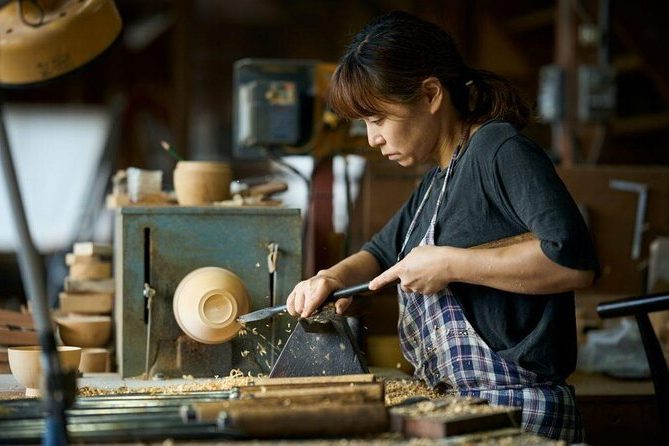
During the workshop, the friction of the abrasive paper releases a slightly sweet and acidic smell, similar to vinegar. This particularity comes from the acetic acid used to treat cotton. An oil-based plastic would never produce such an effect: it is proof of the natural origin of the material. It’s fun to make kids smell during sanding.
In the workshops, polishing is done with abrasive paper and polishing paste. But the real factories in Sabae use a process called gara-ire, or bulge. Mounts are loaded into a huge barrel that looks like a washing machine, with bamboo chips and nut shells, and then left to shove for a whole week. It is an artisanal feat: the power of nature is enough to remove the slightest rough angle.
Choose by age of child
What can be manufactured varies from one establishment to another, but three representative menus are detached.
The first is the collage of mounts, or Megane de Collage, in the form of key chains. Adapted from toddlers to primary school, it consists of assembling colored acetate falls as a puzzle to create an original face or pattern. It is a very popular menu, where children’s imagination is freely expressed.
The second is the eyeglass badge. For school-age children and adults, it is often combined with a factory visit. The finished badge can be pinned on a hat or bag, for a memory that lasts.
The third is the ring. Starting from primary school and for adults, it is a matter of polishing a beautiful marbled material to make it a real jewel. The glittering finish, similar to that of a precious stone, certainly seduces girls and mothers.
Best workshops for families
The Megane Museum is the ideal starting point if you hesitate. This vast establishment traces the history of Sabae’s glasses and allows you to buy the latest models. Its experience workshop is spacious and comfortable, making it the reference address for families with children. The flagship menu, Megane de Collage, costs 2,000 yen and consists of assembling coloured acetate pieces to create a face-shaped keyring. As a puzzle game, it allows to freely represent a favorite character or the face of a family member. The session lasts about sixty minutes and the reservation in advance is preferable, even if the reception without appointment remains possible depending on the available places. On site, parents can seriously try and choose their own glasses in the museum shop, and the giant monument in the shape of glasses outside is the classic place for a photo-remember.
More Jack is for the curious who are looking for a more confidential experience. A mount manufacturer opens its factory to the public. After a guided tour with the machines in operation, we polish a badge in the shape of glasses to his liking. The experience carried out right next to the artisans at work powerfully stimulates the curiosity of fathers and children who love authentic. The session lasts about 90 minutes, including 30 visits and 60 workshops, at a rate of about 2,000 yen. Reservation in advance is mandatory.
KISSO is a beautiful brand of accessories that fully exploits the material of the glasses. It offers a very popular program called KISSO LAND. A coloured acetate ring is chosen, it is constantly punctured with abrasive paper, and a craftsman gives it a radiance similar to that of a precious stone. The session lasts approximately sixty to ninety minutes, starting from 2,200 yen depending on the material, subject to booking. The adjoining shop is perfect for a father looking for a gift for the mother. Bracelet menus are sometimes offered in addition to rings.
One-day route to Fukui
Fukui’s classical itinerary combines the prefectural museum of the dinosaurs of Katsuyama and Sabae: the enthusiasm of the children does not fall back from the day. This program involves driving.
At 9 a.m., arrive at the prefectural museum of dinosaurs in Fukui, Katsuyama. Robots of moving dinosaurs and fossil excavation experiments are a source of tremendous enthusiasm. At noon, leave the museum and take the road to Sabae, about an hour’s drive. At 1 p.m., have lunch in a restaurant near Sabae and taste the local specialty, the katsu don sauce. At 2:30 p.m., take part in the Megane Museum’s keychain workshop: check the sweet smell during sanding and let yourself be absorbed by white dust. At 4 p.m., browse the museum shop and KISSO for souvenirs, then head back on the road.
To do and eat after the experience
The prefectural museum of the dinosaurs of Fukui, in Katsuyama, is about an hour’s drive from Sabae, but it is one of the largest dinosaur museums in the world and is a must during a stay in Fukui. With its realistic tyrannosis robots and exhibitions where you can touch real fossils, it is a dream space for children. Combining the fossil excavation and glass polishing experience on the same day, we cover both Fukui’s history and its manufacturing culture.
On the gastronomy side, the Fukui lunch scene is famous for the sobas Echizen oroshi, served with grated daikon, but their flavor may seem a little bright for children. That’s why the katsu don sauce, a comfort dish from Fukui, is recommended: thin, tender cutlets are soaked in a special sweet and acidic sauce. Well-known restaurants like Yo-roppa-ken have branches near Sabae, and small as well as large finish their plates.
Recommended accommodation in Fukui
The museum of the dinosaurs of Katsuyama and the experience of Sabae’s glasses form the most powerful combination of Fukui, but the distance between the two sites exhausts adults and children if everything is done in a single day. The best is to plan a night on site and enjoy the seafood and hot springs of Fukui in a stay of two days and one night, the ideal formula to see everything without getting too tired.
In the Katsuyama region, a 10-minute drive from the dinosaur museum, JAM Fukui Katsuyama Tokyu Hotel and Resorts (formerly Hotel Harvest Ski Jam Katsuyama) is a resort hotel in the privileged location for a family trip to Fukui. It offers rooms on the theme of dinosaurs and experiences of fossil excavations in its enclosure: the whole hotel is an entertainment space designed for children. A large natural hot spring bath, Hoenji’s onsen, and a varied Fukui buffet also satisfy parents.
In the area of Awara Onsen, renowned for crab and seafood, the Awara Onsen Grandia Housen is a great hostel very popular with families. Japanese rooms on the floor in tatami allow children to ride safely, and some have a private hot spring bath in the open air. There are fresh products from Hokuriku, including the Echizen crab in winter, and easy access to Sabae makes it a perfect base for a quality family stay.

Maintain and shine its accessory
The acetate accessory that you have carefully polished requires a special maintenance, as the material is of natural origin. Wipe the skin’s sweat and oils regularly: over time, the surface can bleach and lose its shine. A soft cloth, like a glasses cloth, is enough for quick cleaning.
When the radiance fades, it is possible to restore it. Unlike plastic that receives only a surface coating, acetate is made of the same material over its entire thickness. Applying a polishing paste for plastic and polishing restores the shine of the first day, as many times as necessary. Once or twice a year, you can organize a small parent-child contest to find out who will get the best brilliant. The joy of maintaining an object and making it live is an education in its own right.
A rough plastic fragment, promised in the trash, turns under the abrasive paper into an object with the glare of precious stone. Falls cut into glass holes, destined for scrap, come to life in the hands of visitors and become unique keyrings and jewels. This overcycling experience is a wonderful activity around sustainable development goals, which gives value to things. During a visit to Fukui, cover yourself with white dust in the family and enjoy both the skill of the artisans and the simple pleasure of polishing.
If this article has brought you useful information and can help other travellers prepare for their stay, a Google review will always be appreciated. |
|
Frequently asked questions about the experience of glasses in Sabae
How long does it take for the workshop and visit?
Count about sixty minutes for a keychain workshop at the Megane Museum, ninety minutes for the factory visit followed by the badge at Plus Jack, and sixty to ninety minutes for the ring at KISSO. If you add the museum visit and the choice of glasses in the shop, plan a half day on site. For a full day in Fukui, set off on eight to nine hours of availability, including travel from the dinosaur museum, lunch and shopping. The rhythm is dense but suitable for children from three to four years for bonding, and from six to seven years for polishing.
What budget for a family?
Workshops cost between 2,000 and 2,200 yen per person, or about 8,000 to 9,000 yen per family of four. Add 1,500 to 2,500 yen per adult for lunch, and 1,000 to 2,000 yen for additional souvenirs and badges. The entrance to the Fukui dinosaur museum costs about 730 yen per adult and 260 yen per child in the primary or secondary school. For a full day including rental car transportation, there are 25,000 to 35,000 yen for four people, excluding accommodation. Rates remain reasonable in terms of the duration and quality of the experience.
Should we book in advance?
Reservations are highly recommended for all workshops, especially on weekends and during school holidays. At the Megane Museum, an appointment-free reception is possible depending on the available seats, but the morning and early afternoon slots often show full coverage in the high season. At Plus Jack and KISSO, advance booking is mandatory, with a recommended delay of two to four weeks. In July and August, as well as during the Golden Week from late April to early May, it sometimes takes a month in advance. Booking also allows you to choose the schedule that suits the visit of the dinosaur museum.
How to get to Sabae from the big cities?
Sabae is easily reached by train from Kyoto or Osaka. From Kyoto, take the JR Hokuriku Shinkansen line or the Thunderbird line to Fukui, then a local train or bus to Sabae, for a total journey of about two hours to two thirty hours. From Tokyo, count three hours thirty to four hours via the Hokuriku Shinkansen to Fukui, then a local correspondence. The JR Pass covers part of the journey, but the Shinkansen Hokuriku is not always included according to the chosen pass. By car, Sabae is about an hour from Fukui and two thirty hours from Kanazawa. A rental car costs about 7,000 to 9,000 yen a day.
Is the workshop suitable for young children and unmanual people?
Yes, the activity is accessible from an early age for the bonding of keyrings, which does not require blade or dangerous tool. The main work is friction with abrasive paper, which is suitable for both toddlers and primary school children. For polishing rings and badges, some patience is useful, but artisans accompany each step. Unmanual people still get a nice result, because the material itself is coloured and the finish depends mainly on the time spent polishing. Plan clear clothes and short nails, and let children handle under supervision.
What if the accessory loses its shine after a few months?
All you have to do is polish it. Acetate is a full material, not a simple coating, which restores the radiance as many times as necessary. Apply a small amount of plastic polishing paste to a soft cloth, then polish in circular movements for a few minutes. Avoid too aggressive abrasive products and keep the accessory away from direct sunlight. Maintenance twice a year is enough to keep a shine close to the new. This particularity distinguishes acetate from ordinary plastic and prolongs the life of the object, in a sustainable approach.
Discover more from Evasions Rebelles - Travel Planner Japon
Subscribe to get the latest posts sent to your email.