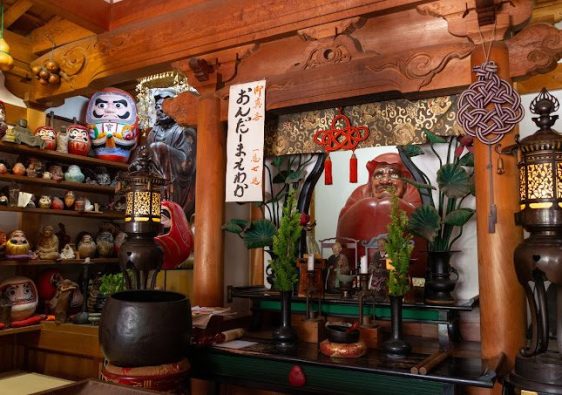
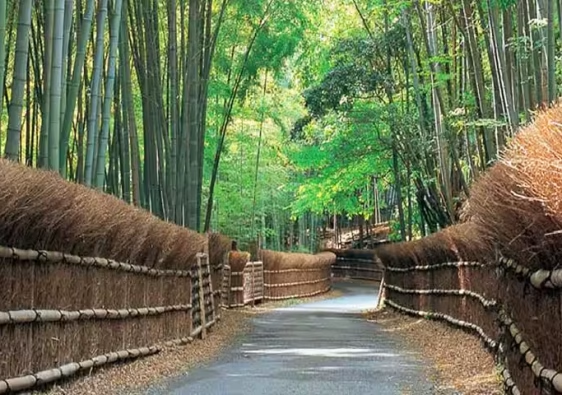
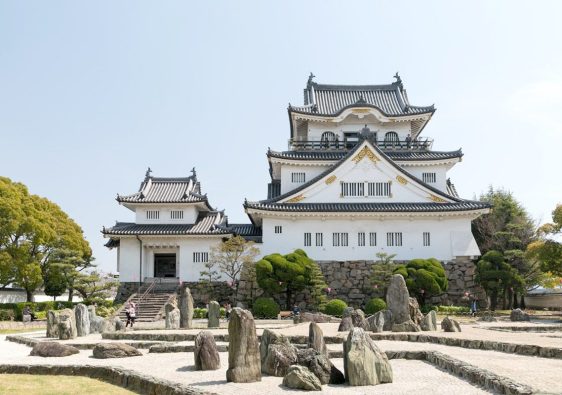
Perched on the wooded slopes of Mount Otowa, in the Higashiyama district, Kiyomizu-dera is one of the most emblematic temples of Kyoto. Founded in 780, this high Buddhist place attracts millions of visitors every year who come to admire its impressive architecture, gather in front of the statue of Kannon, or simply contemplate the city from its famous suspended veranda.
History and origin of the temple
The temple Kiyomizu-dera was founded in the eighth century by the monk Enchin, following a vision of the god Kannon, figure of compassion in Buddhism. The name of the temple, “Kiyomizu”, means “pure water”, with reference to the Otowa waterfall that flows at the foot of the main building. Although the complex has suffered several fires over the centuries, the present building dates back to 1633, built under the aegis of the Tokugawa Iemitsu Shogun.
This place of worship is affiliated with the Kita-Hosso Buddhist School, but it welcomes practitioners of various traditions. Kiyomizu-dera is also designated as a “Kannon Reijo”, a sacred sanctuary dedicated to the goddess Kannon, honoured for her universal compassion.
The main pavilion and its overhanging veranda
One of the most remarkable elements of Kiyomizu-dera is its main pavilion (hondō), built on a wood platform suspended 13 metres above the vacuum. Supported by 139 pillars without the use of nails, this impressive structure offers panoramic views of the city of Kyoto. This spectacular lookout is often associated with the Japanese expression “jumping from the scene in Kiyomizu”, equivalent to “tossing in the water”.
Inside, the main sanctuary houses a representation of Kannon with eleven faces and forty-two arms, a venerated statue but rarely exposed to the public.
The Otowa waterfall and its virtues
At the foot of the main pavilion flows the Otowa waterfall, divided into three water fillets that visitors can collect in a metal ladle. Drinking this water is supposed to bring specific benefits: academic success, longevity, and health. It is wrong to drink from all sources at once, which would be perceived as greed.
This practice attracts a large number of pilgrims, especially during periods of academic examination or significant life changes.
The Shrine of Jishu-jinja: Love and Destiny
Within the complex is also the Shrine Jishu-jinja, dedicated to the divinity of love relations, “Kuninushi”. This small sanctuary is famous for its two love stones, placed about 18 meters from one another. Whoever manages to walk his eyes closed between these two stones would find true love.
Many visitors, especially young people, come to express sentimental wishes or acquire talismans specific to personal relationships.
Special seasons and events
Kiyomizu-dera is renowned for the beauty of its landscapes in all seasons. Spring cherry blossoms and autumn red maples attract considerable crowds. The temple also organizes special night illuminations during certain periods of the year, especially for the seasons of Hanami and Momiji. These light-ups offer a unique atmosphere, although attendance is very high during these events.
The site remains open all year round, with a particularly serene atmosphere during the winter months, when snow covers the roofs and surrounding trails.
Practical information for the visit
Kiyomizu-dera is a 20-minute walk from Kiyomizu-Gojo (Keihan line) or a 10-minute walk from the Gojo-zaka bus stop. The ascent to the temple is made by the historic streets of Sannenzaka and Ninenzaka, marked by traditional shops, confectionery stalls, and artisanal workshops.
Entry is paid (500 yen depending on the seasons for the main temple, extra costs depending on buildings and treasures), with variable opening times: usually from 6am to 6pm, sometimes extended during special illuminations. The tripod is prohibited, and it is recommended to visit early morning or late day to avoid crowds.
Spirituality and Recollection
Beyond the tourist aspect, Kiyomizu-dera retains an active religious function. Visitors are invited to gather in front of Kannon’s statue, join hands in prayer, and reflect on their deep intentions. The site focuses on gratitude: to life, loved ones, and the world around us. It is a place where spirituality takes a simple but profound form.
At the crossroads of architectural heritage, religious symbolism and human emotions, Kiyomizu-dera remains an essential passage for anyone wishing to understand the soul of Kyoto. Taking the time to explore its buildings, to feel the quiet strength of its landscapes, and to connect to the beliefs that inhabit it, each visitor returns with a striking inner experience.
If this article has brought you useful information and can help other travellers prepare for their stay, a Google review will always be appreciated. |
|
Discover more from Evasions Rebelles - Travel Planner Japon
Subscribe to get the latest posts sent to your email.