In Kyoto, a city deeply linked to decorative arts and textile know-how, the Kyoto Shibori Museum offers an accurate and accessible dive into one of Japan’s oldest dyeing arts. Dedicated exclusively to shibori, this museum space allows you to understand the evolution of this millennium technique, to appreciate its aesthetic richness and to live a concrete experience through practical workshops. For a traveller who wants to go beyond iconic sites and discover Japanese crafts in a lively way, this museum is a particularly relevant step.
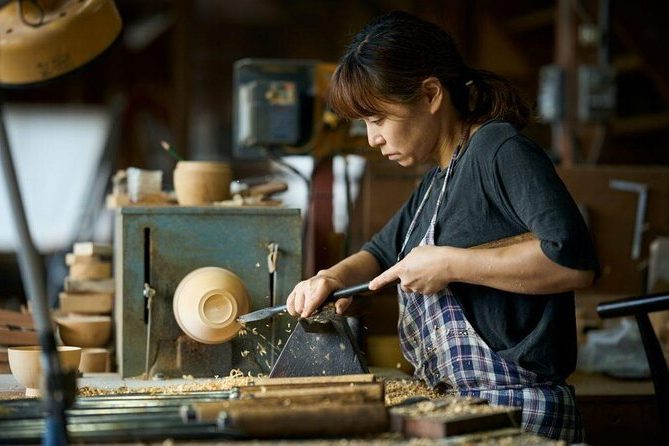
Shibori, a dyeing technique with ancient roots
Shibori is often considered the oldest dyeing technique in Japan. Its origin dates back to about thirteen centuries, when textiles were already central to daily, religious and social life. The principle is to fold, tie, compress or sew the fabric before dyeing, in order to create motifs by reserve.
Unlike an impression or paint applied on the surface, the shibori plays with the material itself. Each gesture influences the final result, making each piece unique. Historically, this technique was mainly used for kimonos, but also for accessories, furniture fabrics and everyday objects.
A unique museum in Japan
The Kyoto Shibori Museum is the only museum in the country entirely dedicated to this textile art. His approach is both educational and aesthetic. The pieces exhibited, made by contemporary artisans, can evoke pictorial works as the complexity of the motifs and the depth of the colours are marked.
The temporary exhibitions, renewed regularly, allow to discover different expressions of shibori, from the most classic to modern interpretations. This alternation offers an evolutionary look at the discipline, highlighting the ability of this craft to adapt to current uses, especially in fashion and accessories.
Understanding gestures and techniques
The museum places great emphasis on understanding processes. Videos detail the different manufacturing stages, from fabric preparation to final drying. This visual approach allows you to grasp the required thoroughness and patience, even for seemingly simple reasons.
Among the techniques highlighted are the sekka shibori, recognizable by its geometrical motifs, the shibori-shime which uses planks to create net reserves, or the kyo-arashi shibori, characterized by dynamic lines evoking movement. Each reflects an aesthetic sensitivity unique to Kyoto and its textile history.
Workshops accessible to visitors
One of the great assets of the Kyoto Shibori Museum is its practical workshops. Several formulas allow visitors to learn about shibori dyeing, even without prior experience. The scarve workshops are among the most popular and are an ideal activity during a stay in Kyoto.
Guided by specialists, the participants discover the basics of the chosen technique, produce their own piece and leave with their creation on the same day. This concrete dimension turns the visit into a tangible memory, much more personal than a simple item purchased in a shop.
For travellers looking for a more technical experience, an advanced workshop around fukusa dyeing allows them to approach more complex patterns, inspired by traditional Kyoto methods.
Shibori today, between heritage and contemporary creation
While the shibori remains deeply rooted in the history of the kimono, it is now experiencing renewed international interest. Scarves, stoles and accessories dyed according to these methods seduce an audience sensitive to the authenticity and craftsmanship of objects.
The museum illustrates this evolution by exhibiting works that go beyond the dress frame. Some pieces are close to wall art or textile installation, demonstrating that shibori is not frozen but continues to evolve in contact with contemporary designers.
Practical tips for integrating the visit into a stay in Kyoto
The Kyoto Shibori Museum is easily part of a cultural itinerary focused on crafts and traditional arts. His visit does not require a full half-day, which allows him to associate with other discoveries in the same area of the city.
To fully enjoy the workshops, it is advisable to schedule the visit at the beginning of the day or check the available slots in advance. Workshops are an excellent activity during a couple or small group stay, but are also accessible to solo travellers.
The visit makes sense for those who are interested in textiles, design, fashion or more widely Japanese craftsmanship, often invisible during a first trip.
A sensitive approach to Japanese culture
Beyond the technique, the Kyoto Shibori Museum captures a more intimate facet of Japanese culture. The relationship to time, to the repetition of the gesture and to the acceptance of the unexpected is reflected in each exhibit.
This sensitive approach perfectly complements the discovery of Kyoto’s historic temples, gardens and neighbourhoods, offering a more concrete reading of local artisanal creativity.
The Kyoto Shibori Museum offers more than just an exhibition. He invites to understand an ancient art through observation, experimentation and dialogue with matter. For a stay in Kyoto enriched by authentic cultural encounters and know-how, this visit is an educational and memorable experience.
If this article has brought you useful information and can help other travellers prepare for their stay, a Google review will always be appreciated. |
|
Discover more from Evasions Rebelles - Travel Planner Japon
Subscribe to get the latest posts sent to your email.