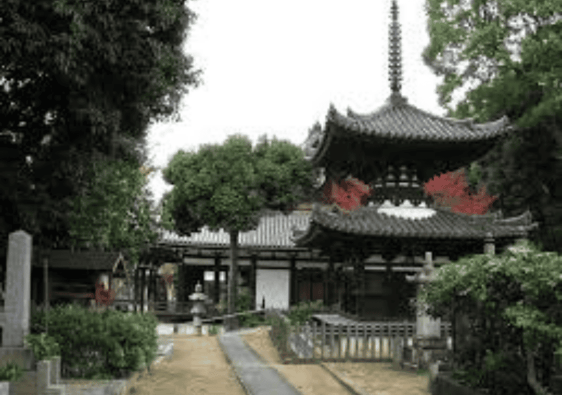
The Ninna-ji Temple is one of the most emblematic Buddhist complexes in Kyoto. A UNESCO World Heritage Site, it combines imperial history, refined religious architecture and serene atmospheres. Located on the Kinukake-no-michi road, this temple remains less frequented than its more famous neighbours, offering a soothing cultural tour and rich in discoveries.
A temple founded by the imperial lineage
Ninna-ji was erected in 888 at the initiative of Emperor Koko, but it was his son, Emperor Uda, who finished the construction and made it his residence after his abdication. As the first imperial monk to direct the temple, he established the tradition of “Monzeki temples” where only members of the imperial family could be officers. This rare feature gives Ninna-ji a major religious and political status in Japan’s history.
An architecture inherited from the imperial palace
The present complex dates largely from the seventeenth century, after being destroyed during the Onin War (1467-1477). Thanks to the support of Tokugawa Shogunate, several buildings were rebuilt, some transferred directly from the Imperial Palace in Kyoto. It includes the Goten, former residence of the chief priest, built according to the principles of Shinden style: curved cedar roofs, white plaster walls, and large aligned tatamis.
The architectural wonders of the Ninna-ji
The visit begins with the majestic Niomon door, guarded by the statues Nio Agyo and Ungyo, protective symbols. Then came the Kondo (main hall), national treasure, and the Miedo, sanctuary dedicated to Emperor Uda, both classified as important cultural property. The five-storey pagoda (Gojunoto), visible from the interior gardens, reaches 36 meters high and remains one of the few visible from inside the temple itself.
Two gardens with contrasting atmospheres
The Nantei dry garden, accessible from the covered corridors of the Goten, spreads a sea of ragged gravels punctuated with Japanese pines. In the back, the Hokutei garden straddles a pond and a small waterfall, evoking the quietness of Buddhist contemplation. This duality – between dry minimalism and wet luxuriance – allows you to better understand the aesthetic sensibilities of classical Japan.
The Reihokan Museum in Ninna-ji: an unknown treasure
The Reihokan Museum retains major works, including the Amitabha Triad dating from the foundation of the temple. Sculptures, painted rolls, ritual objects and ancient documents are presented in a seasonal rotation, which allows to deepen the understanding of Shingon esoteric Buddhism practiced in Ninna-ji.
Ninna-ji and his miniature pilgrimage to Shikoku
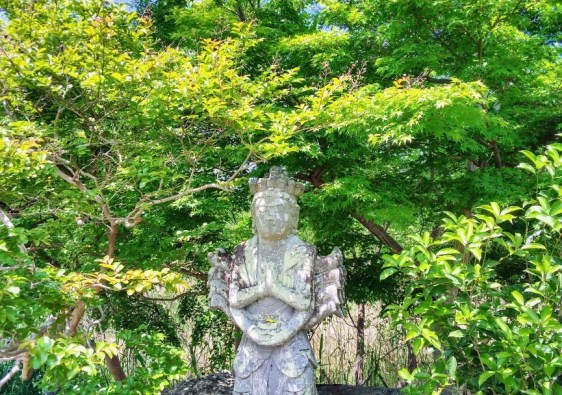
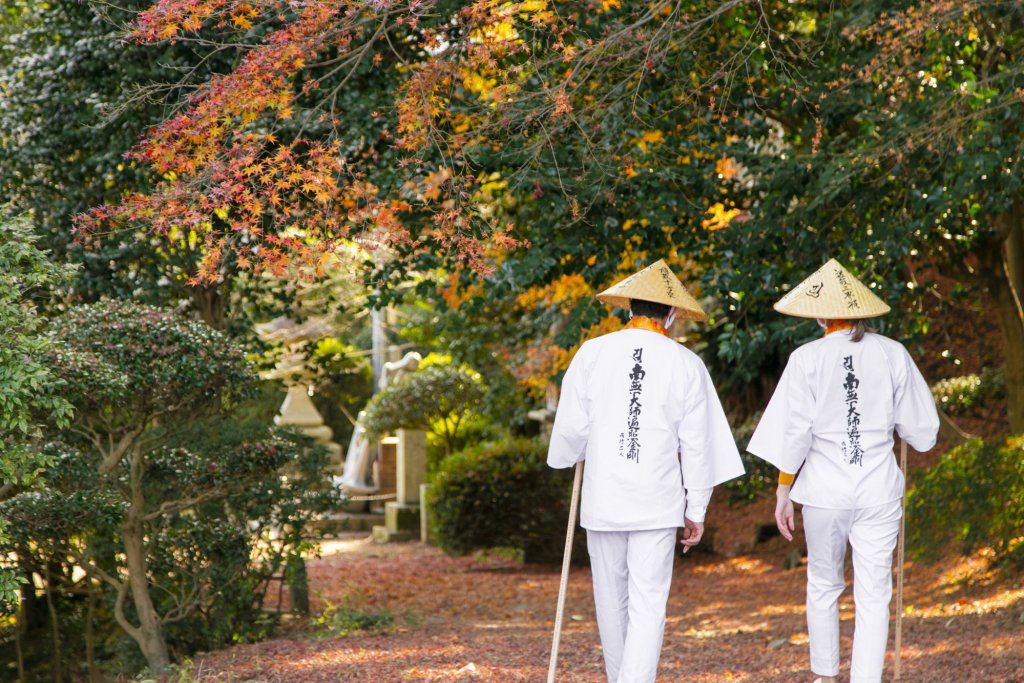
Ninna-ji offers a symbolic circuit of the 88 temples of Shikoku, located in the mountain at the back of the complex. Called Joju-san Omuro, this miniature journey is particularly popular among pilgrims who cannot undertake the true journey. It offers a spiritual experience accessible in a few hours.
Omuro-zakura cherry trees: the latest bloom in Kyoto
Ninna-ji is famous for its Omuro-zakura cherry trees, dense flowers and late flowering. These trees, lower than traditional cherry trees, allow direct immersion in flowering. The park welcomes many visitors from mid to late April, when the majority of Kyoto cherry trees have already lost their flowers.
A peaceful stop on the Kinukake-no-michi road
The temple is ideally located close to the famous Golden Pavilion (Kinkaku-ji) and Ryan-ji Temple. Less crowded than these two sites, it is a quiet alternative, especially outside the sakura season. It is possible to pair the visits in one day, by using the Keifuku Kitano line to Omuro-Ninnaji station.
Practical tips for the visit
- Access: 3 minutes walk from Omuro-Ninnaji station (Keifuku Kitano line)
- Hours: usually from 9am to 5pm (last entry at 4:30pm)
- Rates: between 500 and 800 yen depending on the spaces visited (Goten, Reihokan…)
- Recommended seasonApril for cherry trees, autumn for maple trees
- Visit time: about 1h30 to 2h (more if you explore the circuit of 88 temples)
- Equipment: toilet, vending machines, souvenir shop
Exploring the Ninna-ji Temple provides a better understanding of the fusion between imperial culture and Japanese Buddhism. This soothing place, both sacred and historic, offers a valuable perspective on the spiritual refinement of the Heian era. Whether it is for its gardens, ancient buildings or serene atmosphere, Ninna-ji remains a must for travellers wishing to discover a deeper Kyoto.
If this article has brought you useful information and can help other travellers prepare for their stay, a Google review will always be appreciated. |
|
Discover more from Evasions Rebelles - Travel Planner Japon
Subscribe to get the latest posts sent to your email.