
Takamatsu, is the capital of Kagawa Prefecture located east of Shikoku Island, facing the inland sea. It was a castle town of the Tokugawa family from 1642 to 1868. A ferry was opened in 1910 between Takamatsu and Uno in Okayama Prefecture, connecting the city with Honshu Island. The subsequent extension of the railway lines and the concentration of traffic in Takamatsu made the city the administrative, economic and cultural center of Shikoku. The city’s industries include the production of machinery, tools, pulp, paper, food products and furniture. Today, it is best known for its park, the Ritsurin, its castle, but has many surprises like the Shikoku mura or Mount Yashima.

Ritsurin koen

The design of the park began in 1925 under the governance of Daimyō Ikoma Takatoshi and has ceased to evolve over the generations that followed with several governors who continued to expand and embellish it by adding several ponds among others. The park even served as a residence for the Matsudaira clan for more than two centuries before becoming a public garden in 1875.
The park is 75 hectares wide and can be covered in one or two hours depending on the course followed and the time you choose to spend.
Entry costs 410 yen.
Tamamo Castle
Takamatsu Castle, also known as Tamamo Castle, was built in 1590 on the coast of the inland sea of Seto. It is one of the few Japanese castles built along a seafront, surrounded by saltwater moats that come directly from the sea. The Ikoma clan ruled from the castle for 54 years before their fief was given to the Matsudaira clan, relatives of the Tokugawa shogun, who kept the area for the rest of the Edo period.
Today, there are only ruins left and it is true that the visit to the park seems a bit dull after that of the Ritsurin.
Entry costs 200 yen.
Sunport Takamatsu
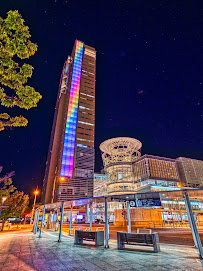
Sunport Takamatsu is the name of the recently renovated business and shopping district around Takamatsu JR station and Takamatsu port, not far from Takamatsu Castle and the railway station.
The port of Takamatsu was the main entry point of Shikoku until the opening of the Seto Ohashi Bridge in 1988. Today, the port continues to offer ferry connections to several nearby islands, including Shodoshima, Naoshima, Megijima and Ogijima.
Sunport Takamatsu’s tallest building, the Symbol Tower, is a 30-story office building with the Maritime Plaza Mall in the lower floors and several fine restaurants in the upper floors.
Shikoku mura of Takamatsu

Shikoku-Mura, meaning Shikoku Village, is an open-air museum at the foot of Mount Yashima for which more than 30 traditional buildings, structures and properties from all over Shikoku have been moved to Takamatsu to preserve and display them.
You will even find the impressive Kabuki theatre which occasionally hosts shows in summer.
Mount Yashima
Yashima is a flat mountain just outside the city centre of Takamatsu. It was the site of a major battle of the 12th century during the Gempei war between the Taira and Minamoto clans. Here, the Tairas were defeated in the final battle.
Shishi no reigan
The Shishi no Reigan viewpoint on Mount Yashima is an observation platform offering stunning views of the city of Takamatsu and the inland sea of Seto, including Ogijima and Megijima. Under the observation platform is a rock that resembles a lion (shishi), roaring by the sea. Here you can also practice kawarake-nage, throw it small pieces of faience to wish good luck and keep the bad spirits away.
Yashima ji

Near the resting area of the summit is the Yashima temple, the 84th of the 88 temples of the Shikoku pilgrimage. In addition to a number of buildings, each in a different era, the temple has a modern museum that exhibits artifacts from Yashima’s history.
Yakuriji Temple and funicular
The Yakuriji Temple, the 85th sacred place of the Shikoku Henro pilgrimage, is close to the top of Mount Goken (375 meters), and it consists of five huge peaks that exceed the earth like swords. Mount Goken once had five peaks, but the eastern peak collapsed during the great earthquake of 1706.
This temple was created in 829 when Kobo Daishi came to these mountains to practice Gumonjiho, an ascetic practice supposed to give an excellent memory. At that time, five swords fell from the sky and the deity of Mount Zao Gongen appeared with the revelation that “this mountain will be a sacred place of Buddhism”. Kukai then buried the swords to keep them safe, and carved an image of Dainichi Nyorai and named these mountains Mount Goken (five swords).
The temple at the time was called Yakunidera (temple of the eight lands), as eight different provinces could be seen in all directions from the top. Another story relates that Kobo Daishi planted 8 chestnut trees before going to study in China and found budding stems when he returned. The name Yakujiri means the temple of the eight cataignes.
Mount Goken has been a religious training centre since Antiquity, today Chujobo Hall, devotes Chujobo, one of the three best tengu (gendious creatures in the long nose) in Sanuki.
Megijima and cave Onigashima
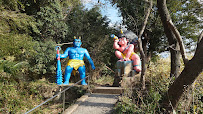
About 4 km from Takamatsu, the island of Megijima meaning “the female tree island”, is also nicknamed Ongashima and translates as “the demon island”. Indeed, it is said that this island is the nest of demons, with a cave 400 meters long that was actually dug by man in the year 100 BC. Not far from the summit of Mount Wasigamin, the island appears in the “Momotaro Legend”.
Takamatsu is a stop or spend a weekend when discoveringShikoku.
Discover more from Evasions Rebelles - Travel Planner Japon
Subscribe to get the latest posts sent to your email.


