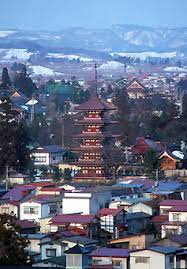
Located half an hour fromSendaiMatsushima is famous for its bay, dotted with numerous islets covered with pine trees and classified for centuries among the three most picturesque views of Japan. The small town is also known for Zuiganji, one of the most important Zen temples in the Tohoku region.

Matsushima Bay
Matsushima Bay is known for its picturesque beauty as one of the “three most picturesque sights in Japan”. 260 small pine-covered islands float in the emerald waters of the bay, a view that has remained unchanged for centuries.
Entsuin
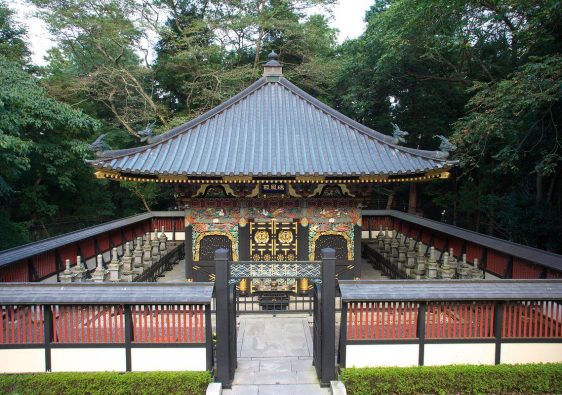
The Entsuin temple houses the mausoleum of the grandson of the samurai sovereign Date Masamune, mysteriously deceased at the age of 19. It includes beautiful moss gardens as well as a rock garden that represents the islands of Matsushima Bay.
Entry costs 300 yen.
Zuiganji
Zuiganji Temple, a national treasure and important cultural property, is one of the most important Zen Buddhist temples in northern Japan. It was originally created in 828 AD by the legendary priest Jikaku Daishi who also founded temples in Hiraizumi and Yamadera (city of Yamagata).
The temple as we see it today was rebuilt by the Samurai sovereign Date Masamune in 1609 as a family temple. As Zuiganji was built at the end of a long period of civil war, it has features that are normally seen only in castles, including a watchtower and “nighting floors”, an anti-intrusion alarm system that consists of a kind of mobile floor making noise when it moves. .
Unusual for a temple, Zuiganji is surrounded by small caves where once lived and prayed monks, as well as an alley lined with cedars.
The entrance costs 700 yen and includes the treasures of the temple museum, including the armor of Date Masamune. It is recommended that opening times vary according to season. The temple usually closes early enough.
Kanrantei
This tea house of the reigning Date family once served samurai, princesses and royal guests. Today, everyone can enter Kanrantei and enjoy matcha tea and pastries while admiring the undulating waters of Matsushima Bay.
In the fall, Kanrantei offers evening schedules where you can enjoy the cool evening breeze and the full moon that rises on Matsushima Bay.
Entrance to the compound costs 200 yen, it will be necessary to provide a supplement if you want to enjoy a matcha tea.
Godaido
With its privileged location overlooking Matsushima Bay, Godaido is a must-see symbol of the city. It was founded in 807. The current building was rebuilt by Date Masamune in 1604. It bears the name of the five Buddhas of wisdom found there. The Buddhas inside Godaido are only shown once every 33 years at a special ceremony.
Unusual red bridges lead to the temple with spaces between the boards, it is said that if you stumble, you are not yet ready to reach the temple.
Godaido’s grounds are free of access but close in the evening.
To Matsushima
Two train lines go to Matsushima from Sendai station, the JR Tohoku line and the JR Senseki line. We recommend the line JR Senseki (about 40 minutes and 420 yen to go). With the JR Senseki line, you will arrive at the Matsushima-Kaigan station, located about 10 minutes walk from the main tourist attractions.
If this article has brought you useful information and can help other travellers prepare for their stay, a Google review will always be appreciated. |
|
Discover more from Evasions Rebelles - Travel Planner Japon
Subscribe to get the latest posts sent to your email.