The pilgrimage of the 34 Kannon of Chichibu is a unique route in Japan, allowing to visit on foot a set of Buddhist temples spread out in a peaceful valley of Saitama Prefecture. Accessible from Tokyo, this 100-kilometre journey invites you to discover an unknown aspect of spiritual Japan, between nature, history and recollection.
Origin of the Chichibu pilgrimage
The pilgrimage of Chichibu, known asChichibu Sanjūyon KannonOne of the three great devotional circuits dedicated to Kannon, the bodhisattva of compassion, is one of them. The other two circuits are those of Saigoku and Bandō, which each have 33 temples and cover several prefectures. The Chichibu pilgrimage, which is more modest in distance but equally significant, was designed to complete these two routes and reach the symbolic figure of 100 sacred places (Nihon Hyakku Kannon).
Historically, this circuit appeared in Kamakura or shortly after, probably in the 13th century. At a time when travel was restricted, he offered local access to an intense spiritual approach to the people of the Edo region (formerly Tokyo). Today, it remains one of the only pilgrimages of this scale that can be carried out on foot in a few days, without leaving a single municipality.
Where is the pilgrimage?
The entire circuit is located in the Chichibu mountain basin, west of Saitama Prefecture. Twenty-five temples are located in the city of Chichibu itself, six in the neighbouring municipality of Yokoze, two in Ogano, and the last in Minano.
The departure is usually from Temple No. 1, Shimanbu-ji, near downtown Chichibu. The route forms a large loop through the surrounding valleys and hills. It is possible to divide the route according to daily stages according to its rhythm, or to combine walking and local public transport for those with less time.
Why 34 temples?
Traditionally, the pilgrimages dedicated to Kannon have 33 sites, corresponding to the 33 forms in which this bodhisattva is supposed to appear to save beings. But in Chichibu, an additional temple was integrated, probably in the 15th or 16th century, with the aim of enabling pilgrims to reach a total of 100 temples by combining the circuits of Saigoku, Bandō and Chichibu. This symbolic number, strongly associated with perfection and completion in Buddhism, strengthened the attractiveness of the circuit.
List of temples and Map of the pilgrimage
The pilgrimage covers about 100 kilometres, making it a feasible route in 4 to 6 days of walking, depending on the physical condition and the time allowed to each temple. He started in the foothills east of Chichibu, continued to Yokoze, then returned to Chichibu before spreading to Ogano and Minano.
- Shimanbu-ji, Chichibu
- Shimpuku-ji, Chichibu
- Josen-ji, Chichibu
- Kinsho-ji, Chichibu
- Choko-ji, Yokoze
- Boku’un-ji, Yokoze
- Hocho-ji, Yokoze
- Saizen-ji, Yokoze
- Akechi-ji, Yokoze
- Daiji-ji, Yokoze
- Joraku-ji, Chichibu
- Nosaka-ji, Chichibu
- Jigen-ji, Chichibu
- Imamiya-bo, Chichibu
- Shorin-ji, Chichibu
- Saiko-ji, Chichibu
- Jorin-ji, Chichibu
- Godo-ji, Chichibu
- Ryuseki-ji, Chichibu
- Iwanoue-do, Chichibu
- Kannon-ji, Chichibu
- Doji-do, Chichibu
- Ongaku-ji, Chichibu
- Hosen-ji, Chichibu
- Kyusho-ji, Chichibu
- En-yu-ji, Chichibu
- Daien-ji, Chichibu
- Hashidate-do (
- Chosen-in, Chichibu
- Houn-ji (
- Kannon-in, Ogano
- Hosho-ji, Ogano
- Kikusui-ji, Chichibu
- Suisen-ji, Minano
Some temples are relatively close to each other, especially at the beginning of the route, while the latter (especially from the 30th to the 34th) are more distant, located in rural or forested areas. These stages sometimes require up to 10 kilometres of walking between two temples.
What is found in temples?
Each temple is dedicated to Kannon, represented in different forms (a thousand arms, eleven faces, standing, sitting…). There are main pavilions, often modest, quiet gardens, bells that pilgrims ring when they arrive, as well as tampons to be placed on a notebook (nokyocho) as proof of passage.
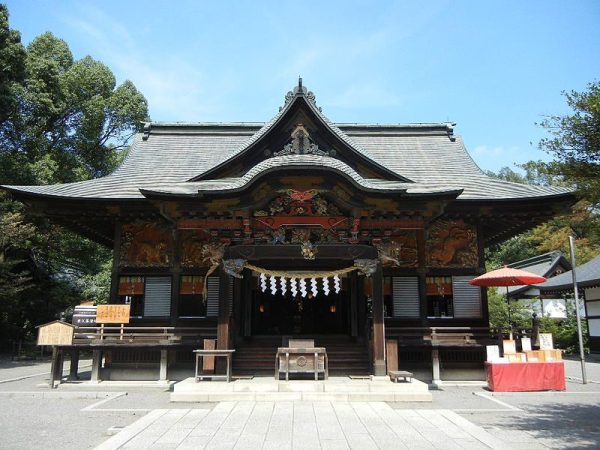
The temples vary in size, architecture and atmosphere: some are isolated in the forest, others are inserted into the urban fabric. The Shimpuku-ji temple, for example, is known for its abundance of statues and decorations, while Suisen-ji, the last of the routes, offers a soothing atmosphere in retreat from the city.
How to get there and prepare for it?
From Tokyo, the journey to Chichibu takes about two hours by train (Seibu Line or Chichibu Railway). It is recommended to stay on site at least one night, especially for those who want to start walking early or enjoy a deeper immersion.
Recommended equipment includes hiking shoes, a light bag, a gourd, a map or GPS, a buffer book, and possibly a pilgrim stick. In summer, heat and humidity can be difficult, while winter brings a dry cold, conducive to walking but sometimes slipping on mountain paths.
It is possible to make the pilgrimage alone, in group, or with local accompaniment. Even if temples are not always clearly indicated, the whole circuit is feasible without a guide if it is well prepared.
A spiritual and cultural experience
Beyond physical performance, the pilgrimage to Chichibu invites an introspection, a reconnection to the slow pace of walking, and a discovery of Japanese Buddhism in its local forms. Each stage offers the opportunity to pray, meditate, observe religious art, or simply enjoy silence.
On the way, other pilgrims, monks, or benevolent villagers are sometimes met. Conversations can occur around a bench, a tea offer or a shared meal. These human moments contribute to the profound meaning of the pilgrimage.
Since Chichibu is still relatively far from the major tourist routes, this route retains an authentic atmosphere, conducive to disconnection and contemplation. It is a peaceful alternative to more frequented tours, while offering an immersion in Japanese religious culture, mountain geography and contemporary rural life.
Practical tips for successful pilgrimage
Choose the right season: Spring (March to May) and autumn (October to November) are ideal, with moderate temperatures and superb landscapes. Summer can be challenging, and winter quieter but demanding.
Plan suitable steps: although some experienced pilgrims can make 10 to 12 temples a day, a softer rhythm allows you to better appreciate the places. Temples 30 to 34 require longer days.
Manage accommodation: Chichibu offers some accommodation, from traditional hostels to modern hotels. For autonomous walkers, the return to Tokyo by train is feasible every night, but it requires good logistics.
Prepare his pilgrim’s notebook:nokyochobuy in the early temples. Each temple has a calligraphed seal, accompanied by red tampons. It is both a memory and proof of your passage.
Respect the place: remove your shoes, remain silent, do not photograph the altars without permission. Each temple is a place of worship before being a tourist site.
The pilgrimage of the 34 Kannon of Chichibu is a peaceful and inspiring adventure. Accessible, it allows everyone, believing or not, to discover a spiritual Japan on a human scale. Taking time to walk, to listen to the bells and to breathe the air of the mountains is also a way to travel differently.
If this article has brought you useful information and can help other travellers prepare for their stay, a Google review will always be appreciated. |
|
Discover more from Evasions Rebelles - Travel Planner Japon
Subscribe to get the latest posts sent to your email.