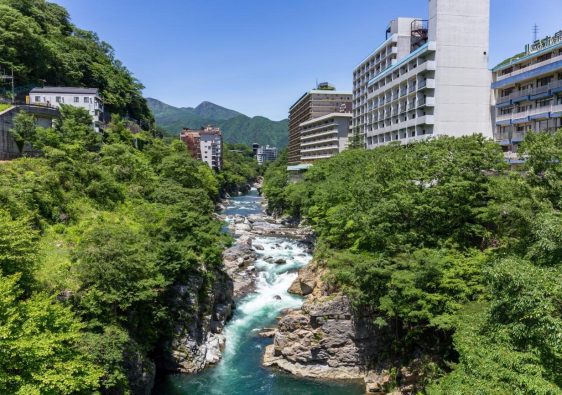
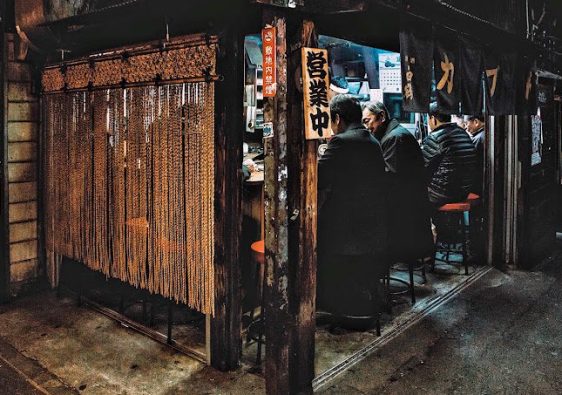
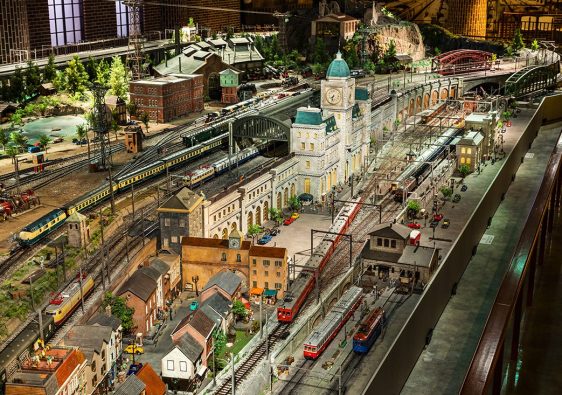
Close to both Tokyo and Nagano, the city of Takasaki is best known for two things: steam locomotives and Daruma. Outside Takasaki are famous spas around Mount Haruna, such as Ikaho Onsen and Shima Onsen. Tomioka Silk Mill , a world heritage site, is less than an hour’s drive away.
Mount Haruna and Lake Haruna
Mount Haruna is a caldeira volcano and is located about 30 km from Takasaki. It is one of the three mountains of Gunma, also called three mountains of Jomo, with Mount Akagi and Myogi. The last eruption would have occurred in the early 6th century.
Mount Haruna-Fuji is thus called because of its similar shape to Mount Fuji. The 1,391-metre mountain can be climbed along the many maintained hiking trails. A cable car allows visitors to easily reach the summit, where one can enjoy a panoramic view. Haruna Lake (Harunako) is popular during the summer months and Haruna Auto Camp is open throughout this season as well as several ryokans and hotels.
Haruna-jinja
Haruna Jinja is a Shinto shrine located on the slopes of Mount Haruna about 2 km southwest of Lake Haruna. Mount Haruna is one of the “three mountains of Jomo” and the sanctuary maintains a close relationship with the shrines of Mount Akagi and Mount Myogi.
With a history of about 1,400 years, Mount Haruna is considered the home of the god of water, fire and agriculture. The gods also give blessings for peace in the world, rich crops, prosperous affairs and marriages.
Surrounded by centuries-old cedars, a peaceful and divine atmosphere emerges from the place. Walking along the panoramic road, you will pass the historic buildings of the sanctuary, the seven gods of good fortune and a giant tree that would be between 600 and 1,000 years old. The six historic buildings are listed as national cultural heritage.
Shrinzan daruma Temple
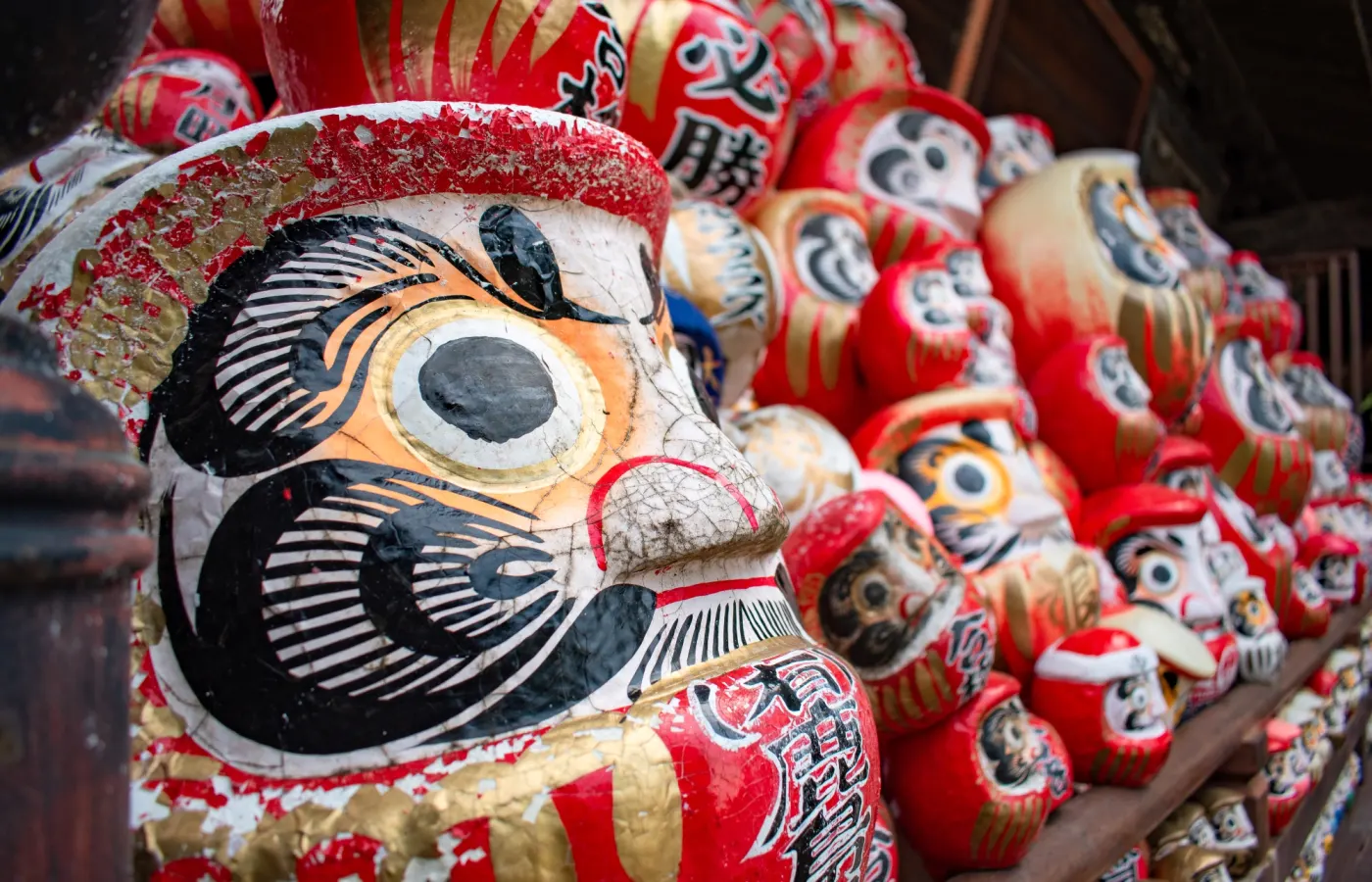
The Shorinzan Daruma Temple can be visited all year round, but an important event takes place on 6 and 7 January with the largest and most famous market of Daruma in Japan (Daruma Ichi) which attracts about 300,000 people each year.
Daruma figures are traditionally bought early in the year, their eyes are white. The first eye is painted when the wish is formulated, the second will be painted once the wish is fulfilled. At the end of the year, the daruma will be returned to the temple or burned.
After buying your daruma, walk again and enjoy the many food stands installed here for the occasion.
Hodota Kofun
Built between the 3rd and 7th centuries, the kofun are ancient Japanese tumulus that served as graves designed for powerful clans. The most common form of kofun was the zenpō-kōen-fun, a massive grave erected in the form of a lockhole. You can observe the stone coffin in the black circular part of the Hachimanzuka Kofun. The funeral tertres Hachimanzuka and Futagoyama, which are part of the Hodota tombs (the historic site listed as a national heritage site), have been restored and are observable thanks to an arranged walk. The Kamitsuke no Sato museum at the Hodota Kofungun site presents objects such as one of Japan’s oldest shoes, several images of clay and earthenware, and a corner with a replica of the first palace of a powerful family.
Getting to Takasaki
Takasaki is easily accessible from Tokyo and Nagano by regular train or Shinkansen.
From Tokyo, take a JR Shonan-Shinjuku Line or JR Takasaki Line to Takasaki Station. You can also take the Hokuriku or the Joetsu Shinkansen. It takes about two hours from Tokyo or a little less than an hour in Shinkansen from Nagano station.
Close to Tokyo or Nagano, Takasaki will be a relaxing stage in the discovery of theKanto.
If this article has brought you useful information and can help other travellers prepare for their stay, a Google review will always be appreciated. |
|
Discover more from Evasions Rebelles - Travel Planner Japon
Subscribe to get the latest posts sent to your email.