Japan is fascinated by its ancient customs, and the art of tattooing — irezumi — is deeply rooted in it. Yet, although it has been practiced for centuries, Japanese tattooing remains the subject of controversy, often associated with negative social values. For tattooed travellers, this perception can lead to misunderstandings, especially in onsen, sento or certain establishments where tattoos are formally prohibited. Here is a complete guide to traveling to Japan with a calm tattoo: history, places where it is refused, solutions to cover, useful vocabulary and tattoo-friendly addresses.

The Origins of Tattoo in Japan: Symbols and taboos
Understanding the history of the irezumi is why the Japanese tattoo remains ambivalent today: a refined art as well as a social marker. This section is for travellers who want to decode local reactions before leaving.
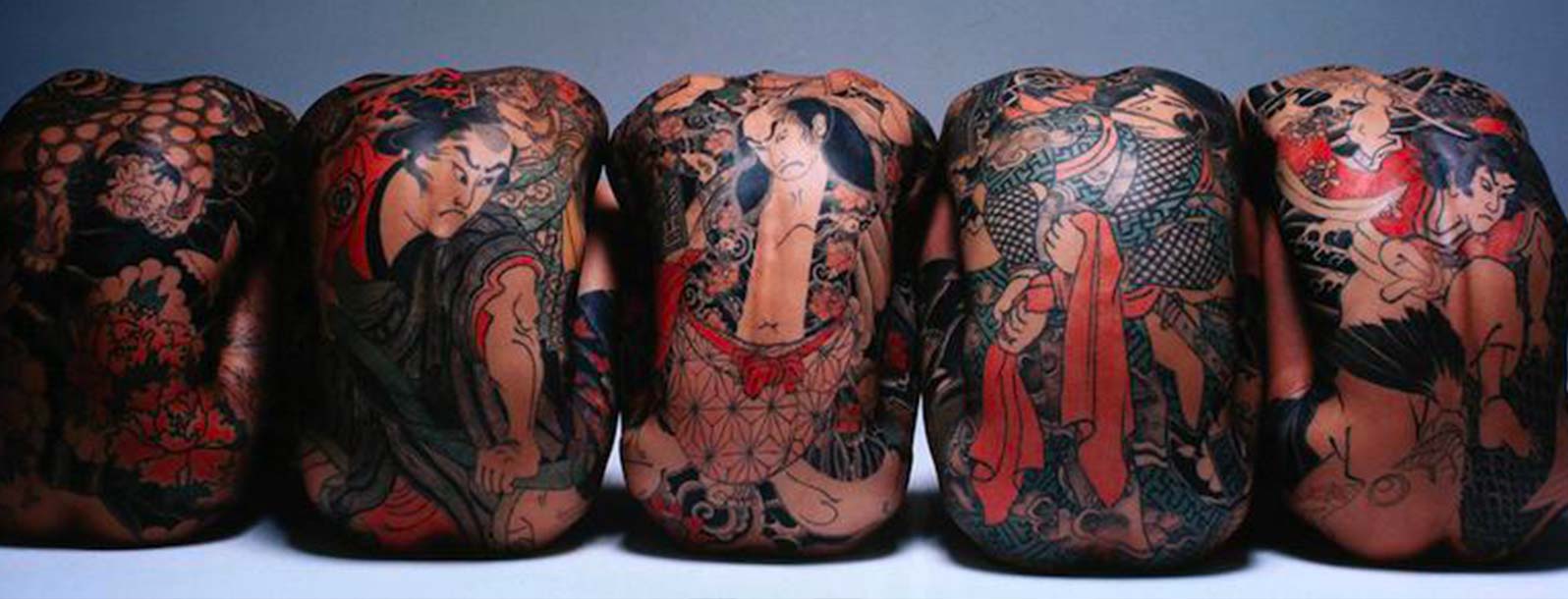
Japanese tattoo, orirezumi, dating back several millennia, with archaeological traces indicating ritual bodily marks from prehistoric times. However, it was during the Edo period (1603-1868) that tattoos really developed, gaining in popularity and sophistication. Inspired by the motifs of the ukiyo-e prints, the irezumi becomes a complete art, practiced in all social classes for its aesthetic, spiritual and symbolic aspect. Traditional motifs often represent mythical creatures such as dragons, carp and phoenix, symbolizing strength, courage and protection.
However, the tattoo also served as a punishment for criminals. Convicted persons were permanently marked to report their offences to society. With the beginning of the Meiji era (1868-1912), the government, anxious to project an image of modernity, formally banned tattoos, thus strengthening their association with criminal groups and the margins of society. This ban was not lifted until 1948, but the imprint of this period still remains in the Japanese perception of tattoos today.
The influence of cinema and yakuza on tattoo perception
The Japanese cinema of the 1960s and 1970s frozen an image of the tattoo that travelers still encounter today. This is why this prejudice persists, and how it manifests itself on the spot.
The 1960s-1970s marked the golden age of Yakuza cinema in Japan, contributing largely to the image of tattoos as a symbol of criminal belonging. The films often expose members of the Japanese mafia wearing complex and wide tattoos, covering their backs and arms, symbolizing their loyalty and courage within the organization. Although the practice of tattooing within the yakuza tends to disappear nowadays for reasons of discretion, this imagery remains engraved in the minds of the Japanese public.
For some Japanese, seeing a tattooed person immediately recalls these symbols of an era marked by organized crime. Conversely, foreigners who view tattooing as an artistic or spiritual expression may be surprised by the persistence of this prejudice. This explains why institutions such as onsens (thermal baths), sento (public baths) and certain beaches or gyms still impose restrictions on tattooed people.
Tattoo in Japan: illegal or not?
Having a tattoo is not illegal in Japan — but practicing as a tattooer has long been framed there. This shade changes everything for travellers who plan to get tattooed on site.
If having a tattoo is not illegal in Japan, tattooing itself remains a controversial activity. Until 2020, Japanese law required tattooers to have a medical license, assimilating tattooing to a medical act. It is only after a historic decision of the Supreme Court of Japan that tattooing is officially recognized as an artistic practice independent of medicine. This victory marks a step forward for the tattoo community, although most continue to exercise discreetly to avoid legal complications.
For tourists, this means that it is possible to get tattooed in Japan, but it must be done well in advance. Established tattooers are often very popular, with waiting lists of up to several years. It is therefore advisable to contact the artist of his choice well before the trip via social networks or by email, in order to organize the project and confirm the availability.
How are tattoos perceived in Japanese society?
The reaction of Japanese varies greatly depending on the context and type of tattoo. What you will experience as a foreign traveller differs significantly from the experience of a tattooed Japanese.
Tattooed foreigners generally receive a relatively positive reception, awakening curiosity more often than reprobation. On the other hand, tattooed Japanese people sometimes face discrimination, particularly in the area of employment. For example, the mayor of Osaka created a controversy in 2012 by demanding that tattooed officials cover their tattoos or leave their posts.
For tattooed travellers, it is essential to understand that even small tattoos can cause discomfort in some Japanese because of the cultural heritage of the yakuza. During visits to public places, tattoos can be tolerated, but it is often recommended to cover them in traditional places such as temples or shrines, out of respect for local culture.
Where tattoos are refused
This is the #1 question of tattooed travellers: where am I going to be refused? Onsen and sento concentrate most of the restrictions, but the rule varies from one institution to another.
Onsen and sento are the strictest places for tattoos. In some public baths, tattoos are still poorly seen, and it is common that a sign mentioning the prohibition of tattoos is displayed at the entrance (irezumi kinshi). Even some water parks, gyms, and sometimes beaches prohibit access to tattooed people to avoid any offence to other users.
However, the policy varies from institution to institution. Some onsen allow access to tattooed people provided tattoos are hidden under a bandage or towel. Others, such as private baths available in some ryokan, offer a popular alternative for tattooed visitors.
How do you live your tattoos in Japan?
With a little anticipation, a tattooed trip to Japan takes place smoothly. Here are the reflexes to adopt before departure and on-site purchasing solutions.
For travellers wishing to fully enjoy their stay without a hitch, it is useful to inquire in advance and follow local instructions. For example, checking onsen and ryokan policies at the time of booking avoids bad surprises. Focusing on private baths, or making sure you have accessories to cover tattoos, are practical solutions.
Buy before going to Japan: If you prefer to buy before your departure to be quiet, you will be able to search in pharmacy/parapharmacy for flesh-coloured sparadraps or scar protection devices (attention, some contain active agents). Or order online by looking for “tattoo cover tape” or “tattoo cover sticker” and choose the product that suits you best.
Buy in Japan: If you buy in Japan, you can find such devices in parapharmacy (Sundrug, Matsumoto Kiyoshi…) or in stores like Don Quijote (don’t hesitate to type these names in Google Maps to find them).


Sites and applications for friendly tattoos
Once restrictions are understood, it remains to be found establishments that accept tattoos. These updated resources will save you valuable time.
Resources such as “Tatoo Friendly” allow travellers to find establishments that accept tattoos. This site also lists tattoo salons in different Japanese cities and provides up-to-date information on onsen and sento tattoo policies. Social media platforms are also a good way to learn about and share experiences as a tattooed tourist in Japan.
Request entry authorization with a tattoo: useful vocabulary
A few sentences in Japanese are often enough to defuse a misunderstanding at the entrance to an onsen or establishment. Here they are, with their pronunciation and their meaning.
To ask if tattoos are allowed, say:Tattoo wa daijobu desu ka?( If the staff refuses, the expression will often be heardO kotowari desuThis means that access is denied. These expressions will be useful in places where access with tattoos can be a problem.
Where to get a tattoo in Japan: Tokyo and Osaka
The two urban hubs are the most accessible studios for travellers. Here are the addresses to target and the precautions to take.
Tokyo
Osaka
Tattoos in Japan, although rooted in culture and history, remain a sensitive subject. For tattooed travellers, being aware of this heritage and the restrictions that result from it is essential to enjoy their stay without upset. By respecting local rules and planning in advance, it is quite possible to visit Japan with tattoos and fully experience this unique cultural experience. Japan, a land of contrasts, invites visitors to discover surprising traditions — and the progressive tolerance of tattoos is an example of this which illustrates the respect for differences and cultures.
Frequently Asked Questions about Tattoo in Japan
Can we get into an onsen with a tattoo in Japan?
What types of tattoos are there in Japan?
How much does a tattoo cost in Japan?
How do I cover his tattoo for an onsen or a scent?
Are tattoos prohibited in ryokans and hotels?
Can we get a tattoo in Japan as a tourist?
|
If this article has brought you useful information and can help other travellers prepare for their stay, a Google review will always be appreciated. |
|
For a daily dose of Japan, follow us on Threads
Discover more from Evasions Rebelles - Travel Planner Japon
Subscribe to get the latest posts sent to your email.