
Nestled in Nagano Prefecture, the Kiso Valley is one of the few places in Japan where one can still walk an ancient road from the Edo era, cross villages frozen in time, and contemplate a preserved mountainous nature. Ideal for travellers looking for peace, cultural hikes and living traditions.

Understanding the Kiso Valley and its interest in travellers
The Kiso Valley extends about 70 kilometres along an ancient section of the Nakasendo Road, one of the five major roads in Japan of the Edo period. This route linked Kyoto to Edo (Tokyo) via inland mountainous land. Unlike Tokaido, which ran along the coast, the Nakasendo offered a safe passage through the Japanese Alps.
Today, this region attracts travellers for its rich heritage and natural environment: preserved historic villages, accessible hiking trails, sacred mountains and crystal clear rivers. It is a perfect stage for those who want to leave the great Japanese metropolises and explore a more rural, slower, but still very lively Japan.
The major relay cities: Magome, Tsumago and Narai
Magome and Tsumago are the two most visited relay cities in the valley. Located at the southern end of the accessible section of Nakasendo, they are the ideal starting point for an immersive hike in the history of feudal Japan.
Magome is a town entirely rebuilt in Edo style after being destroyed by fire. Despite this reconstruction, the atmosphere is neat, with paved alleys, wooden houses and superb views of the surrounding mountains.

Tsumago, on the other hand, has been restored with extreme concern for authenticity. No apparent electrical pole, no light signs, and strict regulations frame renovations. The village is a model of architectural conservation.
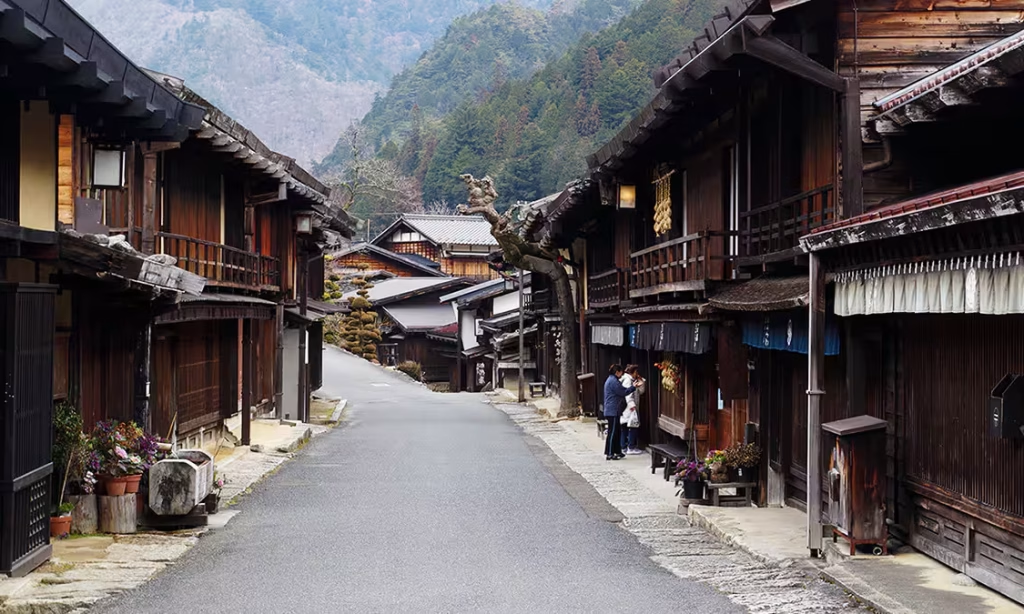
Narai, further north, is less frequented but equally remarkable. Larger than others, it extends for almost one kilometre and offers a mix of old inn, small stalls and artisan workshops. It is also a good base for a night in a ryokan.

Hiking between Magome and Tsumago: an immersion in history
The eight-kilometre stretch between Magome and Tsumago is one of Japan’s most famous hiking trails. Easily accessible, well marked and untechnical, it allows you to cross forests, streams, hamlets and rice fields on mountainside.
The hike takes about two to three hours at a moderate pace. We cross on the way to ancient kilometric terminals, small shrines, traditional tea houses and waterfalls. This path is a unique way to walk in the footsteps of samurai, traders and porters of the Edo era.
Practical advice: If you carry luggage, there is a portage service between the two cities. Just leave your bag in the morning at Magome and pick it up in Tsumago in the afternoon.
Kiso-Fukushima: an urban stop in the heart of the valley
Located in the centre of the valley, Kiso-Fukushima is an ancient post town that also served as a checkpoint for Tokugawa Shogunate. The city once controlled the movements of travellers, especially those of samurai and merchants.
Today, Kiso-Fukushima offers a good balance between historical charm and modern amenities. The city centre is full of old alleyways, public baths (onsen), local restaurants and sake distilleries. The Gakiya-jo, former headquarters of the checkpoint officers, and the Yamamura Museum are interesting stops to better understand the strategic role of the city.
Mount Ontake: Spirituality and hiking in altitude
To the west of the valley, Mount Ontake dominates the area at the top of its 3,067 metres. This active volcano, Japan’s second highest after Mount Fuji, has been a sacred pilgrimage site for over a thousand years.
The religion surrounding Mount Ontake is a syncretism between Shintoism, esoteric Buddhism and shamanic practices. Pilgrimage paths lead through sacred waterfalls, forest shrines and meditation sites.
Guided or free hikes are possible, although some areas are restricted according to volcanic activity. For lovers of spiritual experience, accommodation allows to participate in rituals led by the Yamabushi, mountain monks.
Activities around rivers, lakes and gorges
The Kiso Valley is crossed by the Kiso River, with clear and powerful waters. It is an ideal area to practice aquatic activities or simply enjoy the calm of the banks.
The Atera ravine, with its translucent blue-green waters, is a renowned place for swimming, fishing and picnics. Kayaking is another popular option, especially on Lake Ontake or Lake Shizenko, where landscapes alternate between cliffs and forests.
Rafting is also offered in season, usually in spring and summer, when water levels are conducive to this activity. It is possible to book in Kiso-Fukushima or in the activity centers around Mount Ontake.
Sleep in the Kiso Valley: traditional hostels and local accommodation
The charm of the valley is also based on its accommodation. In Magome, Tsumago and Narai there are minshuku and ryokan, i.e. family or traditional hostels. These establishments often offer a complete experience: kaiseki dinner, hot bath, tatami and futon rooms.
Book in advance is highly recommended, especially in high season (spring and autumn). The comfort can be rustic, but the welcome is warm and the experience very authentic. For those looking for more modern amenities, Kiso-Fukushima offers more classic hotels.
Practical information to get to the Kiso Valley
The Kiso Valley is accessible by train via the JR Chuo line. From Tokyo, you can reach Shiojiri Train Station via Matsumoto (Super Azusa Train), then take the Limited Express Shinano to Kiso-Fukushima.
From Nagoya, the route is more direct: the JR Shinano line makes it possible to reach Nakatsugawa (to Magome) or directly Kiso-Fukushima.
To reach Magome, you must then take a local bus from Nakatsugawa. Tsumago is accessible from Nagiso Train Station, about 15 minutes’ walk or via a shuttle. Narai is served by the station of the same name on the Chuo line.
Local transport is infrequent: check schedules well in advance helps avoid bad surprises.
Exploring the Kiso Valley is about discovering a more confidential Japan, where history fits into every paved street and wooded summit. A destination to be preferred if one wants to immerse himself in a rural daily, punctuated with traditions and inspiring landscapes.

Si cet article vous a apporté des informations utiles et peut aider d’autres voyageurs à préparer leur séjour, un avis Google en cliquant sur l’image suivante sera toujours apprécié.

Pour une dose de Japon au quotidien, suivez-nous sur Threads
Kiso Valley, Nakasendo, Tsumago Magome Hiking, Magome Tsumago Walking, Ancient Villages Japan, Kiso-Fukushima, Narai Japan, Edo Road Japan, Mount Ontake Hiking, Ontake Pilgrimage, Onsen Kiso Valley, Ryokan Kiso Accommodation, Hiking in Japan, Kiso Valley Access, Kiso Valley Transport, Easy Hiking Japan, Japan Historical Trail, Shizenko Lake Kayak, Atera ravine Swimming, Kiso-Fukushima Saké, Kiso Train, Kiso Valley Summer, Kiso Valley Autumn, Minshuku Tsumago, Ryokan Magome, Japan Rural, Historical Hiking Japan, Japan Central Alps, Mountain Region Japan, Kiso Valley Culture, Spirituality Mountain Japan, Ontake Sanctuary, Nakasendo Villages
Discover more from Evasions Rebelles - Travel Planner Japon
Subscribe to get the latest posts sent to your email.


