
The Nakasendo is one of the most emblematic roads of the Edo era, connecting Kyoto to Tokyo through the Japanese mountains. Far from the coastal axes, this inner road has preserved beautifully preserved sections, especially in the Kiso valley. To explore the Nakasendo today is to dive into the history of feudal Japan, between post villages, traditional houses, cedar forests and paved paths. This article offers a practical and detailed exploration of this road full of memory, focusing on its most remarkable stages.
Map of the Nakasendo
A historic road from centralization of power
The Nakasendo, literally a “mountain centre road”, originated in the 7th century but became a national feature in the 17th century under Tokugawa Shogunate. It then becomes one of the five main axes (Gokaido) linking Edo to the whole country. About 533 km long, it crosses the mountains and connects 69 post cities (shukuba), where travellers could rest, eat and change horses.
Unlike Tokaido, which is more frequented and located along the coast, the Nakasendo offers a quieter alternative, although physically demanding, avoiding river crossings. This detail made him particularly appreciated by the then female travellers. Even today, it remains appreciated for its peaceful atmosphere and well preserved segments.
Map and geographical reference
The road extends between Kyoto and Tokyo, passing through the current prefectures of Kyoto, Shiga, Gifu, Nagano, Saitama and Tokyo. The most popular section of modern travellers is in the Kiso Valley (Kisoji), where the natural environment and post villages have been particularly well preserved.
Kiso Valley: the jewel of Nakasendo
In the heart of Nagano prefecture, the Kiso valley stretches about 70 km between steep mountains. The region has 11 historic post cities, some of which are among the best preserved in the country. The local cypress wood, which is valued for its strength and longevity, is still worked on according to traditional methods.
Visitors can discover artisanal objects, taste regional cuisine, stay in rustic inns and explore forest trails. The Kiso River, with clear waters, also offers opportunities for nautical activities such as kayaking, fishing or rafting.

Magome: the charm of a hilly village
Magome-juku, the 43rd post town of Nakasendo, is located on the hillside in the town of Nakatsugawa. The paved path sinuous through restored traditional houses, craft shops and inns. The village has been carefully restored and offers an immersion in the aesthetics of the Edo period.
The sloping main street is a pleasant place to walk, punctuated with cafes, shops and spectacular mountain views. There is also the museum dedicated to writer Shimazaki Toson, born in Magome, who described life in this region in his works.

Tsumago: a model of heritage restoration
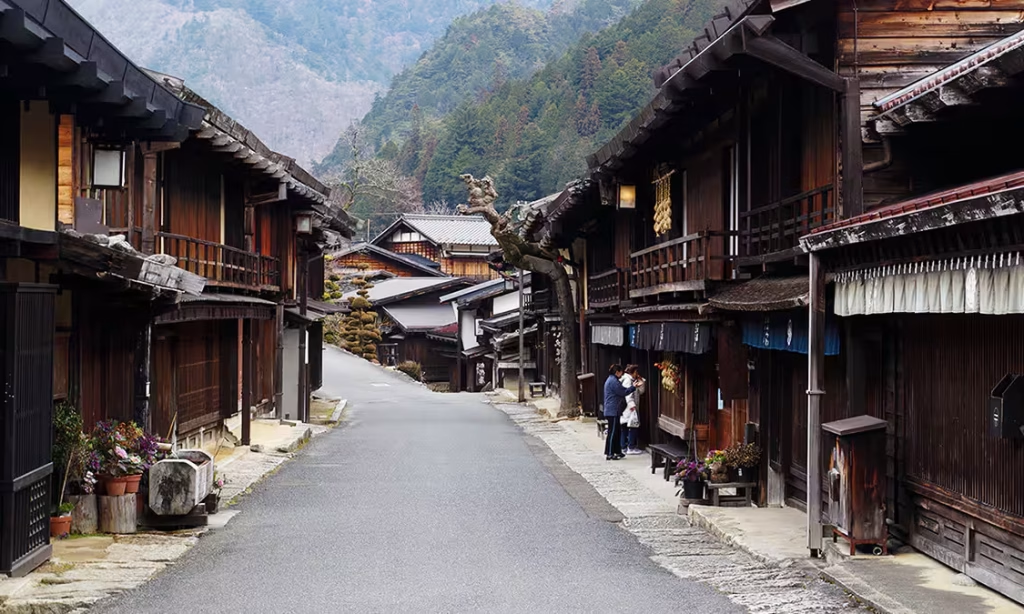
Tsumago-juku, 42nd stage on the Nakasendo, is a few hours’ walk from Magome. It is one of the first post cities to have been restored according to strict conservation principles, notably prohibiting visible electrical cables and modern signs.
The walk between Magome and Tsumago, about 8 km away, is one of the most popular sections of the trail. It crosses cedar forests, rice fields and hamlets, and is a beautiful half-day hike. Tsumago seduces by its main street lined with dark wooden houses, its preserved atmosphere and its cultural sites such as the ruins of the castle or the Rurisan Kotoku-ji temple.
Narai: the richness of a central relay
Narai-juku, located north of the difficult Tori-toge Pass, is one of the largest and most prosperous post cities in Nakasendo. Its alignment of traditional houses extends over nearly one kilometre, making it the longest of post cities in terms of conservation.
Narai is full of historic residences to visit, such as the house Nakamura or the old house Kamidon-ya, which illustrate the way of life of the rich merchants of the time. The main street is also punctuated with craft shops and discreet shrines. From the southern exit of the city, you can access an old section of the trail leading to the Tori-toge Pass, an ideal place for hikers.

Karuizawa: a former resort relay
Karuizawa is located at the foot of Mount Asama, an active volcano in Nagano Prefecture. Formerly 18th Post City, it is now a popular tourist destination for its mild climate, green landscapes and cultural life. By the end of the 19th century, it became a summer retreat for Japanese foreigners and elites.
The city combines Western style architecture, art galleries and historic churches. It also offers a wide range of outdoor activities: hiking, cycling, golf, tennis, winter sports… as well as many shopping opportunities. Karuizawa is a convenient starting point for exploring the Japanese Alps and a pleasant stage for lovers of history and modern comfort.

Walking in the footsteps of the past
Today, although many sections of the Nakasendo have been replaced by modern roads, some segments, especially between Magome and Tsumago, are still walking and marked. Walking between these cities, from about two to three hours, offers a nice introduction to the pace of the journey in the Edo era.
Considerable efforts have been made to maintain the original aspect of these sites. Stone terminals still exist, the buildings have been carefully restored, and we can even sleep in old inns, some having preserved their wooden structure and their age atmosphere.
The itinerary can be explored over several days, combining walking and train trips. The JR Chuo line and local buses make it easy to reach the main stages, even without a personal vehicle.
Practical tips for exploring the Nakasendo
It is advisable to visit the Nakasendo in the spring (April-May) or autumn (October-November), when the temperatures are mild and the landscapes are the most beautiful. Summer can be warm and humid, while some sections are snowy in winter.
Prepare to walk on sometimes steep or irregular paths. Comfortable and water resistant shoes are recommended. Some hostels require advance booking, especially during periods of high attendance.
For a more complete stay, consider combining several stages with museum tours, gourmet breaks, or outdoor activities such as fishing or cycling. Nakasendo can also be integrated into a wider route in Nagano or central Japan.
Rediscovering the Nakasendo means taking the time to travel through the landscapes, villages and history of a less known but deeply authentic Japan. Whether it’s for a one-day hike or a multi-stage route, this centuries-old path offers a sensitive dive into the territory’s memory.

Si cet article vous a apporté des informations utiles et peut aider d’autres voyageurs à préparer leur séjour, un avis Google en cliquant sur l’image suivante sera toujours apprécié.

Pour une dose de Japon au quotidien, suivez-nous sur Threads
Nakasendo, historical road Japan, hiking Nakasendo, Magome Tsumago, Kiso Valley, Nakasendo Trail, Japan Post, Narai-juku, Tsumago-juku, Karuizawa Japan, Edo Kyoto Trail, ancient road Japan, Tokugawa Road, hiking in Japan, Magome Stage, visit Tsumago, Japan Hiking Trail, Torii-toge Pass, authentic Japan Travel, historic walk Japan, Nakatsugawa, Nagano Hiking, rural tourism Japan, traditional accommodation Japan, ryokan Nakasendo, Japan inns, cypress wood Kiso, Kiso River, Kisoji, hiking Kiso Valley, Japanese Mountain Road, Japanese Heritage, Edo Japan, historic cities Japan, cultural hiking Japan, Nakasendo Guide, Trekking Forest Japan, historical road Japan, path Nakasaka, historical walk Japan, Tokkado Nakasendo, history Japan, Kiso, hike Magome Tsumiso, mountain culture Japan, Magome Road Colo Japan, forest Japan, forest Japan, forest Japan, forest Naka, forest Naka, forest Naka, forest Naka, historical road,
Discover more from Evasions Rebelles - Travel Planner Japon
Subscribe to get the latest posts sent to your email.


