Perched on the mountainside in Gifu Prefecture, Magome is a former post station of the Edo period. This peaceful village, beautifully restored, offers an immersion in Japan in the past. With its cobbled alleyways, traditional houses and forest trails, Magome seduces travellers seeking authenticity.
Understanding Magome’s historical role
Magome-juku was the 43rd of the 69 Nakasendo road stations, which linked Edo (present-day Tokyo) to Kyoto through the interior. Unlike the coastal road of Tokaido, Nakasendo passed through the mountains, crossing deep valleys like Kiso. Magome was also part of Kisoji, an older segment of Nakasendo.

The name “Magome” refers to the time when the horses were left at the entrance to the village because of the steep relief. It was with the rise of the Tokugawa Shogunate that Magome gained importance as a relay for official travellers and traders. In the 19th century, the village had more than 700 inhabitants and 69 buildings, including inns (hatago), prestigious residences (honjin), and stalls.
The rebirth of a forgotten village
The arrival of the railway Chūō in the 20th century bypassed Magome, causing its decline. But a local desire for preservation allowed its restoration faithful to the Edo era. Today, Magome is considered a “living museum”, and attracts visitors from Japan and elsewhere, curious to discover a historic city frozen in time.
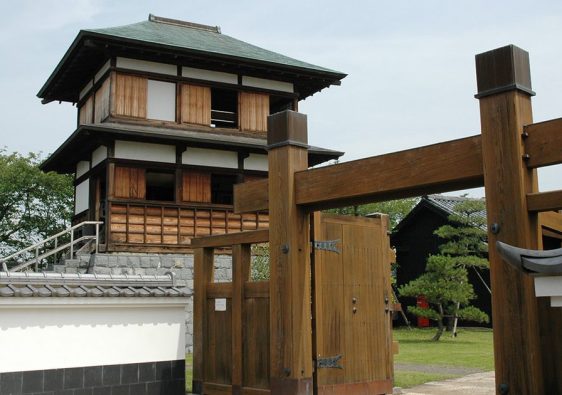
Wood houses aligned along a single sloping street have been rebuilt or preserved using traditional methods. Some now house museums, cafes, or ryokans (Japanese inn), but all retain their architectural character.
Explore Magome on foot
The experience in Magome lives walking. The village is accessible to cars only on the outskirts, which guarantees a quiet environment, without noise. The route usually starts at the bottom of the village, with the old paved road. As you climb, you cross local craft shops, tea rooms and small galleries. Watermills, potted plants and views of the green hills complete the decor.
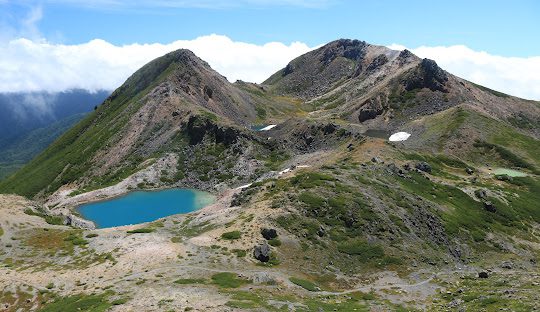
Arriving at the top, the look opens onto the Kiso Valley and Mount Ena. This view is ideal at sunrise or sunset, especially for photography lovers.
A hike between Magome and Tsumago
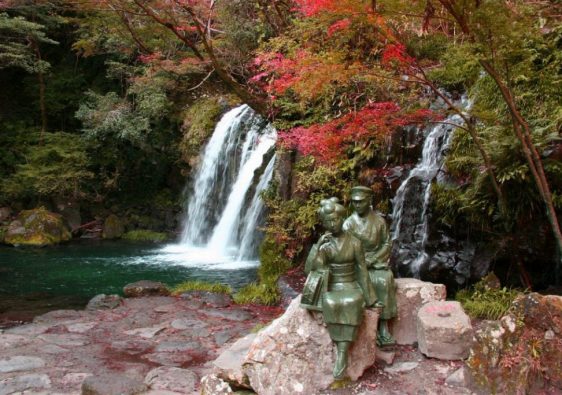
The old Nakasendo road from Magome to Tsumago (about 8 km) is one of the most popular in Japan. It is a well-maintained trail that winds through the cedar forest, crosses waterfalls, old kilometric poles and old protective pillars.
This walk lasts about 2h30 to 3h, without great difficulty, and allows to pass from one preserved village to another. The marking is clear, and several shelters or benches are arranged along the way. In warm season, we can meet bear bell bearers, adding an unusual touch to the excursion.
Toson Shimazaki Museum
Magome was also famous for the birth of novelist Toson Shimazaki (1872–1943), a major author of Japanese naturalism. His best known work,Yoakemae(Before dawn), depicts the upheavals of Japan’s Meiji restoration through the eyes of a character inspired by his father.
The memorial museum, housed in his home, presents manuscripts, personal objects and period photos. The visit deepens the understanding of life in the region at the end of the 19th century, as well as the political and social transition that the country experienced.
Tsushimaya Shiryokan and local crafts
A few steps from Toson Museum, the Tsushimaya Shiryokan Building offers another look at the local past. The ground floor houses a souvenir shop and restaurant, while on the first floor there is an exhibition of Meiji’s objects. Some documents recall the commercial effervescence of Magome’s day-to-day reception of travellers.
The main street shops offer artisanal products, such as pottery in the area, washi paper, or local sake. It is also an opportunity to taste regional specialities such as soba noodles, gohei-mochi (roasted rice bowls in miso sauce) or brown pastries.
Practical information to visit Magome
Best time to go
Magome can visit all year round, but the months of April, May, October and November offer ideal weather conditions. Spring reveals cherry blossoms while autumn adorns the mountains of red and orange. Summer is pleasant but sometimes humid, and winter can be snowy.
Access from Nagoya
From Nagoya, take the line JR Chūō to Nakatsugawa (about 75 minutes). Then a bus from stop #3 takes you to Magome-juku in 30 minutes. The total price is about 1,880 ¥. Buses run regularly during the day.
It is also possible to reach Magome on foot from Tsumago (or vice versa), or to use the car via the Chūō motorway (Nakatsugawa IC exit), with an additional 20 minutes of road.
Moving on site
Magome is a compact village. Walking remains the ideal way to discover it. Local bus service connects Magome to Tsumago, Nakatsugawa or hiking trails. However, most visitors prefer walking trips to fully appreciate the natural setting.
Accommodation
Magome’s traditional ryokans make it possible to spend a night in quiet, Japanese-style rooms. Some offer a kaiseki dinner (refined meal with several dishes). Book in advance is recommended, especially in high season. Sleeping on site allows you to discover the village at dawn or at dusk, in a more intimate atmosphere than in the middle of the day.
Useful advice
- Provide suitable shoes for walking, especially if you are considering the trail to Tsumago.
- Respect local life: some houses are private, even if they look like historic buildings open to the public.
- Take water, especially in the summer, because there are not many fountains.
- Enjoy the dim lighting in the evening, which reveals another side of the village.
Magome is a human-sized destination, conducive to disconnection and contemplation. Taking the time to explore, we discover much more than just a simple village of the time: it is a living page of Japan’s history, in the heart of the Kiso Valley.
If this article has brought you useful information and can help other travellers prepare for their stay, a Google review will always be appreciated. |
|
Discover more from Evasions Rebelles - Travel Planner Japon
Subscribe to get the latest posts sent to your email.