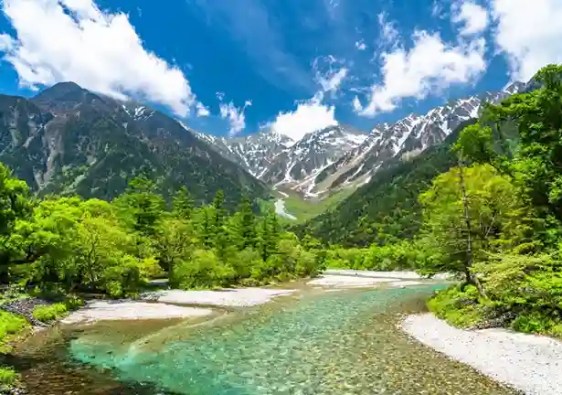
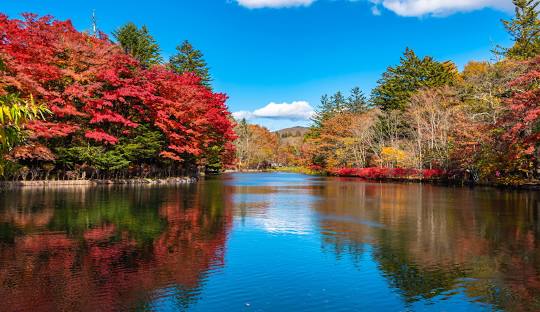
Nestled between the mountains and the Sea of Japan, the city of Murakami offers a fascinating dive into the history, gastronomy and culture of a region not yet explored by travelers. Known for its dried salmon, feudal remains and hot springs, Murakami offers an authentic stopover, ideal for curious people looking for places rich in local traditions.
Discover the ruins of Murakami Castle
Dominating the city from a wooded hill, the ruins of Murakami Castle recall the strategic importance of the region during the period of the Warring Kingdoms. Once a stronghold of the Honjō clan, then of the Naitō clan in the Edo era, the castle was a major administrative and military center. Today, visitors can survey the remains of its stone walls and defence platforms, classified as a national historic site. The panorama from the heights offers an unobstructed view of the city, the Iwafune plain and the shores of the Japanese Sea.
Walk on the coast of Sasagawa Nagare
North of the city lies Sasagawa Nagare, a spectacular 11-kilometre stretch of coastline. Its clear waters and rock formations carved by the waves attract both photographers and hikers. This part of the coast is classified as a picturesque place of beauty and is home to small accessible beaches, ideal for a summer swim or a contemplative break facing the sea. There are also some isolated coves and views easily accessible by car or bike from the city centre.
Relax in Senami Onsen
About ten minutes from the centre of Murakami is Senami Onsen, a coastal spa renowned for over a century. The baths are fed by a naturally warm source around 95 °C. In Funto Park, eggs can be cooked directly in the spring, an activity enjoyed by visitors. The accommodation in the area offers baths with sea views, especially at sunset, making Senami Onsen an ideal step to relax after a day of exploration.
Explore the world of salmon in Iyoboya Kaikan
Iyoboya Kaikan is an original museum dedicated to salmon, an economic and cultural pillar of Murakami. For centuries, the inhabitants have developed a sustainable management system calledTanekawa no Sei, to protect and bring salmon back into the Miomote River. The museum traces this history and offers a sensory immersion with a gallery of underwater observation, allowing to see the salmon swimming from autumn to winter. Additional exhibitions show local biodiversity and the evolution of fishing and conservation techniques.
Visit Sennensake Kikkawa, the fermented salmon kingdom
In the heart of Murakami, the Kikkawa store attracts attention with its hundreds of salmon hanging in an old wooden building. These fishes, salted by hand and then dried for several months, form what is called the “sennensake” (thousand-year-old salmons). Each visitor can discover the stages of fish processing, taste different versions (salted, marinated with miso, soy sauce) and buy as a souvenir. Kikkawa also works as a small living museum, valuing ancestral know-how passed on from generation to generation.
Destroy Murakami sake
The rich source water and the quality of local rice (Iwafune-May) make Murakami a privileged place for sake production. Two breweries are particularly active: Miyao, founded in 1819 and known for its sake “Shimeharitsuru”, and Taiyo, a cooperative of several small producers. These establishments offer visits, sometimes free of charge, as well as tastings to better understand the subtleties of the different cuvées. The sake of Murakami is distinguished by its finesse, balanced by mineral notes and a freshness typical of the Niigata region.
How to get to Murakami
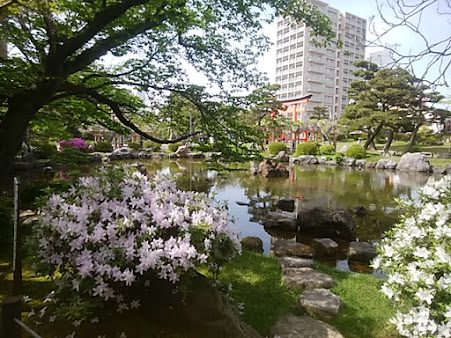
Murakami is accessible from Niigata by train. The most direct way is the Limited Express Inaho, which connects the two cities in about 45 minutes. Local trains also serve Murakami via Shibata, but the route is longer. From Tokyo, it takes about 4 hours to combine Shinkansen with local lines. For self-employed travellers, the car makes it easier to discover the surrounding area, including the coast, onsen and rural areas with little public transport.
What to report from Murakami
Dried salmon products, especially those from Kikkawa, are emblematic memories of the city. There are also local sakes in bottles of different sizes, perfect to offer. For artisans, some stores sell wooden or ceramic items inspired by local traditions. Iwafune-May rice is sometimes offered in gift bags, as well as miso or soy sauce condiments used for fish fermentation.
Murakami does not reveal himself in one glance, but invites a careful and respectful exploration. This discreet town on the Niigata coast offers its visitors a rare immersion in lively traditions, an intimate relationship to the sea and the mountains, and a local gastronomy deeply rooted in everyday life. A precious stopover for anyone wishing to touch an unknown but essential Japan.
If this article has brought you useful information and can help other travellers prepare for their stay, a Google review will always be appreciated. |
|
Discover more from Evasions Rebelles - Travel Planner Japon
Subscribe to get the latest posts sent to your email.