
Shirabyōshi are fascinating figures of medieval Japan, at the crossroads of arts, beliefs and social change. Little known to the general public, they embody an essential part of Japanese performing arts history. Through their dance, singing and presence in classical narratives, the Shirabyōshi open a door to the cultural and religious world of Heian’s time in Kamakura. This article offers an in-depth exploration of this artistic and human phenomenon.
Origins of Shirabyōshi
The termShirabyōshiA sung form of dance appeared at the end of the Heian period (794-1185) and the performers of this artistic form. Their appearance is attributed to the figures of Senzei and Wakano-mae, active under the reign of Emperor Toba. This form of performance, born in imperial courts and aristocratic circles, borrows from older traditions, especially those of the miko (traveling priests) who danced in rituals.

These shamanic origins are essential to understand the symbolic impact of shirabyōshi: their dance was not only artistic but also perceived as a bearer of spiritual energy, sometimes linked to the idea of divine possession or communication with the invisible.
A codified art and a singular appearance
The shirabyōshi were visually distinguished by their men’s outfit: they wore men’s clothes like thesui-kan(court clothing), thetachi-eboshi(high hair) and a ceremonial sword in the belt. This transvestance was an integral part of performance. It was not a mere disguise but a voluntary shift of social and gender codes.
Their dance performed on poetic songs like theImayōpoems sung in Japanese, on a free rhythm. Musical accompaniment, often limited to drums or flutes, gave way to a very flexible expressive form, close to improvisation.
From ritual to aristocratic intimacy
Shirabyōshi occurred in various contexts. Some were involved in rituals or public holidays, but most were engaged in private performances in the homes of the powerful. They were not assimilated to ordinary courtesans: their artistic knowledge, their mastery of singing and their knowledge of poetry distinguished them.
Some shirabyōshi have become famous thanks to their relations with the elites. Giō, Hotoke Gozen, Kamegiku or the famous Shizuka Gozen, a lover of General Minamoto no Yoshitsune, are mentioned in the narratives as women both cultured, charismatic and influential.
An ambiguous figure in medieval society
The social status of shirabyōshi remains complex. They had a marginal profession, often linked to religious margins, but sometimes enjoyed privileged access to the spheres of power. This ambiguity strengthened their fascination.
Some were daughters of modest families, others related to religious or military circles. Their social and geographical mobility, relative freedom and contact with the elite made them atypical figures in the rigid structure of Japanese medieval society.
Influence on posterior arts
Over time, the shirabyōshi style influenced several theatrical forms such as theSarugaku, which gave birth to theatre no , orkusemaiAnd narrative songs. Their vocal repertoire, their way of saying poems, their relationship to movement have been integrated into more codified forms.
Aesthetic elements of shirabyōshi are also found in some later court dances or in the formation of geishas in singing and dancing. Their influence therefore spread in Japanese artistic culture, even after their disappearance as a defined group.
Representations in the collective imagination
In classical literature, shirabyōshi are often presented as tragic or mysterious figures, loved and rejected by great lords, or as independent women with singular destiny. They often embody ephemeral beauty and melancholy, but also virtuosity and finesse.
They are also represented in classical iconography: some prints of the Edo era stage their typical costumes, highlighting their graceful posture and their distant look. These representations help forge an idealized and symbolic image of their role in culture.
Contemporary heritage and remains
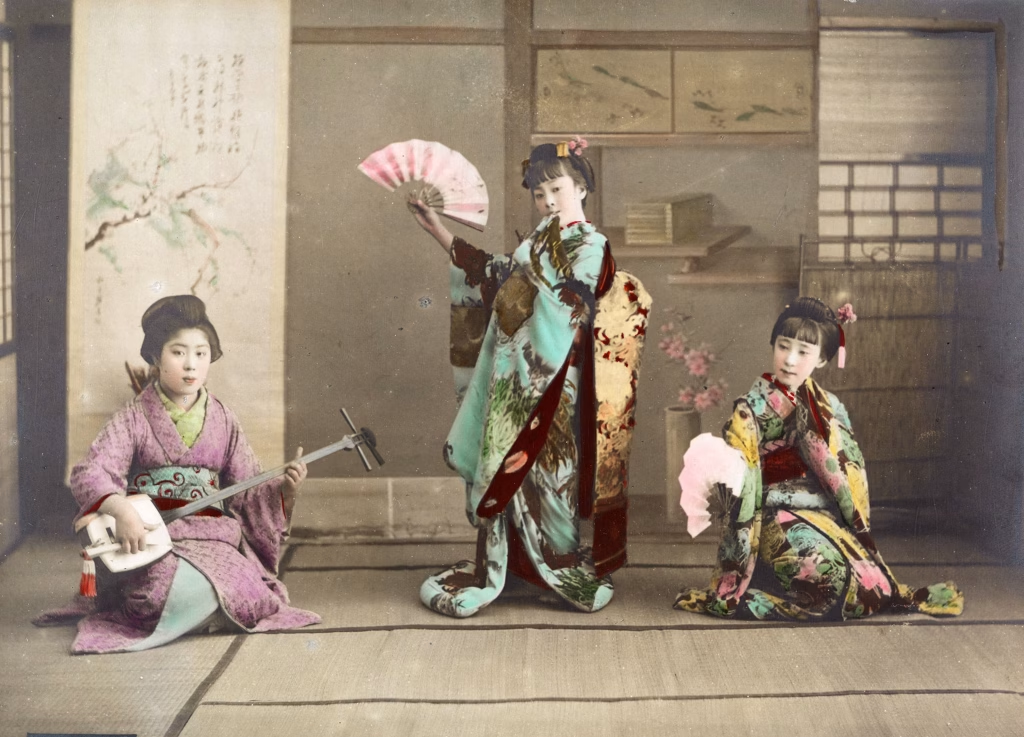
While Shirabyōshi no longer exist as a group, some historical festivals or reenactments pay tribute to them. In Kyoto, some traditional dance shows or historical events feature performances inspired by their style.
Similar costumes are sometimes used in re-enactments of ancient dances or in educational performances designed to transmit pre-noi forms of theatre. Academic research is also available on their historical, artistic and spiritual role in the transition periods of medieval Japan.
Practical aspects for curious travellers
For those who want to discover this unknown aspect of Japan, there are several options for them. Museums such as the Costume Museum in Kyoto or sections of the Tokyo National Museum evoke the spectacular practices of the Japanese Middle Ages. Festivals likeJidai MatsuriorGion Matsurisometimes incorporate visual elements that recall the shirabyōshi outfits.
It is also possible to follow demonstrations of ancient dances at cultural events in temples or shrines. Finally, no or bugaku shows allow to observe stylistic filiations with shirabyōshi, even if their form is no longer directly represented.
Shirabyōshi remain one of the most intriguing witnesses to Japan’s mixed artistic performance, ancient rites and social issues. Their dance, both transgressive and refined, continues to attract the interest of researchers, artists and travellers in search of a deep and little-known Japan. Understanding their role means better understanding the roots of the Japanese performing arts and the metamorphoses of the female figure in the cultural history of the archipelago.

Si cet article vous a apporté des informations utiles et peut aider d’autres voyageurs à préparer leur séjour, un avis Google en cliquant sur l’image suivante sera toujours apprécié.

Pour une dose de Japon au quotidien, suivez-nous sur Threads
Discover more from Evasions Rebelles - Travel Planner Japon
Subscribe to get the latest posts sent to your email.


