The town of Hachinohe, with a population of about 237,000, is the second largest city in the Aomori prefecture. As a fishing town, Hachinoh is one of the highest catch volumes in Japan. Hachinohe is also one of the most powerful industrial cities in northern Tohoku. In addition, it has become an international freight distribution centre representing northern Japan via international trade routes with North America, China, Korea and South-East Asia. Hachinohe is endowed with a magnificent nature, such as the hatching areas of black tern gulls in Kabushima or the natural lawns of the coast of Tanesashi. With the summer festival “Sansha Taisai” and the winter festival “Enburi”, which are designated as intangible folk cultural objects of national importance, and the historical archaeological site of Korekawa which continues to inform us of the beauty of the “Jomon culture”, Hachinohe is a city full of history, tradition and culture.

Castle
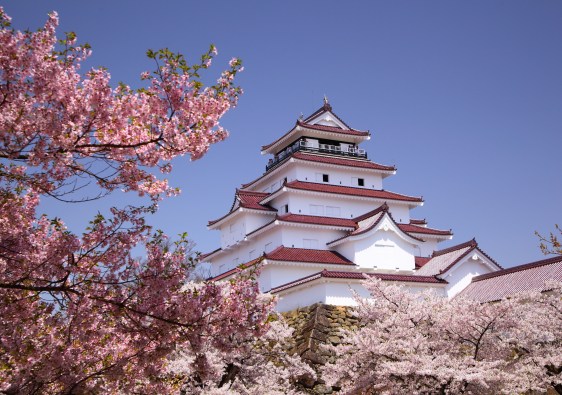
After the relocation of the Hachinohe Nanbu clan to Tohno, Nanbu Toshinao from Morioka Nanbu moved to Hashinohe and started working on this new castle. Officially, the castle was a jinya because Toshinao did not have a title of “Lord of the castle” under the Tokugawa system. Whatever the size or structure of the castle, it was considered a jinya for lords without castle rights. In 1838 Nanbu Nobumasa received the letters of credence from the lord of the castle. He made many renovation plans, but was never able to accomplish them.
Tasenin
Taisen-in is a Zen temple of the Soto sect. It was built by the Niida family at the time of Edo. It is estimated that the main door of the temple was built before 1811. A commemorative tower and a ordination stone on the temple grounds both bear engravings evoking the Great Tenmei Famine (1782-88).
The temple is also well known in the city for its lotus pond which bloom from late August to early September.
Coast of Tanesashi
The coast of Tanesashi offers many natural attractions such as the sea itself, its beach covered with grass, the nakisuna (singing sand) that produces sounds during the walk, and a vast grassy plain with many flowers and plants.
For a more detailed article, it isHere.
Fish market
The morning market of the Mutsuminato station is a must-see and popular gathering place for the inhabitants of Hachinoh since the post-war period. Affordably called “Hachinohe’s cuisine”, this market is full of fresh fish. Heads covered with shit and baskets on the back, elderly women who hold the stalls of the market and shop there are one of the symbols of Hachinoh and its culture. They are so emblematic that they have their own name, isaba-no-kaccha (mothers of the market), and a statue honors them at the entrance to the market. Visiting the market early in the morning is the best way to start your visit to Hachinoh.
Machikado museum
The Hachinohe Clinic Street Corner Museum is a small art museum specializing in the exhibition of the Tukiyo-e and other traditional Japanese wood paintings, the works of Hatsusaburō Yoshida and other pieces and materials related to the region. It was opened and organized by Hidehiko Ogura, an obstetrician practitioner to exhibit his collection of art works. The museum opens its doors free of charge for temporary exhibitions throughout the year.
Ando shoeki museum
In the middle of the Edo period, Shoeki Ando developed an innovative philosophy while earning his life as a doctor in Hashinoh. His ideas about working towards a society in which nature and humans are in harmony are still alive to date, and he is said to be the first environmentalist in the world. In the archives housed in a restored rice attic belonging to the adjacent sake brewery “Hachitsuru”, documents that have been restored thanks to digital technology, such as its “Journal du domaine Hachinohe”, can be consulted.
Historical site Nejo
Nejo is a castle built by Nanbu Moroyuki in the first year of Kenmu (1334). It was the centre of the Hashinoh region for about 300 years until it was no longer used because of the change of territory in 1627.
The Nejo site was designated a national historic site in 1945. After this, excavation and maintenance projects were carried out for about 11 years from 1978. The main part of the historic site was converted into a park under the name “Historical site Ne Castle Place” in 1994, and the state of the castle during the period Azuchi-Momoyama was restored and maintained on the site of Honmaru on the basis of the results of the search investigation. The workshop, Itakura, Naya, Umaya, etc. were restored, centered on the building where the ritual was performed by the owner, called the main sanctuary. You can see the New Year ritual and various tools.
Sansha taisai matsuri
The Hachinohe Sansha Taisai Festival is the largest festival in the Hachinohe region with a history and tradition of nearly 300 years. It takes place annually between 31 July and 4 August. As one of Japan’s important immaterial popular cultural assets, the Hachinohe Sansha Taisai festival captures its visitors with 27 large ornate tanks, a procession of mikoshi (Portable Sanctuary) and toramai (Tiger Dance).
On August 2, the festival culminates, the Kiba Dakyu Kagami-style event is held at the Shrine of Chojasan Shinra.
The Kiba Dakyu is a traditional martial art form executed on horseback that has more than three forms in Japan. The Kiba Dakyu Kagami style of Hachinohe is designated intangible cultural property of the prefecture of Aomori. Kiba Dakyu is similar to polo, two teams (red and white) with four riders each competing to score against the other team. Runners use sticks with a net at one end to throw a ball in their goal and score.
Enburi matsuri
The Hachinohe Enburi is a traditional folk celebration of about 800 years. Dancers known as “Tayu” perform movements related to rice cultivation, in order to pray for a rich harvest. The Tayu wear beautiful and flashy costumes as well as a traditional hat called Eboshi. The Eboshi are mostly black and are traditionally worn by men when they dress formally. At this festival, however, the Eboshi have the shape of horse heads and are decorated with brilliant ornaments. When the Tayu shake their heads, the Eboshi sparkle beautifully, hypnotizing viewers. Between Tayu’s performances, local children also organize adorable celebration dances. About 30 groups of dancers from Enburi meet each year for this festival, which can be seen throughout the city of Hashinoh.
Wood horses d’Hachinohe
The Yawata-uma horse figure is a traditional local toy with a history of over 700 years. It is said that the wood horses were originally made by farmers out of season to be sold as souvenirs of the annual festival of the Kushihiki Hachiman-gu shrine, and became known as “Yawata-uma”. (“Yawata” is another reading of “Hachiman.”) The beautiful patterns painted on wooden horses reflected the way the real horses were traditionally decorated for the rural marriages of the area. The Yawata-uma is one of Japan’s “migoma” or three wooden horses, and as they bring luck, they are often given in memory of celebrations like weddings.
Getting to Hachinoh
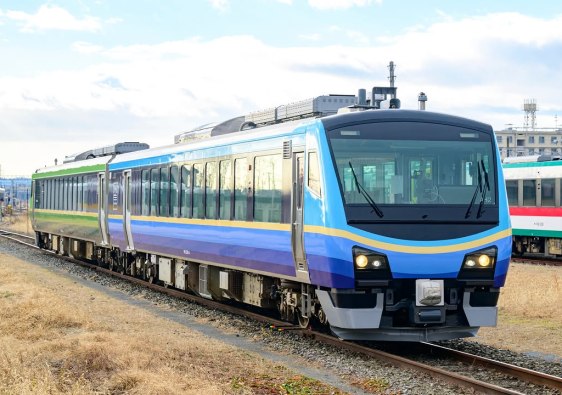
The most convenient way to get to Hachinohe is by train. It takes a little less than 3 hours to get toTokyoIn Hashinoh by shinkansen.
Inside the city of Hachinohe, most of the main tourist attractions are accessible using the local Hachinohe Line train line.
From Hachinohe Train Station, you can take the train to Hon-Hachinohe Train Station (to reach the city centre), Mutsuminato Train Station (to access the morning markets), Same Train Station (to access Kabushima) and Tanesashi Kaigan Train Station (to access Tanesashi Coast Station) or to Nanbu.
At the edge of the city is the coast of Tanesashi, which is famous for its nature and beauty. The city centre of Hachinohe has one of the most vibrant nightlifes in northern Japan. From nature to history, from industry to cooking, there is a treasure of hidden secrets to discover on the northern border of Japan.
If this article has brought you useful information and can help other travellers prepare for their stay, a Google review will always be appreciated. |
|
Discover more from Evasions Rebelles - Travel Planner Japon
Subscribe to get the latest posts sent to your email.