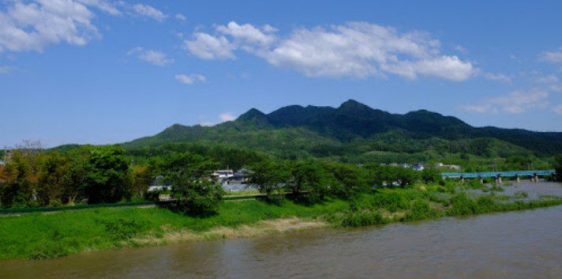
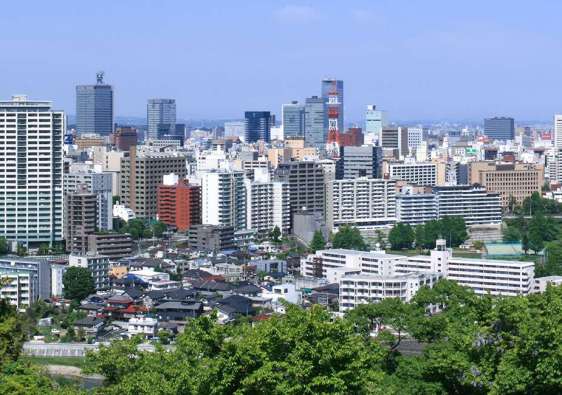
Located in Iwate Prefecture, Morioka, built on the banks of the gently flowing Kitakami River, is a town that developed around the castle that housed the Nambu clan, the samurai which controlled much of the region until the 19th century. It flourished by focusing political, economic and commercial functions. The 17th century castle has long disappeared, but the ruins are preserved in the green park that occupies the site.

Ruins of the castle
When it was built in 1597, the castle was known as Kozukata Castle. It was the residence of the local feudal lords until 1874, when most of the buildings were demolished. The stone walls remain in their original form and the castle park has been preserved since then.
Today, the park is known as the park of the ruins of Morioka Castle and is a place of relaxation and popular leisure for the inhabitants. It is also recognized as one of Japan’s top 100 historic parks.
Many people come to the park during the spring festival of Sakura(hanami). The view of cherry blossoms is enchanting when it is illuminated by paper lanterns at night. The park attracts visitors throughout the year with its seasonal beauty. The Tsurugaike pond is gracefully decorated with wisteria trellis in flowers in May and d ́hortensias in July. Red maple leaves and bright yellow gingko leaves contrast with the castle stone walls in autumn. Many miniature snow huts create fascinating candlelit scenes during the Morioka Yukiakari festival in winter.
The park also houses monuments of some of the great names of literature, including Takuboku Ishikawa, Kenji Miyazawa and Inazo Nitobe. Some of their texts are written on monuments.
Red brick building of Iwate Bank
Another historic structure in downtown Morioka not to be missed is the Bank of Iwate Red Brick Building completed in 1911. The design is similar to that of Tokyo station, because it was the same responsible architect. The building reflects an era of the end of samurai and modernization in the late 19th and early 20th century, with a unique style. Its worthy exteriors and beautiful interiors with great attention to detail in decorated ceilings and stairs with handrails create a nostalgic atmosphere.
Ishiwarizakura
Ishiwarizakura is an edohigan cherry tree (which blooms around the spring, which means equinox) about 380 years old, measuring 4.3 meters around the base and 10 meters high. This magnificent tree, which is a national natural monument, emerged from the crack of a granite rock. Located opposite the Morioka courthouse, it is one of the first cherry trees to bloom in the city, announcing the arrival of spring each year.
In 1932, a fire was declared at the courthouse, but Ishiwarizakura escaped damage thanks to the efforts of the firefighters and, in particular, a gardener named Fujimura Jitaro, who risked his life to save the tree. Today, Jitaro’s family continues to care for Ishiwarizakura as a volunteer gardener.
Museum of Art
The museum presents a permanent exhibition of works by local artists in the prefecture of Iwate, Tetsugoro Yorozu, Shunsuke Matsumoto and Yasutake Funakoshi, and houses temporary exhibitions on various Japanese and foreign themes.
Takuboku and Kenji Museum in Morioka
Morioka is the city where the famous poet Takuboku Ishikawa and children’s storyteller Kenji Miyazawa spent their youth. This museum is the ideal place to discover their works and their history.
The brick building in a beautiful modern Western architectural style has a nostalgic atmosphere. This building was formerly the headquarters of Bank No. 90 and was completed in 1910. The architect was Tsutomu Yokohama, who attended the same school in Morioka as Takuboku and Kenji. The building is one of the first examples of buildings in Japan that were built to reflect the European style of the late 19th century and is designated as an important cultural asset. When they were young, Morioka barely began to see his early western-style buildings and transformed into a modern city. The first floor houses a permanent exhibition of the first editions and other materials and the second floor exhibition room houses special exhibitions and concerts. The large chronological panels trace the stories of the two men are particularly worthy of detour.
Source of Seiryusui
It is a famous source in Daijiji-cho, the city of Morioka. It has been named one of the 100 exquisite and well preserved waters of the Heisei era, and as Daiji spring water nearby, it has been used as a daily water source since ancient times. Four wells, one for drinking water, one for washing rice, one for washing clothes and one for washing feet were installed and managed by the local population. Near the source are companies that depend on the use of the famous water, including tofu manufacturers, sake brewers and soba noodle restaurants.
Nanshoso
Nanshoso is an old traditional Japanese house in which you can enjoy Matcha tea as out of time.
Hachiman-gu Temple
The most beautiful sanctuary of Iwate with its beautiful red shadow and its large torii piercing the sky
With a history of more than 300 years, the sanctuary is venerated by citizens as god of the roots of human life. The shaden (main building of the sanctuary) which was rebuilt in a brilliant vermilion in 1997 is to be seen.
Morioka Zoo
The zoo is home to more than 700 animals of nearly 100 different species, some of which are endemic to Japan, such as sheep from Okinawa, Japanese black bears, tanuki (dirty dogs) and monkeys.
To Morioka
Take Tohoku Shinkansen or Akita Shinkansen from Tokyo Station. The journey takes just over two hours.
Morioka is a city to discover with many historical, cultural or natural facets. It will also be an excellent step in the discovery of theTohokuin view of its geographical position.
If this article has brought you useful information and can help other travellers prepare for their stay, a Google review will always be appreciated. |
|
Discover more from Evasions Rebelles - Travel Planner Japon
Subscribe to get the latest posts sent to your email.