Japan, with its varied landscapes, vibrant cities and ancestral culture, is an ideal destination for cycling enthusiasts. Walking on Japanese roads makes it possible to discover this fascinating country in an intimate and authentic way, away from the crowd of large cities and traditional tourist routes. This gentle and ecological mode of transport offers a total immersion in the grandiose landscapes of Japan, creating enriching encounters with its inhabitants. Whether you’re an experienced cyclist or an amateur, here’s all you need to know to prepare your bike trip to Japan: advantages, circuits, rinko bag, disadvantages and practical tips.

The advantages of discovering Japan by bike
Travelling by bike in Japan has many advantages that turn each trip into a unique adventure. Here are the five reasons why cycling is an ideal way of discovering the archipelago.
- Flexibility: the bike offers great freedom of movement. You can organize your itinerary at your own pace, stopping where you like to explore the place or take a break.
- Autonomy: Unlike public transport, the bike allows you to move without time constraints. No need to worry about train or bus schedules; You are the master of your day.
- Total immersion: cycling allows you to be as close to nature and to feel the atmosphere of the places crossed. You can discover peaceful bamboo forests, golden rice fields and steep coasts at your own pace.
- Discovery of unusual places: The bike allows you to take cross-roads and small paths not accessible to cars, often leading to authentic villages and unexpected panoramas.
- EcologicalBy choosing the bike, you opt for an environmentally friendly mode of transport. Japan is known for its cleanliness and commitment to nature conservation. Travelling by bike fits perfectly with this approach.
Main cycling circuits in Japan
Japan offers a variety of bicycle circuits, adapted to all levels. Here are the five most popular routes, which will allow you to discover emblematic regions of the country.
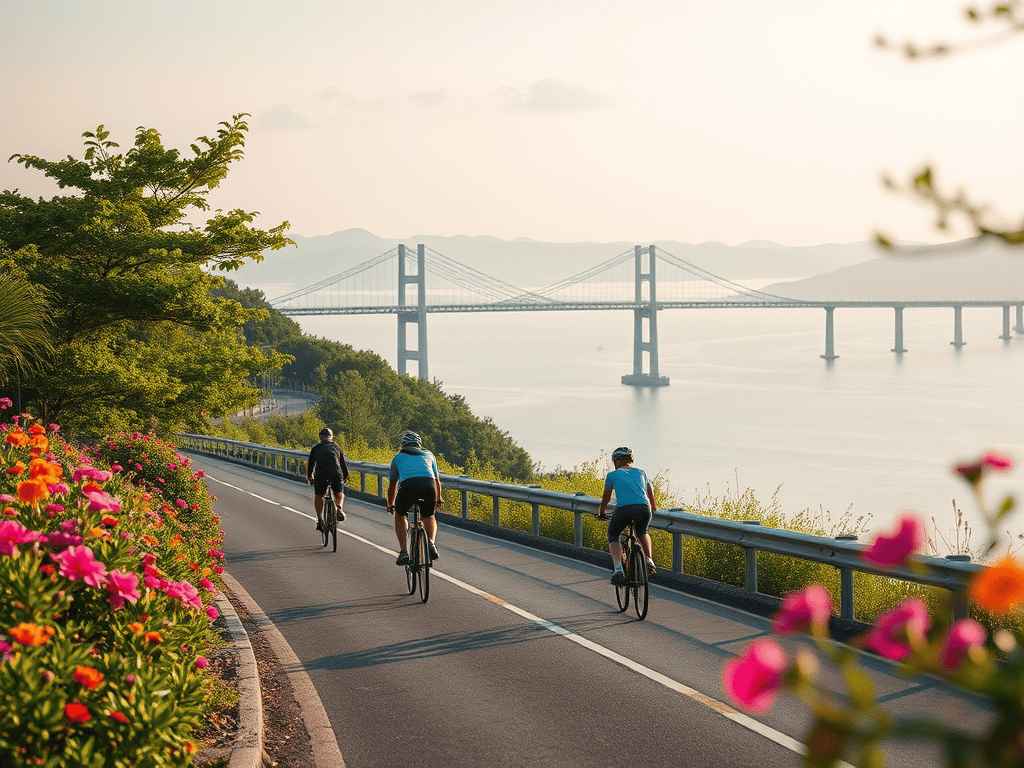
- The Shimanami KaidoThis circuit is one of the most famous in Japan. It connects Honshu Island to Shikoku Island by crossing several small islands and suspended bridges (70 km). The views of the inland sea of Seto are spectacular and offer an unforgettable panorama.
- The Noto PeninsulaThis route takes you through picturesque fishing villages, terraced rice fields and wild coastal landscapes. It is ideal for an experience of calm and serenity.
- The Japanese AlpsFor experienced cyclists, this mountainous region offers an intense sporting challenge with vertiginous passes, but also stunning landscapes. The Nagano and Gifu mountains are particularly recommended.
- Kyoto and its surroundingsThe Kyoto region is perfect for cycling. You can explore historic temples, Zen gardens, Arashiyama bamboo forests and peaceful rivers while enjoying a city rich in cultural heritage.
- HokkaidoThe North Island is a paradise for cyclists. It offers varied landscapes, active volcanoes, huge lakes and dense forests. Outdoor enthusiasts will love exploring this area by bike.
Urban cycling circuits : Tokyo, Kyoto, Osaka
Large Japanese cities such as Tokyo, Osaka and Kyoto are increasingly accessible to cyclists. Thanks to the development of bike paths and self-service bike rental, it is easy to explore these cities by bike.
- TokyoAlthough very urbanized, Tokyo has several neighborhoods and parks perfectly suited for cycling discovery. You can pedal along the Sumida River, or visit the traditional Asakusa district.
- Kyoto: the city is known for being “cycling”, with many tracks that will lead you to the most famous temples and shrines.
- OsakaThis lively city is also suitable for bicycles, with trips that will make you discover its modern architecture and culinary heritage.
Count 1,000 to 2,000 ¥/day for an urban bike rental (mama-chari), and 2,000 to 4,000 ¥/day for a road bike or a VTC. Docomo Bike Share 24 hour packages cost 1,000 to 1,500 ¥.
The rinko bag: carrying your bike on public transport
For cyclists wishing to combine cycling and public transport, therinko bagIt is essential. It is a bag specially designed to carry a bicycle disassembled in trains. This practical system allows you to travel easily with your bike, especially when you want to connect two regions without cycling everything.
Count 3,000 to 8,000 ¥ for a quality rinko bag (marks: Ostrich, Tioga, Mont Bell). The bike must be partially dismantled (front wheel removed, handlebar turned) to hold in the bag. On the Shinkansen, the bike stored in its rinko bag is considered a hand luggage – no special reservation is required. On local trains, take 1 to 2 minutes to install or remove the bag.

Constraints to consider
Although cycling is a great way to discover Japan, some disadvantages must be taken into account before leaving. Here are the five points to anticipate.
- WeatherJapan has rainy seasons (tuyu in June, typhoons in August-September), especially in summer and autumn. Heavy rain can make some roads dangerous.
- Traffic: in large cities, traffic is sometimes dense, which requires great vigilance, especially for cyclists not used to Japanese roads (dried to the left).
- The reliefSome parts of Japan, such as the Japanese Alps or Hokkaido, are very hilly and require good physical condition.
- LanguageAlthough more and more signs are being translated into English, in rural areas language may be an obstacle.
- HousingDepending on the route chosen, you may not find a place to rest and take a shower. See our articleCamp in Japan.
Examples of cycling routes in Japan (interactive map)
To help you visualize the routes, here is an interactive map of the main cycling routes in Japan. Click on the image to load the map (loading is delayed not to slow down the page).
Tips for a successful cycling trip to Japan
For your cycling trip to Japan to be a success, here are five tips to keep in mind before and during your stay.
- Choose the right periodSpring (March-May) and autumn (September-November) are the ideal seasons for cycling in Japan, with pleasant temperatures (12-24 °C) and stunning landscapes. Avoid summer (heat, rain, typhoons) and winter (snow, closed roads).
- Prepare equipmentA suitable bike, helmet, technical clothing and repair kit are essential. A detailed map or GPS is also recommended. Count 500 to 1,500 ¥/day for the rental of a road bike, and 3,000 to 8,000 ¥ for a rinko bag.
- Accommodation for cyclists: many accommodations, such asminshuku(family hostels) or hostels, welcome cyclists (5,000 to 10,000 ¥/night). There are also specialized hotels that offer services such as bicycle rental or a secure storage space.
- Route planningPrepare your itinerary in advance based on specialized guides and maps. Some routes are better suited for beginners (Shimanami Kaido), while others require a more advanced level (Japanese Alps).
- Respect local customsAs a visitor, it is important to respect the rules of movement (guided to the left) and local customs. The Japanese are very respectful of others on the road, and it is important to follow this example.
Japan by bike offers an exceptional experience, between adventure, cultural discoveries and immersion in nature. It is an ideal way to explore regions that are often inaccessible to other means of transport while enjoying total flexibility and autonomy. So prepare your bike, adjust your helmet and discover Japan’s hidden treasures on two wheels. This trip will certainly be one of the most memorable experiences of your life!
Frequently Asked Questions for Cycling in Japan
Can you rent a bike in Japan easily?
What is a rinko bag and is it mandatory?
What is the best season for a bike trip to Japan?
How much does a bike trip to Japan cost?
Can we travel by bike with an electric bike in Japan?
What are the essentials of a first cycling trip to Japan?
|
If this article has brought you useful information and can help other travellers prepare for their stay, a Google review will always be appreciated. |
|
Want a daily dose of Japan? Follow us on Threads.
Discover more from Evasions Rebelles - Travel Planner Japon
Subscribe to get the latest posts sent to your email.