Mimasaka is a rural town rich in history and culture. The Great Epistle, Philosopher and Artist Miyamoto Musashi was born in what is today Mimasaka. The Musashi Memorial Martial Arts Center is a large structure that allows visitors to discover Mimasaka’s culture through this historical figure.

Historical district
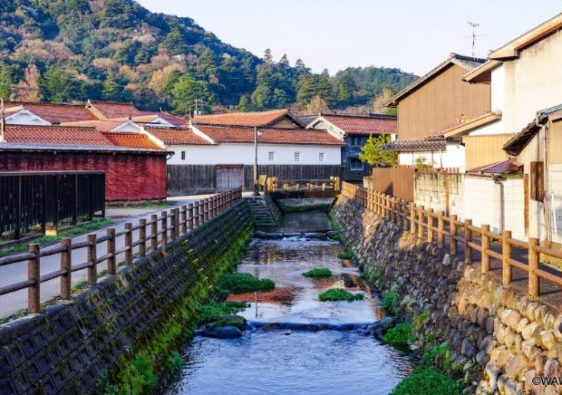
This former relay along the Inaba Kaido motorway housed the still existing Ohara Inn, which was used by the lords of the Tottori estate when they were travelling to and from Edo under the system of kotai sankin (alternate presence), in which the feudal lords had to share their time between their original domains and the capital of Edo. The honorary doors and palaces built in the “sukiya” style (house of the tea ceremony) are always exactly as they were at the time.
Musashi Museum
This museum presents many priceless treasures, including a portrait of Bodhidharma by Musashi himself and one of his tsuba (handguard sword) with a distinctive “fish cat and gourd” design. The surroundings are full of famous sites and ruins of places linked to Miyamoto Musashi.
Musashi Budokan
It is a martial arts centre built in the Ohara area, the birthplace of Kensei Miyamoto Musashi, in order to become a symbol of “Musashi no Sato” and a high place of kendo.
The unique curved exterior design is based on the pattern of the “Namakosukashitsuba” sword shield made by Miyamoto Musashi.
Kawadokofun Park
First funerary tumulus park in Okayama Prefecture. Kawato’s tumulus group is a group of tumulus built at the end of the Kofun period (late 6th century to early 7th century). At that time, therefore, there was little documentation, the only clue to know the history of the region is what remains in the tumulus and ruins of the village.
The Kawato tumulus group consists of three tumulus in the park and one to the southwest. The second tumulus is one of the largest in the Mimasaka region, and has revealed many artifacts such as pottery and earthenware.
Daishoji Temple
It is a historic temple that would have been opened by Emperor Shomu’s decree (738). In Honbo, 400 years old, you can see Aizen Myo, as well as a beautiful Japanese garden and many temple treasures such as the hall used by the feudal lord and the Kago of the Imperial Palace of Kyoto.
In front of the mountain gate, there are two great ginkgos that have become the model of the millennial cedar that appears in the novel “Miyamoto Musashi”. Starting in mid-June, the Hydrangea Tanabata festival attracts many visitors.
To Mimasaka
Mimasaka is easily accessible by train from Okama via Tsuyama.
If this article has brought you useful information and can help other travellers prepare for their stay, a Google review will always be appreciated. |
|
Discover more from Evasions Rebelles - Travel Planner Japon
Subscribe to get the latest posts sent to your email.