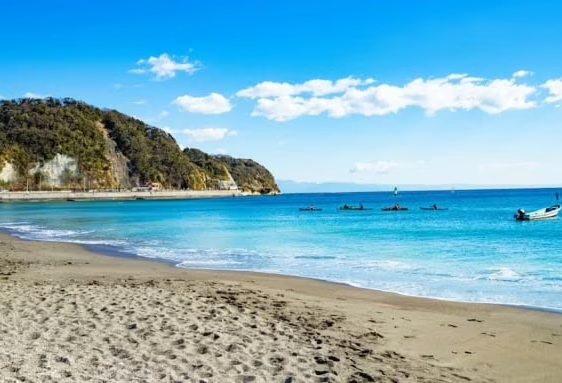
A few minutes by train west of Kamakura, Enoshima offers an easy access sea break from Tokyo. Connected to the continent by a bridge, this small island concentrates coastal landscapes, religious sites, local specialities and spectacular views. Appreciated for its relaxed atmosphere and compact character, Enoshima lends itself to a day trip as well as to a complementary stage during a stay in the Shōnan region.

An accessible and pleasant island
Enoshima is divided into several distinct zones. The marina and the approaches to the bridge are accessible by vehicle, while the more wooded and hilly central part is mainly discovered on foot. Paid escalators facilitate ascent for those who want to limit effort. The whole island, however, remains human-sized, allowing a smooth visit without undue time constraints.
The Sanctuary of Enoshima and the goddess Benten
The Sanctuary of Enoshima consists of three sanctuaries at different points of the island. They are all dedicated to Benten, a divinity associated with wealth, music, knowledge and good fortune. The main pavilion houses a particularly venerated statue, attracting both curious visitors and the faithful. According to local legend, Benten was at the origin of the island’s creation after taming a five-headed dragon that terrorized the region. This story explains the recurring presence of the dragon motif in places of worship.
Iwaya caves, between myth and geology
On the southern coast of the island, the caves of Iwaya open in the cliff facing the ocean. Easy access on foot, they offer a short but striking visit. The first cave houses religious statues, while the second is associated with the legendary dragon linked to Enoshima. The dark atmosphere and the noise of the waves reinforce the singular character of the site, especially appreciated in clear weather when the sea is calm.
Samuel Cocking Garden and Sea Candle Tower
At the top of the island is the Samuel Cocking Garden, built on the former estate of a British merchant who settled in Enoshima in the late 19th century. Today, this landscaped park houses the Sea Candle Tower, a 60-metre-high structure that also serves as a lighthouse. From the observation platform, the panorama extends to Sagami Bay and, in clear weather, to Mount Fuji. The garden is also a popular space for a shady break during the visit.
Enoshima Daishi and Buddhist Presence
Although the island was historically marked by Shintoism, a Buddhist temple reappeared in the early 1990s. Enoshima Daishi belongs to the Shingon sect and is distinguished by its monumental statue of Fudō Myōō, protector of Buddhism. The site, more recent, contrasts with ancient shrines while completing the religious landscape of the island.
The bell of love and local legends
A trail leads to a high point of the island where stands the famous bell of love. Combined with the legend of Benten and the dragon, it attracts many couples. The tradition is that we ring the bell together before hanging a padlock with names, symbol of shared wishes. The site also offers a clear view of the ocean, making it a popular stop even outside its symbolic aspect.
The rocky coasts of the southern island
The south coast of Enoshima has a more crude face, with steep cliffs and wide rocky plates accessible at low tide. These areas are frequented by walkers, amateur fishermen and those who simply want to enjoy the sun facing the ocean. It is also from this part of the island that small boats from Enoshima to the mainland leave some days.

Beaches and water activities nearby
The beaches on both sides of Enoshima are among the closest to Tokyo. In summer, they attract swimmers and swimmers, while in the rest of the year, the long stretches of sand between Kamakura and Chigasaki become popular spots for surfers. The atmosphere varies greatly depending on the season, going from animated in July and August to calmer the rest of the year.
Culinary specialties and local street food
Gastronomy is an important part of the Enoshima experience. Shirasu, composed of young white fish caught in Sagami Bay, is the island’s emblematic ingredient. It is served raw or cooked, often on a bowl of rice. Benten Nakamise dori shopping street is home to many shops offering snacks and souvenirs. There are shirasu croquettes, grilled squid, sweet meatballs, ice cream and local beers.
Among the most popular specialties, the senbei tako, a crispy cake containing a small octopus, attracts long queues. Sweets lovers will also enjoy monaka ice cream, combining ice cream and red beans paste in a crispy hull.
Enopass, a convenient ticket for the tour
For those who want to explore several sites, the Enopass is an interesting option. This combined ticket includes access to the island’s main attractions, such as the garden, observation tower, caves and escalators. It also allows for discounts on certain visits and purchases, simplifying the organization of the day.
Getting to Enoshima easily
Enoshima is served by several transport lines, each leading to a different station near the island. From Kamakura, the local train journey takes about 25 minutes, with a high frequency. This accessibility makes it an ideal destination for an excursion without complex preparation.
Enoshima seduces by its balance between sea, culture and simple pleasures. Accessible, varied and disparate, the island offers a different reading from the Kamakura region and naturally integrates into a route around Tokyo for those who want to add a maritime touch to their stay.

Si cet article vous a apporté des informations utiles et peut aider d’autres voyageurs à préparer leur séjour, un avis Google en cliquant sur l’image suivante sera toujours apprécié.

Discover more from Evasions Rebelles - Travel Planner Japon
Subscribe to get the latest posts sent to your email.